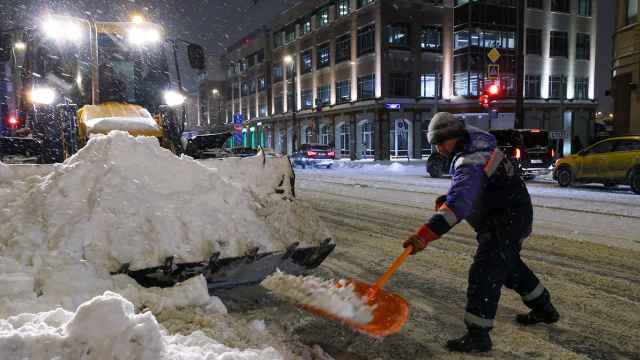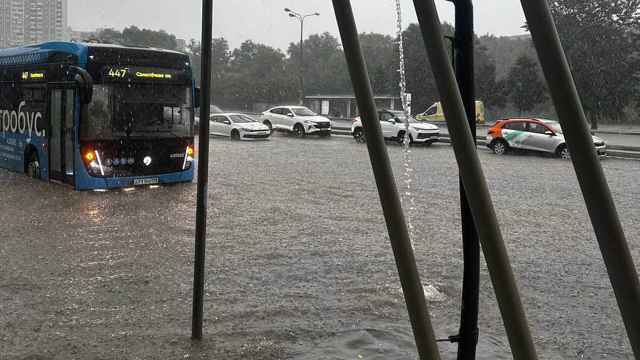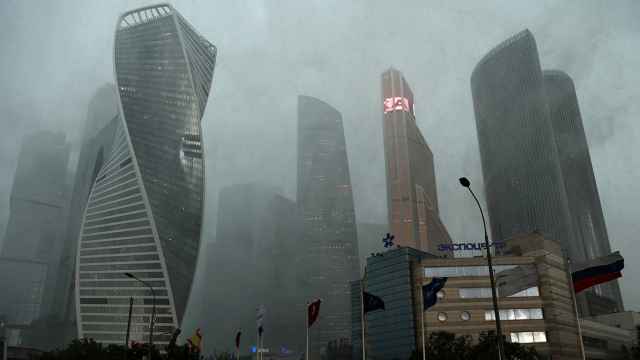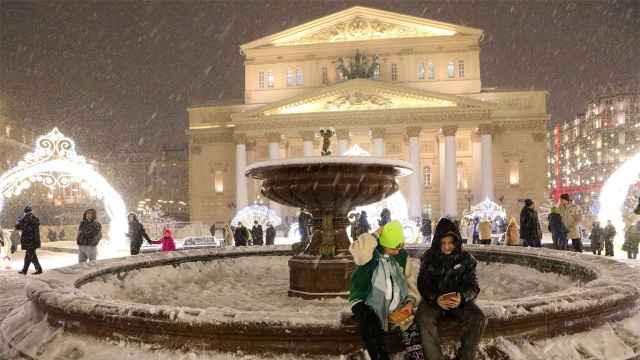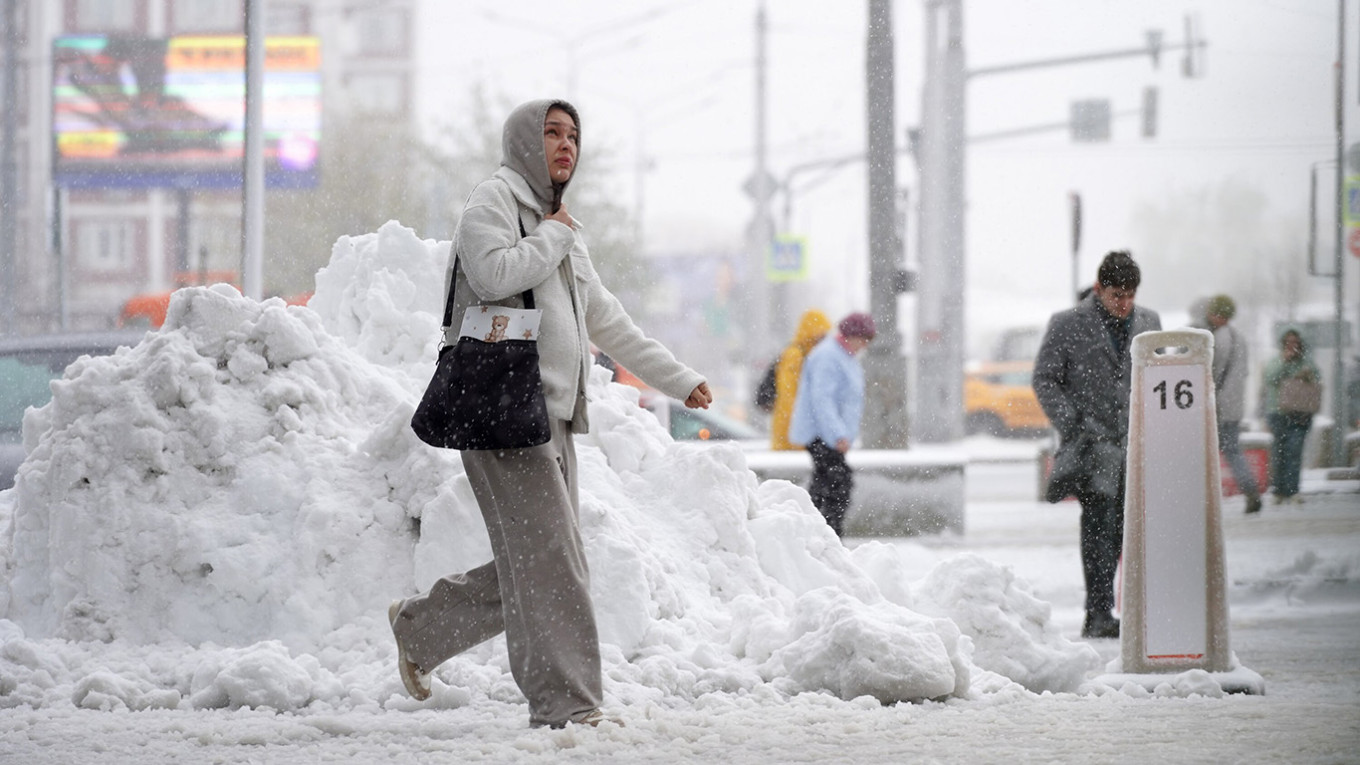
Muscovites awoke Monday to a record-shattering blanket of snow after a rare late-April winter storm swooped into the Russian capital overnight, with local authorities warning that snow and wind would persist over the next two days.
The city saw around 21 millimeters of precipitation between Sunday night and Monday morning, according to Yevgeny Tishkovets, chief meteorlogist at the Phobos weather center. That is, on average, roughly equal to 21 centimeters (8.3 inches) of snow.
Tishkovets said the snowfall over the past 24 hours broke a daily record set in 1880, writing in a Telegram post: “Never in the entire history of meteorological observation has there been this much snow on April 27.”
The weight of the snow toppled trees in Moscow and snapped power lines, cutting electricity to 50 villages in the surrounding Moscow region and leaving commuters stuck in gridlocked traffic.
Some airports temporarily grounded flights due to poor weather conditions. Officials in Moscow issued an “orange” weather advisory, the second-highest alert level.
Beyond the Russian capital, emergency authorities said 76,000 people across multiple regions were without power. At least three people, including a child, were killed in the southern city of Samara after high winds toppled trees, officials said, while dozens of people in several regions were injured.
The Ryazan, Tula and Vladimir regions surrounding Moscow, as well as St. Petersburg and Veliky Novgorod in northwestern Russia, also reported snowfall on Monday. Snow was expected in the regions of Voronezh, Kursk, Penza, Volgograd and Perm.
Forecasters expect the winter weather system to linger for another 48 hours. Moscow Mayor Sergei Sobyanin warned residents to brace for more wet snow and wind gusts of up to 23 meters per second (50 miles per hour).
Meteorologists in Europe said the unseasonable blast has been driven by a so-called “Omega block” over the North Atlantic, a stubborn high-pressure system that effectively has acted as a conveyor belt to funnel a pool of Arctic air deep into Eastern Europe.
They noted that the rare pattern allowed the polar air to bypass usual westerly winds, clashing with the region’s early spring warmth to create an intense winter storm.
A Message from The Moscow Times:
Dear readers,
We are facing unprecedented challenges. Russia's Prosecutor General's Office has designated The Moscow Times as an "undesirable" organization, criminalizing our work and putting our staff at risk of prosecution. This follows our earlier unjust labeling as a "foreign agent."
These actions are direct attempts to silence independent journalism in Russia. The authorities claim our work "discredits the decisions of the Russian leadership." We see things differently: we strive to provide accurate, unbiased reporting on Russia.
We, the journalists of The Moscow Times, refuse to be silenced. But to continue our work, we need your help.
Your support, no matter how small, makes a world of difference. If you can, please support us monthly starting from just $2. It's quick to set up, and every contribution makes a significant impact.
By supporting The Moscow Times, you're defending open, independent journalism in the face of repression. Thank you for standing with us.

Remind me later.