

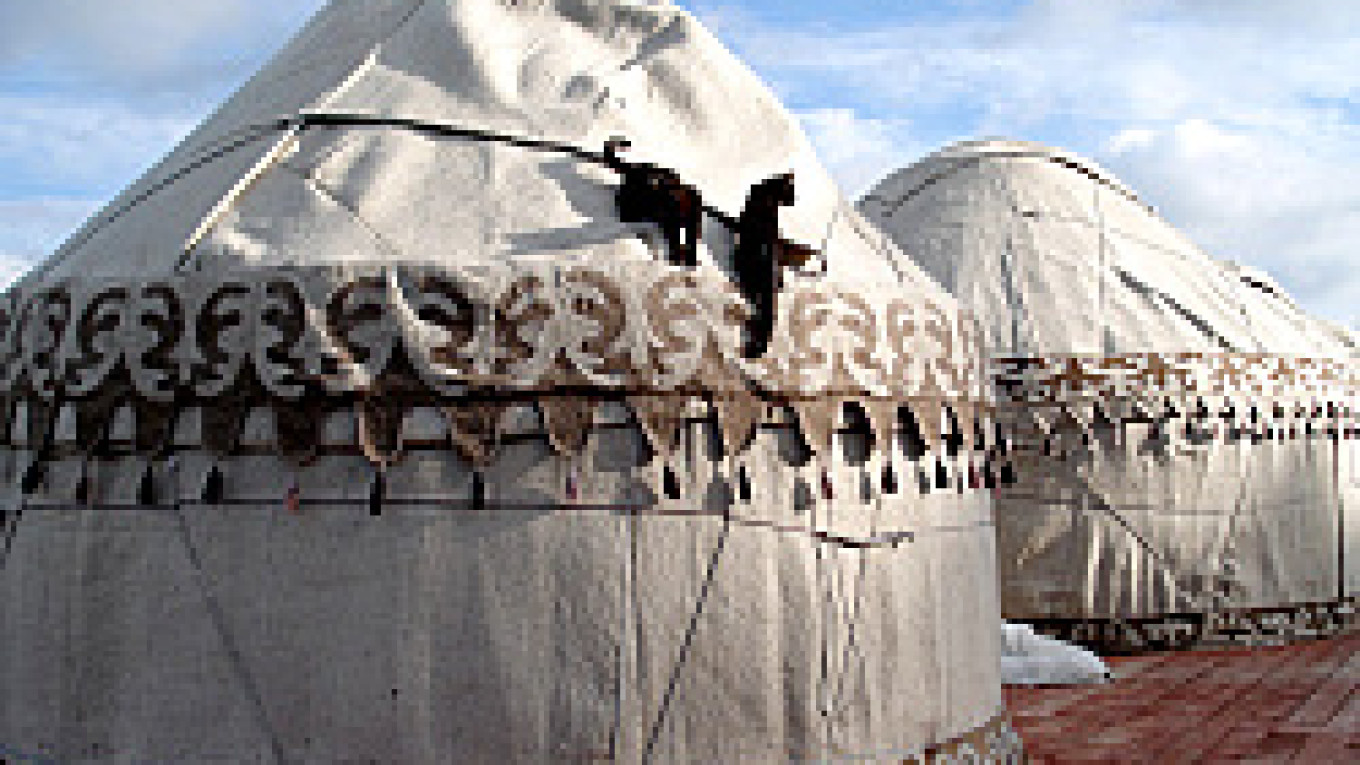
Located two hours outside Moscow by bus, Ethnic World is 83 hectares of land where reproductions of traditional settlements of various ethnicities from around the world will be built, cultivating a greater understanding of the lives, traditions and cultures of others.
The project began approximately two years ago as the brainchild of Ruslan Buramov, a half-Russian, half-Azeri businessman.
"Ruslan believes that it is possible for people of all different cultures and backgrounds to live together in one place," explained tour guide Ala Nikolaevna. "This project is the demonstration of this possibility and the necessity of public education regarding other cultures. Ruslan himself bought this land, declaring that all of his money would go into the fulfillment of this idea, and he organized the collective to bring his plan into realization."
Unfortunately, because of the present economic conditions, the project has suffered some delays. Currently, only the European Slavic settlements and the Asiatic yurt settlements have been completed.
"We plan on having everyone from America to Germany to Japan represented here," Ala said. "Right now, they are constructing India and are finishing up Siberia. In 10 to 13 years, we hope to have everything fully completed."
Guests can also check out the cafe, browse the fairly pricey wooden souvenirs or hop on a small dog sled for a quick ride across the snowy fields for 350 rubles.
Ethnic World
Visitors in the world's largest oven.
|  |
| |
The Slavic settlement consists of 10 izbas, each representing a different group from across Russia. "Each izba is different inside and out," said Ivan, another tour guide, "representing a different aspect of traditional Slavic life, from kids' toys to farm work. The outside of every home is also constructed to match those that would be found in the area of each group respectively."
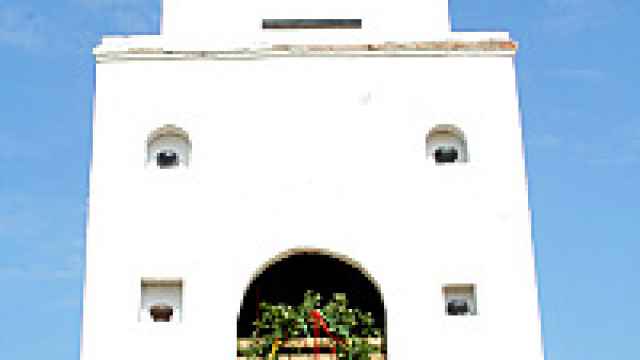
In the center of the ring of izbas, representing the heart of Slavic life, is the world's largest oven. Four times the size of a normal oven at 11 meters tall, the oven is open for exploration. Visitors enter the base, climb a thin spiral staircase and after warming themselves before a wall-sized virtual fire — equipped with recorded crackling sounds ?€” continue to the top of the stove to gaze upon the world stretching below.
Ethnic World (Etnomir). See web site www.ethnoworld.ru for detailed instructions on how to get there. Tel. (499)140-04-04, (495)710-73-41.
A Message from The Moscow Times:
Dear readers,
We are facing unprecedented challenges. Russia's Prosecutor General's Office has designated The Moscow Times as an "undesirable" organization, criminalizing our work and putting our staff at risk of prosecution. This follows our earlier unjust labeling as a "foreign agent."
These actions are direct attempts to silence independent journalism in Russia. The authorities claim our work "discredits the decisions of the Russian leadership." We see things differently: we strive to provide accurate, unbiased reporting on Russia.
We, the journalists of The Moscow Times, refuse to be silenced. But to continue our work, we need your help.
Your support, no matter how small, makes a world of difference. If you can, please support us monthly starting from just $2. It's quick to set up, and every contribution makes a significant impact.
By supporting The Moscow Times, you're defending open, independent journalism in the face of repression. Thank you for standing with us.

Remind me later.