

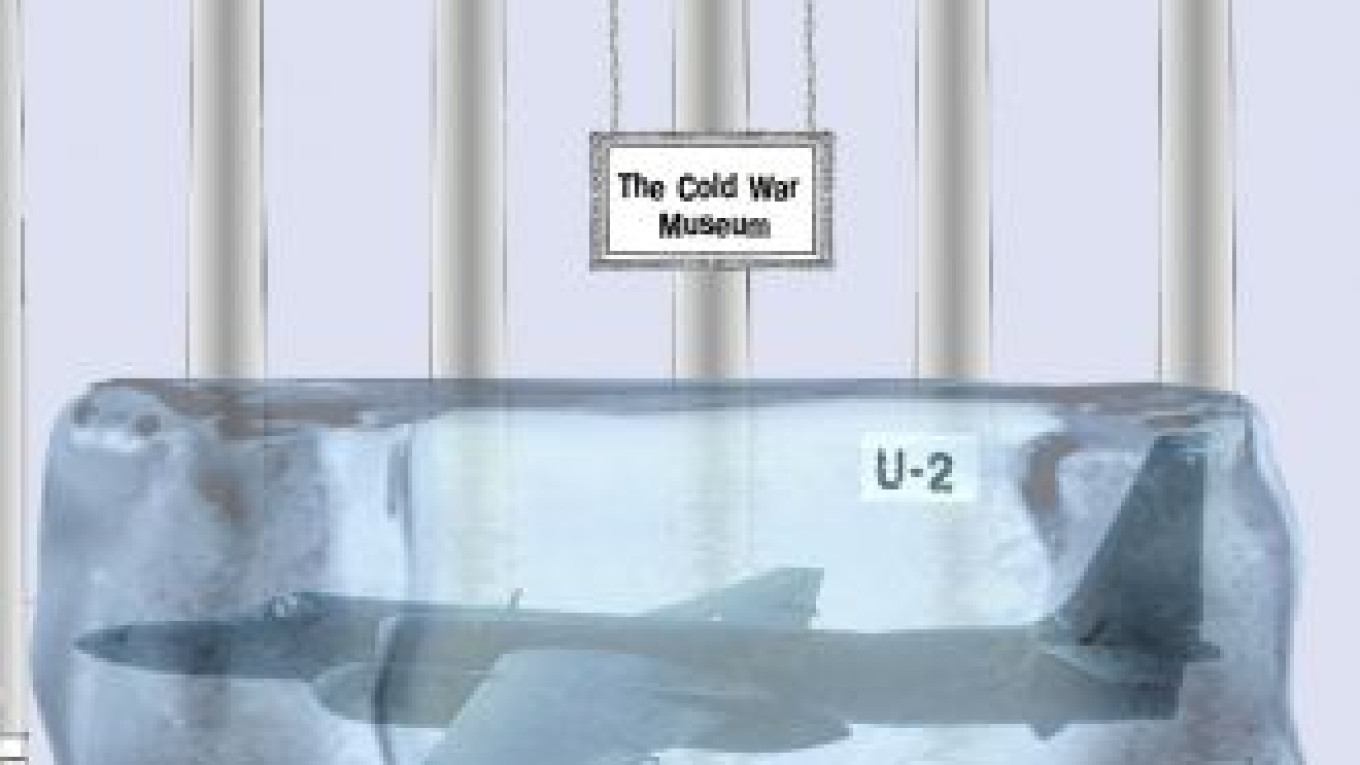
May 1 marked the 50th anniversary of the U-2 incident in which my father, CIA pilot Francis Gary Powers, was shot down by a Soviet SA-2 missile while flying a photographic reconnaissance mission over the Soviet Union. I am honored that over the past 50 years my father’s role in the U-2 incident has been transformed from a possible defector and CIA scapegoat to a nationally recognized U.S. hero. Unfortunately, there are some who still believe in the conspiracy theories and misinformation that were originally circulated in the 1960s. Others, even within the U.S. government, continue to disrespect my father and ignore the truth that has been revealed through declassified documents, declassification conferences and first-hand accounts over the past 50 years either because of ignorance or political correctness.
I first visited Moscow in 1990 right after the fall of the Berlin Wall and before the breakup of the Soviet Union. The trip originated from Los Angeles and included stops in London, Paris and Berlin. During my time in Moscow, I asked my hosts if I could see a few of the sites associated with the U-2 incident. I was shown the exterior of the Hall of Columns and a few other locations, but when I asked to see the wreckage of my father’s plane that I heard was displayed in a Soviet museum, no one knew where the museum was located.
My second trip to Moscow occurred in 1997 when a group of retired KGB, CIA, FBI and Canadian intelligence officers took part in a gathering of former spies. During that trip, I visited various sites in Moscow associated with intelligence activities since the time of Josef Stalin. The tour group saw drop sites, safe houses and other clandestine locations where spies were caught, captured or killed. In addition, I saw the U-2 wreckage at the Central Armed Forces Museum, where it was also displayed in 1990. During this trip, I visited my father’s former cell in the infamous Vladimir Prison for hardened criminals located in Vladimir, 200 kilometers east of Moscow.
During my latest visit last week to commemorate the 50th anniversary of the U-2 incident, I had the privilege of interviewing retired Soviet Rear Admiral Boris Novy, as well as retired KGB agent Oleg Nechiporenko, who questioned Lee Harvey Oswald in Mexico City in September 1964. In addition, I visited the missile factory that designed the SA-2 missile and met with some retirees that were responsible for designing the missile that shot down my father 50 years ago.
But the highlight of my visit was attending the May 9 Victory Day parade on Red Square. What many people fail to realize is that the 65th anniversary of the end of World War II is also the 65th anniversary of the start of the Cold War. In order to better understand the world today, it is essential to understand how the Cold War influenced international relations between 1945 and 1991. This trip was the start of what will be a vibrant conversation and international commitment to building The Cold War Museum, a former U.S. Army communications base near Washington. I founded The Cold War Museum in 1996 to honor Cold War veterans, preserve Cold War history and educate future generations about this important period.
Growing up in the shadow of a famous Cold War figure gave me an interesting insight into the Cold War, my father’s role and the current importance of preserving Cold War history. Later this year, we will release the first of many educational programs in which the audience will be able to listen to never-before-heard audio recordings of my father talking about the U-2 incident.
Both the end of World War II in 1945 and the end of the Cold War in 1991 were our common victory, and our two countries must continue to work together to provide a better future for our children.
Francis Gary Powers, Jr. is the founder of The Cold War Museum in Vint Hill, Virginia, and The Cold War Times. www.coldwar.org
A Message from The Moscow Times:
Dear readers,
We are facing unprecedented challenges. Russia's Prosecutor General's Office has designated The Moscow Times as an "undesirable" organization, criminalizing our work and putting our staff at risk of prosecution. This follows our earlier unjust labeling as a "foreign agent."
These actions are direct attempts to silence independent journalism in Russia. The authorities claim our work "discredits the decisions of the Russian leadership." We see things differently: we strive to provide accurate, unbiased reporting on Russia.
We, the journalists of The Moscow Times, refuse to be silenced. But to continue our work, we need your help.
Your support, no matter how small, makes a world of difference. If you can, please support us monthly starting from just $2. It's quick to set up, and every contribution makes a significant impact.
By supporting The Moscow Times, you're defending open, independent journalism in the face of repression. Thank you for standing with us.

Remind me later.