

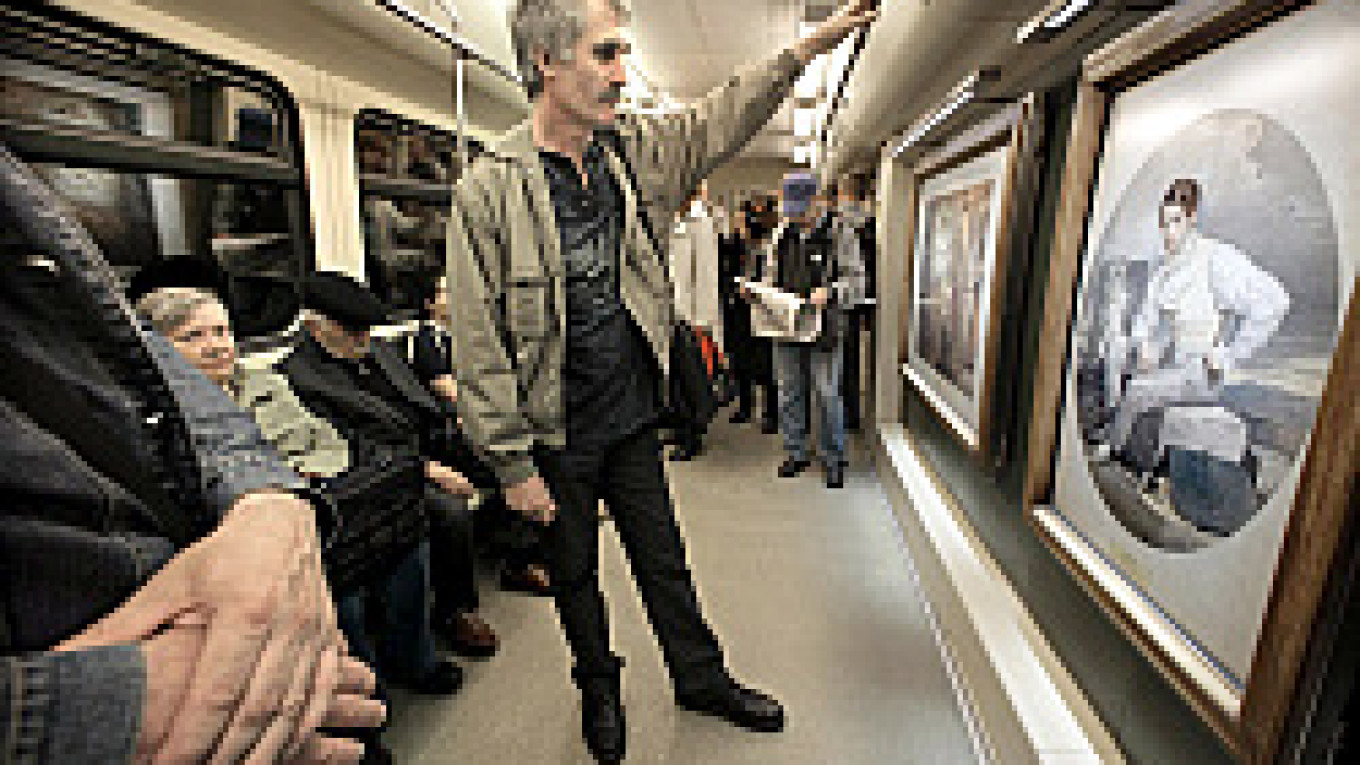
The city's chandelier-adorned metro, ranked one of the world's busiest, said passenger numbers had fallen by 7 percent in the first quarter of 2009 from the same period last year.
The number of people using the Stalin-era system has fallen by an average of about 700,000 a day in April and May, metro chief Dmitry Gayev said.
"This is the steepest decline in passenger numbers ever recorded in the postwar history of the Moscow metro," Gayev, who has run the metro since 1995, told reporters.
Gayev said the fall was steeper than during the 1991 collapse of the Soviet Union or during the 1998 financial crisis, when Russia defaulted on its domestic bonds.
Construction firms in Moscow, many of which borrowed heavily during the boom years, have slashed jobs for manual workers, many of whom commuted to work from the Moscow region and used the metro upon arrival.
"Many people working at Moscow enterprises were coming from the greater Moscow region and other regions, while in the construction industry many workers, especially from the former Soviet Union, have now been made redundant," said Gayev.
Opened in 1935 under Josef Stalin, the metro is a subterranean sanctuary complete with marble floors and mosaics that celebrate the utopias of several generations of Kremlin rulers.
One of the world's deepest, Moscow's metro serves between 9 million and 10 million people a day, putting it on par with Tokyo's underground system.
They are considered the busiest two metro systems in the world, though Gayev said Moscow is still the busiest.
A Message from The Moscow Times:
Dear readers,
We are facing unprecedented challenges. Russia's Prosecutor General's Office has designated The Moscow Times as an "undesirable" organization, criminalizing our work and putting our staff at risk of prosecution. This follows our earlier unjust labeling as a "foreign agent."
These actions are direct attempts to silence independent journalism in Russia. The authorities claim our work "discredits the decisions of the Russian leadership." We see things differently: we strive to provide accurate, unbiased reporting on Russia.
We, the journalists of The Moscow Times, refuse to be silenced. But to continue our work, we need your help.
Your support, no matter how small, makes a world of difference. If you can, please support us monthly starting from just $2. It's quick to set up, and every contribution makes a significant impact.
By supporting The Moscow Times, you're defending open, independent journalism in the face of repression. Thank you for standing with us.

Remind me later.