

Starting this weekend and running through Tuesday, the "Architecture Days" festival gives Muscovites the chance to take in the view and take a tour around some of the most interesting 20th-century constructions as well as the numerous new buildings throughout Moscow.
One of the architects of the Federation Tower, Sergei Tchoban, will show visitors around the recently completed top floors of the tower on Sunday.
"The view of Moscow from there is extraordinary," said Alexander Zmeul, one of the organizers of the festival.
The tours are free to the public, and the aim is to show Muscovites the new buildings in Moskva City and to talk with architects of the construction boom.
"We want people to see the seeds of the new architecture that is being built around the city," said Zmeul an organizer for the event. Previously, Zmeul and Nataliya Alekseyeva worked on smaller architectural excursions called Svoboda Dostupa or Freedom of Access.
"We noticed that at first it was just architects and people from the construction industry. But with each new tour, the percentage of non-architects increased, so we decided to do a bigger event that was targeted at the general public," Zmeul said.
The festival also takes a look at some of the gems of the early and mid-20th century like Le Corbusier's only Moscow building and the red brick Agriculture Ministry on the Garden Ring.
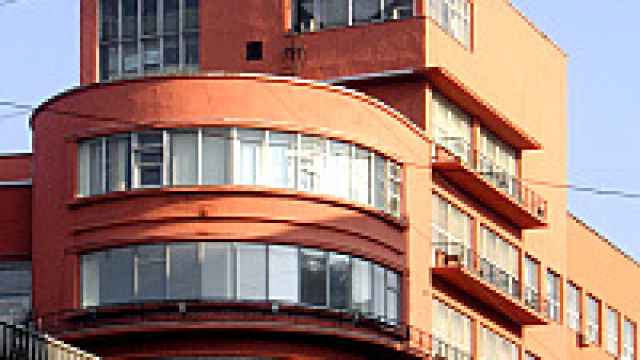 Sovarch.ru The ministry of agriculture. |  |
| |
A tour on Saturday will take visitors by bus to see the works of 21 architects from the 21st century. These include two interesting luxury apartment complexes: Roman House, the first building by classicist Mikhail Filippov, which has a dramatic curved entrance, and Copper House, a green apartment embellished with many narrow openings, designed by Sergei Skuratov.
Last week, Architecture Days held tours that dealt with some of the problems of contemporary architecture such as the destruction of industrial areas. "We are showing three places near Kurskaya, including Winzavod, where there are good examples of industrial conversions. A lot of these areas are being destroyed around Moscow, and we wanted to show people that you can create an exciting space without necessarily demolishing the original building."
Artplay, another example of an industrial conversion, lovingly restored by Sergei Desyatov at Ulitsa Timura Frunze, was recently knocked down. The complex has been rehoused near the Yauza River, and there will be an excursion to the new territory on Monday.
One of most interesting events in Architecture Days is a tour of Soviet architecture on and around Prospekt Akademika Sakharova. "We want to show this street because it contains a good cross section of different types of Soviet architecture in a small area," said Denis Romodin, who will give the tour on Sunday.
The tour, "Novokirovsky Prospekt. A Window onto Soviet Architecture: Utopia and Reality" stems from Romodin's web site Sovarch.ru.
Now called Prospekt Akademika Sakharova, Novokirovsky was built in 1935 to connect the center to Komsomolskaya Ploshchad, a hub for inter-city trains. The excursion is one of the few at Architecture Days in which participants don't have to sign up in advance. Romodin is expecting over 100 people.
Two of the buildings on the tour are some of the best known in the city. The Agriculture Ministry is a bright red Constructivist building with a cylindrical corner tower that sits on the Garden Ring Road. Those driving past will know the structure by the corner clock that tracks the hours drivers spend crawling by in traffic jams. The architect, Alexei Shchusev, created Lenin's Mausoleum and is considered one of the Soviet Union's greatest architects.
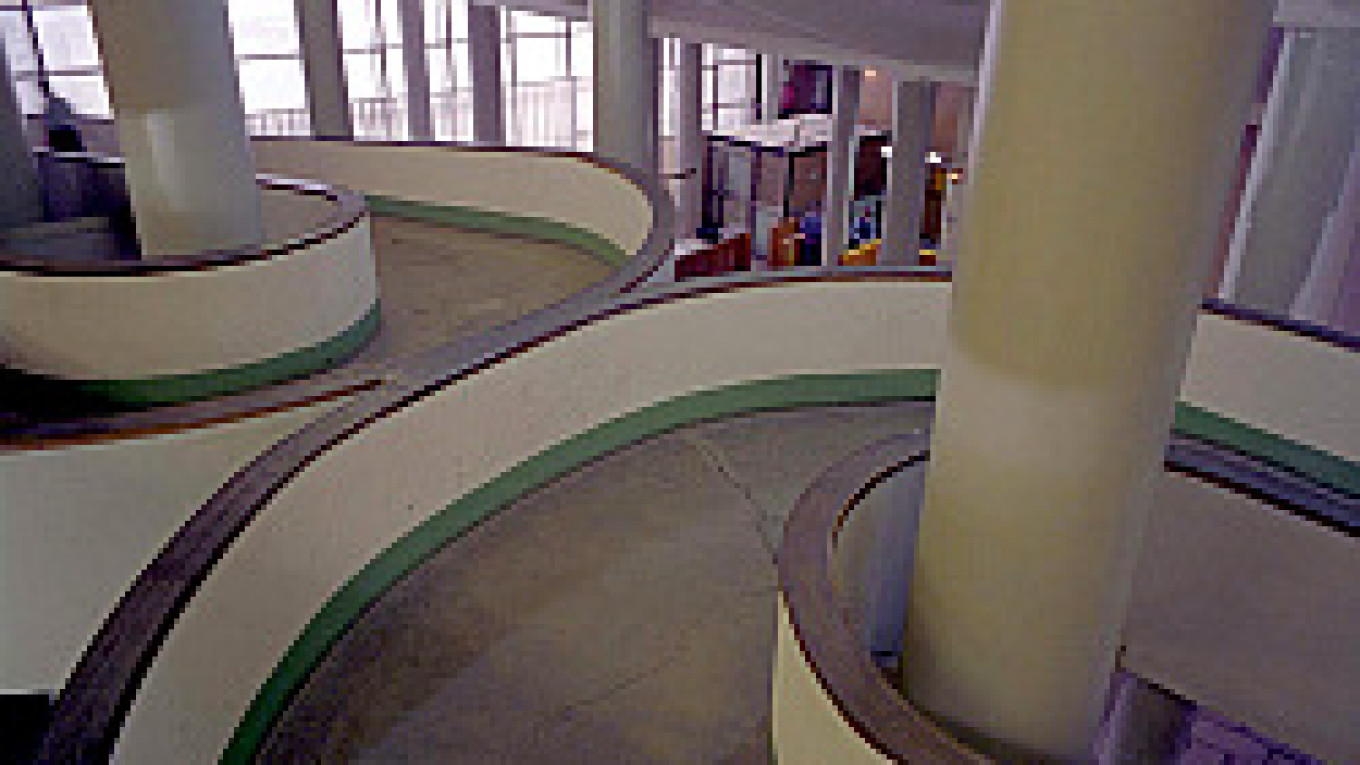
Nearby, the State Statistics Service is a huge brown building on Ulitsa Myasnitskaya. From one side it is an average office building with a bland grid of windows, but its other facades reveal that the structure is slightly unusual: A two-tiered circular shape protrudes onto the street, and a large part of its hulking mass is resting on columns.
Despite its prominence, few know that it's designed by one of the greatest architects of the 20th century, Le Corbusier, who had his eye on Moscow as a backdrop for many of his utopian projects.
Romodin's tour will pass the statistics ministry but will not go inside. International experts say the interior is deteriorating, and architectural historian and Le Corbusier expert Jean-Louis Cohen has complained that experts are still not allowed inside to evaluate its condition.
"Statistics seems to remain as secret in Putin's Russia as they were in Soviet times," he wrote recently in an academic journal.
For more information or to sign up for the architectural tours go to www.archidays.ru.
A Message from The Moscow Times:
Dear readers,
We are facing unprecedented challenges. Russia's Prosecutor General's Office has designated The Moscow Times as an "undesirable" organization, criminalizing our work and putting our staff at risk of prosecution. This follows our earlier unjust labeling as a "foreign agent."
These actions are direct attempts to silence independent journalism in Russia. The authorities claim our work "discredits the decisions of the Russian leadership." We see things differently: we strive to provide accurate, unbiased reporting on Russia.
We, the journalists of The Moscow Times, refuse to be silenced. But to continue our work, we need your help.
Your support, no matter how small, makes a world of difference. If you can, please support us monthly starting from just $2. It's quick to set up, and every contribution makes a significant impact.
By supporting The Moscow Times, you're defending open, independent journalism in the face of repression. Thank you for standing with us.

Remind me later.