
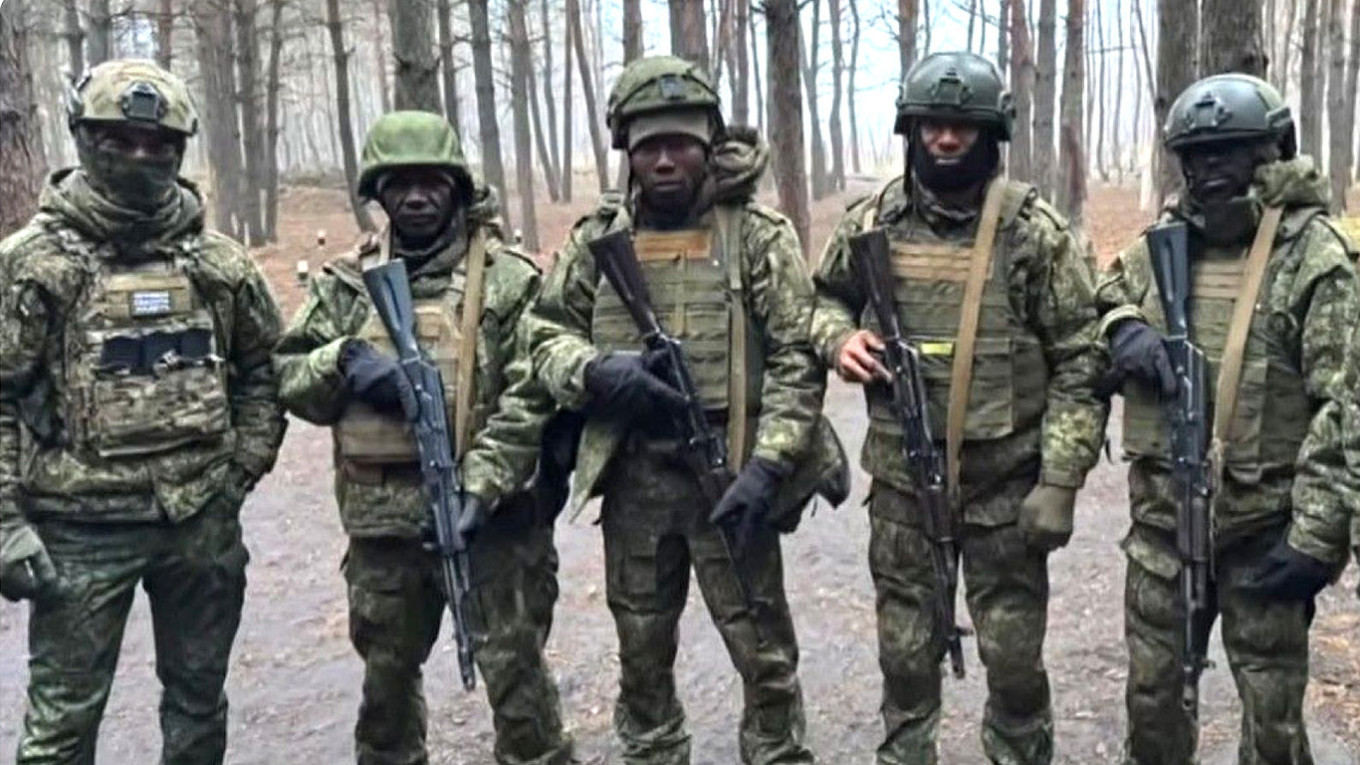
Twenty-seven Ugandans who were enlisted to fight for the Russian military in Ukraine have been killed or are presumed dead, a letter from Uganda's Embassy in Moscow to its foreign ministry showed.
The letter, seen by Reuters on Thursday, listed the names of 11 Ugandans confirmed dead and another 16 whose bodies could not be located.
Uganda's embassy said it had received the information in a letter from the Russian Foreign Ministry. An official at Uganda's foreign ministry confirmed its authenticity.
Russia's Embassy in Kampala did not immediately respond to a request for comment.
Over the past several months, a growing number of reports have revealed that African men are being lured to Russia with promises of employment, only to end up on the front lines in Ukraine.
Those reports have sparked outrage from officials in countries like Kenya, Ghana and South Africa.
Ukraine said last year that more than 1,400 people from three dozen African countries were fighting alongside Russian forces on its territory, with some recruited through deceptive methods.
Russian authorities have denied illegally recruiting African citizens to fight in Ukraine.
A Message from The Moscow Times:
Dear readers,
We are facing unprecedented challenges. Russia's Prosecutor General's Office has designated The Moscow Times as an "undesirable" organization, criminalizing our work and putting our staff at risk of prosecution. This follows our earlier unjust labeling as a "foreign agent."
These actions are direct attempts to silence independent journalism in Russia. The authorities claim our work "discredits the decisions of the Russian leadership." We see things differently: we strive to provide accurate, unbiased reporting on Russia.
We, the journalists of The Moscow Times, refuse to be silenced. But to continue our work, we need your help.
Your support, no matter how small, makes a world of difference. If you can, please support us monthly starting from just $2. It's quick to set up, and every contribution makes a significant impact.
By supporting The Moscow Times, you're defending open, independent journalism in the face of repression. Thank you for standing with us.

Remind me later.