

A wave of attacks against the Russian internet giant Yandex has sent shockwaves across the country in recent days and caused major disruptions to daily life.
Yandex, often referred to as the “Russia’s Google,” provides a range of digital services used by millions of Russians every day. Russian-language media reported widespread outages across the company’s products over the weekend, with people unable to access certain websites and applications.
The attacks, which Kyiv says are a retaliation for Russia’s strikes against similar targets, represent a new phase in Ukraine’s air campaign against Russia. Ukraine has increasingly sought to undermine Russia’s economy by striking infrastructure vital to some of its largest businesses in recent months, but this is the first time that targeting their data centers has become part of that strategy.
What happened?
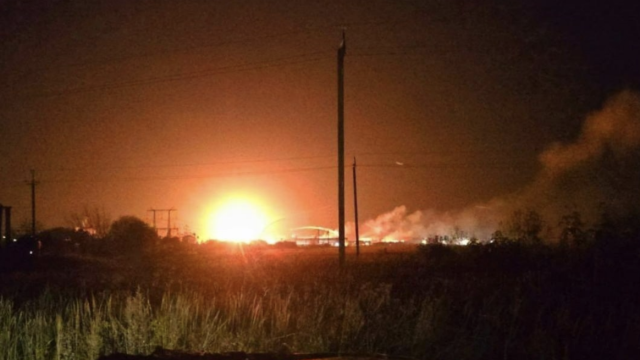
On Oct. 9, Yandex, Russia’s largest technology company, announced that two of its data centers had been struck by drones, one in the city of Sasovo southeast of Moscow and the other in the Kaluga region southwest of the capital. A third facility in the suburbs of Vladimir east of Moscow would be hit before the weekend was through.
Serious damage was reported at all three locations. In a statement posted on Friday, Yandex said that operations at its Sasovo facility were “completely halted” while part of the infrastructure in Kaluga was “disabled.” The Vladimir facility, meanwhile, was taken completely offline on Sunday, according to the company.
“Yandex teams are working around the clock to ensure our services remain operational and to help those affected by the incident,” the company said after the two initial strikes. “This is our top priority right now, but unfortunately, it’s not easy.”

The effects of the attacks were not limited to the data centers they targeted. Nine people were injured in the Kaluga region, while about 1,600 customers were left without electricity in the Vladimir region, the heads of each region said. Neither explicitly mentioned the Yandex facilities.
Ukrainian President Volodymyr Zelensky said on Oct. 8 that the attacks were retaliation for Russia’s own strikes against its data centers. Indeed, last month, Moscow struck such facilities in the Kyiv region, causing temporary internet outages for roughly 100,000 households.
Moscow claimed that the data centers it struck were used by Ukrainian military intelligence bodies.
What is Yandex?
To understand the impact these attacks are having on regular Russians’ lives, consider what would happen if Google suddenly went offline.
Gone would be access to the company’s flagship internet browser, but also to its many other essential services: maps, payment, email and its virtual workspace, to name a few.
Like Google, Yandex is a company whose tendrils have stretched to nearly every corner of the Russian technology market since its founding in the 1990s. However, in Russia, its monopoly over digital services is arguably even larger.
While apps like Yandex Maps and Yandex Pay might be expected offerings of Russia’s largest technology company for people in the West, something like the widely used taxi and food delivery app Yandex Go rolls the function of Uber and DoorDash into one. In Russia, they’re all managed by the same company.
What’s more, Yandex offers a cloud computing service that provides digital infrastructure for some of Russia’s largest companies. According to the Yandex Cloud website, the platform has more than 64,000 customers.

How disruptive are the attacks?
As with any other major player in the technology industry, data centers form the backbone of all of these operations.
Understandably, after some of them were hit, people quickly began flagging issues. Russian-language media reported over the weekend that many Yandex apps had gone down temporarily but had been restored. Others were still experiencing interruptions or complete outages on Monday.
Yandex itself urged some users to switch to alternative platforms during the outwages. Taxi drivers told the exiled outlet Vyorstka that they received a notification from Yandex advising them to switch to Google Maps or Waze while the company was fixing its servers.
Separately, the websites of other companies that use Yandex’s cloud services were reportedly impacted, including grocery giant Magnit, fast-food chain Vkusno i Tochka and household appliance retailer M.Video, the Kommersant newspaper reported, citing publicly available outage data.
Yandex’s operations outside of Russia also appear to have been affected. According to The Times of Central Asia, users in Kazakhstan, Kyrgyzstan and Uzbekistan have reported difficulties accessing the company’s apps. Similar outages were noted in the Armenian capital Yerevan, forcing users to book their taxis with a local competitor, which was in turn strained by the surge in traffic.
Particularly disruptive for Russians was the attacks’ effect on digital financial services. Yandex is so integrated into everyday payments that when its digital wallet application, Yandex Pay, went down, it warranted its own explanation from company leadership.
“All your money is safe,” Dima Pirogov, CEO of Yandex’s FinTech Division, said in a statement posted to the company’s social media platforms on Sunday. “The money itself isn’t stored in the data center. That’s where the servers that power our services are located.”
“We can’t yet give you a precise timeline for restoration,” Pirogov added, “but we promise: we won’t stop until the service is restored.”

How are officials reacting?
President Vladimir Putin has so far not commented on the attacks. That’s not unusual — Putin is rarely the first one to telegraph the Kremlin’s reaction to such developments.
Some hints have emerged, however, that the Kremlin is taking the situation seriously.
On Monday, Digital Development Minister Maksut Shadayev told a State Duma committee that his office was working with the Defense Ministry on measures to protect data centers, a sign that officials are worried about the effect of further attacks.
“The scale of the attacks — which we were all monitoring in real time — was unprecedented,” Shadayev said, adding that “the entire industry is now helping to resolve” the chaos they caused.
As two major questions vex Yandex — how to restore service completely and how to repair damaged infrastructure — the company could be grappling with the fallout from the attacks for a while.
According to a source who spoke to Kommersant, delivering replacement equipment to the damaged facilities could take as long as six months.
A Message from The Moscow Times:
Dear readers,
We are facing unprecedented challenges. Russia's Prosecutor General's Office has designated The Moscow Times as an "undesirable" organization, criminalizing our work and putting our staff at risk of prosecution. This follows our earlier unjust labeling as a "foreign agent."
These actions are direct attempts to silence independent journalism in Russia. The authorities claim our work "discredits the decisions of the Russian leadership." We see things differently: we strive to provide accurate, unbiased reporting on Russia.
We, the journalists of The Moscow Times, refuse to be silenced. But to continue our work, we need your help.
Your support, no matter how small, makes a world of difference. If you can, please support us monthly starting from just $2. It's quick to set up, and every contribution makes a significant impact.
By supporting The Moscow Times, you're defending open, independent journalism in the face of repression. Thank you for standing with us.

Remind me later.