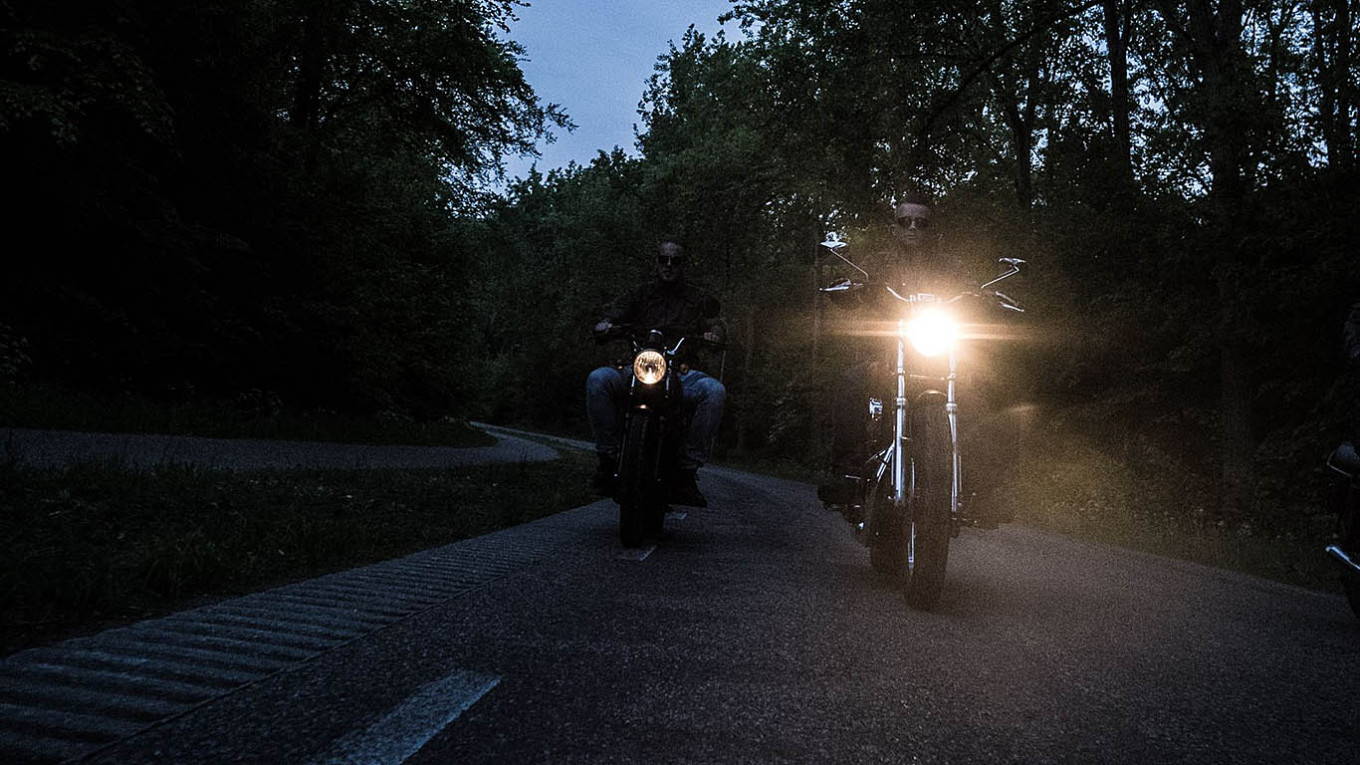
Kremlin-backed authorities in annexed Crimea said they will impose a nighttime curfew on motorcycles and other motorized bikes starting Wednesday in an effort to prevent loud engine noise from interfering with air defense forces tracking incoming Ukrainian drones.
Sergei Aksyonov, the Russian-appointed governor of Crimea, announced the curfew on Tuesday, a day after his adviser criticized loud motorbikes for allegedly disrupting the work of mobile air defense firing groups during air raid alerts.
State media reports claimed that bikers in the peninsula were purposely driving on the road during Ukrainian drone attacks “at the request of certain individuals on messaging apps for small financial rewards.”
Aksyonov said the movement of motorcycles, mopeds, scooters, ATVs and similar modes of transportation will be strictly banned between 8:00 p.m. and 6:00 a.m. from June 17 until further notice.
“The main goal of these measures is to ensure public safety and to protect military personnel, government installations and specialized facilities,” Aksyonov wrote in a post on Telegram.
The motorcycle ban follows other transportation restrictions in Crimea. Last week, authorities suspended rail service between 11:00 p.m. and 5:00 a.m. across the peninsula after a deadly Ukrainian drone attack on a passenger train locomotive.
Ukraine’s military also claimed that Russia banned all military cargo traffic along the Novorossiya highway, a vital transit link stretching from Rostov-on-Don in southern Russia through occupied Ukrainian territories into Simferopol.
For weeks, Ukraine has ratcheted up its targeted drone campaign against the military trucks and fuel tankers that supply Crimea from the north, triggering a local gasoline shortage.
While the peninsula is linked directly to mainland Russia via the Kerch Bridge in the east, Ukrainian attacks in recent years have prompted Moscow to restrict its use for hazardous cargo like fuel. Instead, supply lines have relied on northern land corridors.
Ukraine’s military claims that average daily traffic along the Novorossiya highway plummeted by over 40% between early May and early June.
A Message from The Moscow Times:
Dear readers,
We are facing unprecedented challenges. Russia's Prosecutor General's Office has designated The Moscow Times as an "undesirable" organization, criminalizing our work and putting our staff at risk of prosecution. This follows our earlier unjust labeling as a "foreign agent."
These actions are direct attempts to silence independent journalism in Russia. The authorities claim our work "discredits the decisions of the Russian leadership." We see things differently: we strive to provide accurate, unbiased reporting on Russia.
We, the journalists of The Moscow Times, refuse to be silenced. But to continue our work, we need your help.
Your support, no matter how small, makes a world of difference. If you can, please support us monthly starting from just $2. It's quick to set up, and every contribution makes a significant impact.
By supporting The Moscow Times, you're defending open, independent journalism in the face of repression. Thank you for standing with us.

Remind me later.