Install

Get the latest updates as we post them — right on your browser

Today's paper. Last Updated: 05/28/2012

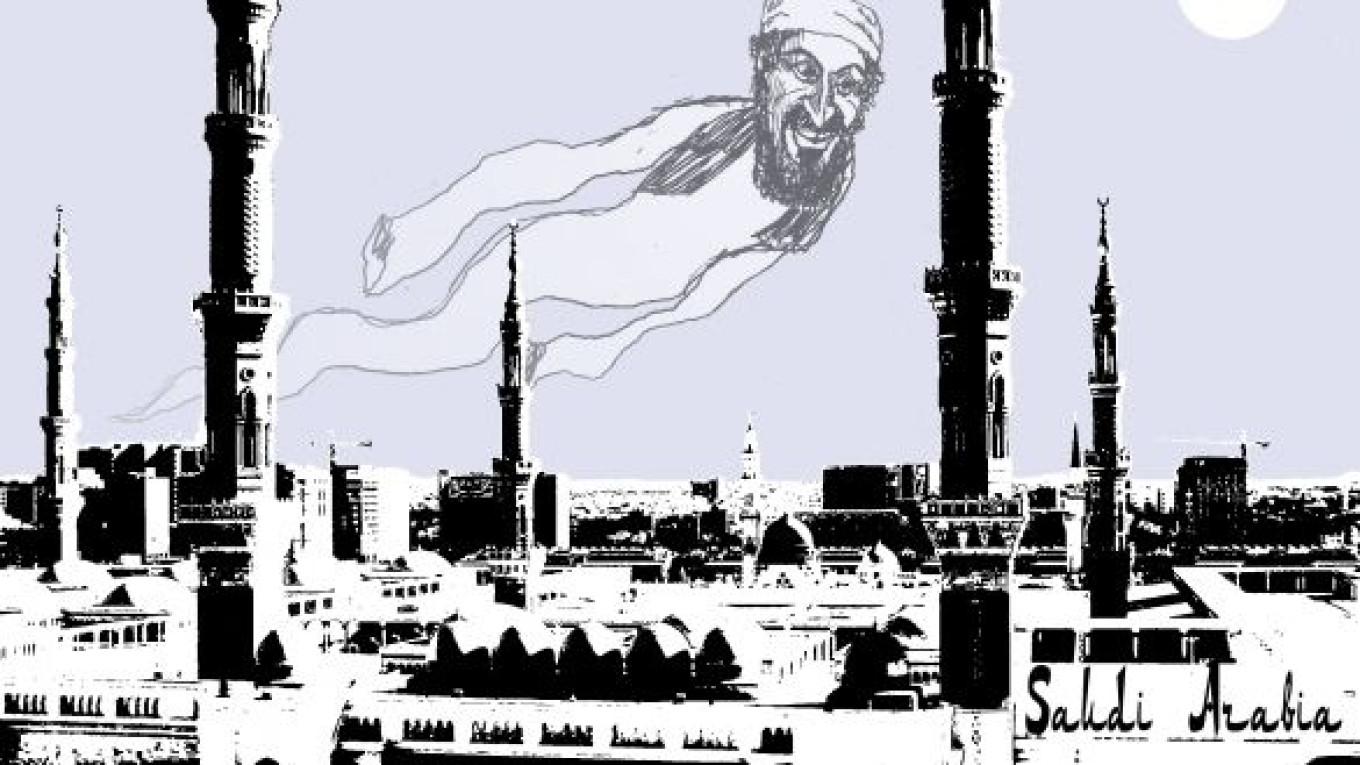
Bin Laden's Ghost

Osama bin Laden’s death in his Pakistani hiding place is like the removal of a tumor from the Muslim world. But aggressive follow-up therapy will be required to prevent the remaining al-Qaida cells from metastasizing by acquiring more adherents who believe in violence to achieve the “purification” and empowerment of Islam.

Fortunately, bin Laden’s death comes at the very moment when much of the Islamic world is being convulsed by the treatment that bin Laden’s brand of fanaticism requires: the Arab Spring, with its demands for democratic empowerment (and the absence of demands, at least so far, for the type of Islamist rule that al-Qaida sought to impose).

But can the nascent democracies being built in Egypt and Tunisia — and sought in Bahrain, Libya, Syria, Yemen and elsewhere — see off the threats posed by Islamist extremists? In particular, can it defeat the Salafi and Wahhabi thought that has long nurtured bin Laden and his ilk and which remains the professed and protected ideology of Saudi Arabia?

The fact is that before the U.S. operation to kill bin Laden, the emerging democratic Arab revolutions had already done as much in just a few short months to marginalize and weaken his terrorist movement in the Islamic world as the war on terror had achieved in a decade. Those revolutions, whatever their ultimate outcome, have exposed the philosophy and behavior of bin Laden and his followers as not only illegitimate and inhumane, but actually inept at achieving better conditions for ordinary Muslims.

What millions of Arabs were saying as they stood united in peaceful protest was that their way of achieving Arab and Islamic dignity is far less costly in human terms. More important, their way will ultimately achieve the type of dignity that people really want, as opposed to the unending wars of terror to rebuild the caliphate that bin Laden promised.

After all, the protesters of the Arab Spring did not need to use — and abuse — Islam to achieve their ends. They did not wait for God to change their condition, but took the initiative by peacefully confronting their oppressors. The Arab revolutions mark the emergence of a pluralist, post-Islamist banner for the faithful. Indeed, the only people to introduce religion into the protests have been rulers — such as those in Bahrain, Yemen, Libya and Syria — who have tried to use fear of the Shia or Sunni “other” to continue to divide and misrule their societies.

Now that the United States has eradicated bin Laden’s physical presence, it needs to stop delaying the rest of the therapeutic process. Washington has been only selectively — and shortsightedly — irradiating parts of the cancer that al-Qaida represents, while leaving the malignant growth of Saudi Wahhabism and Salafism untouched. Indeed, despite the decade of the West’s war on terror and Saudi Arabia’s longer-term alliance with the United States, the country’s Wahhabi religious establishment has continued to bankroll Islamist extremist ideologies around the world.

Bin Laden — who was born, raised and educated in Saudi Arabia — is a product of this pervasive ideology. He was no religious innovator. He was a product of Wahhabism and later was exported by the Wahhabi regime as a jihadist.

During the 1980s, Saudi Arabia spent $75 billion for the propagation of Wahhabism, funding schools, mosques and charities throughout the Islamic world. The Saudis continued such programs after the terror attacks of Sept. 11, 2001. Not surprisingly, the creation of a transnational Islamist political movement, boosted by thousands of underground jihadi web sites, has blown back into Saudi Arabia.

Like the hijackers of 9/11, who were also Saudi Wahhabi ideological exports (15 of the 19 men who carried out those terror attacks were chosen by bin Laden because they shared the same Saudi descent and education), Saudi Arabia’s reserve army of potential terrorists remains because the Wahhabi factory of fanatical ideas remains intact.

So the real battle has not been with bin Laden, but with that Saudi state-supported ideology factory. Bin Laden merely reflected the entrenched violence of Saudi Arabia’s official ideology.

Bin Laden’s eradication may strip some dictators — both within the Arab world and beyond — of the main justification they have used for their decades of repression. But the United States knows perfectly well that al-Qaida is an enemy of convenience for Yemen and other U.S. allies in the region. In many cases, terrorism has been used as a pretext to repress reform. Indeed, now Washington is encouraging repression of the Arab Spring in Yemen and Bahrain, where official security forces routinely kill peaceful protesters calling for democracy and human rights.

Al-Qaida and democracy cannot coexist. Indeed, bin Laden’s death should open the international community’s eyes to the source of his movement: repressive Arab regimes and their extremist ideologies. Otherwise, his example will continue to haunt the world.

Mai Yamani’s most recent book is “Cradle of Islam.” © Project Syndicate


This article has 3 comments on TheMoscowTimes.com and 0 comments on Facebook.

Leave a comment


Discussion
The Moscow Times welcomes your comments and invites you to discuss topics with other readers. Your comment will be posted automatically to enable a live discussion. If you aren't familiar with our comments policy, you can read it here.

If you're a registered user, you can start typing your comment below. If not, take a moment to sign up. and then return to the article.

If your comment doesn't appear, contact us by using our web form.

Comments


Bin Laden's Ghost

Good and timely argument with two reservations. We shouldn't be too hasty to make any assumptions about democracy in Arabia, a region that hasn't seen fair representation since the Roman republic. And the central question is not whether al-Qaida and democracy could co-exist; the question is whether Islam and democracy are compatible. Revolution and reform are not the same things.

Bin Laden's Ghost

After 1.3 trillion dollars expenditures, killing of thousands of people in Iraq, Afghanistan and Pakistan and near a decade search US finally got its target in Abbotabad Pakistan. After killing of Bin Laden popularity of US president increased dramatically in United States. US president personally monitored abbotabad operation with his senior advisers including secretary of state Hillary Clinton . After successful operation Obama said that now after death of Bin Laden world is more safe place than before. Despite claim of  US president ground realties are very different. US authorities made same claims after death of Saddam Hussein in Iraq and death of Baitullah Mehsood in Pakistan but condition are still going bad to worst in these countries and instead of peace and economic stability deaths, destructions and worst economic conditions have become routine in these countries. Now true reality is that Abbotabad operation and killing of Bin Laden can boost falling graph of US President Obama after worst economic conditions, unemployment in USA and huge war expenditures in US occupied countries but can't change ground realties in present world specially in US occupied countries. US illegal operations on Pakistani soil and announcement of sea burial of Bin Laden add further fuel on  anger of  the Muslim world. Al Azhar Egypt openly criticized US decision as inhuman. Sentiments' are already high in Muslim world after killing of  Kaddafi son in Libya by NATO bombing. Several western embassies and UNO office already attacked. After death of Bin Laden war of words are going on between US and Pakistani authorities. Recently US accused Pakistani ISI of secret contacts with Haqqani net work. Now most of Pakistani rightly believe that death of Bin Laden near capital Islamabad is big conspiracy against their country some sources are trying hard to wide their war agenda from Afghanistan to Pakistan and recent Abbatabad operation can provide them wrong justification to pursue their war agenda against Pakistan. KHAWAJA UMER FAROOQ R-836 BLOCK 19 AL NOOR SOCIETY F.B AREA KARACHI PAKISTAN ID 2180250637 Phone : 6502001

Bin Laden's Ghost

After 1.3 trillion dollars expenditures, killing of thousands of people in Iraq, Afghanistan and Pakistan and near a decade search US finally got its target in Abbotabad Pakistan. After killing of Bin Laden popularity of US president increased dramatically in United States. US president personally monitored abbotabad operation with his senior advisers including secretary of state Hillary Clinton . After successful operation Obama said that now after death of Bin Laden world is more safe place than before. Despite claim of  US president ground realties are very different. US authorities made same claims after death of Saddam Hussein in Iraq and death of Baitullah Mehsood in Pakistan but condition are still going bad to worst in these countries and instead of peace and economic stability deaths, destructions and worst economic conditions have become routine in these countries. Now true reality is that Abbotabad operation and killing of Bin Laden can boost falling graph of US President Obama after worst economic conditions, unemployment in USA and huge war expenditures in US occupied countries but can't change ground realties in present world specially in US occupied countries. US illegal operations on Pakistani soil and announcement of sea burial of Bin Laden add further fuel on  anger of  the Muslim world. Al Azhar Egypt openly criticized US decision as inhuman. Sentiments' are already high in Muslim world after killing of  Kaddafi son in Libya by NATO bombing. Several western embassies and UNO office already attacked. After death of Bin Laden war of words are going on between US and Pakistani authorities. Recently US accused Pakistani ISI of secret contacts with Haqqani net work. Now most of Pakistani rightly believe that death of Bin Laden near capital Islamabad is big conspiracy against their country some sources are trying hard to wide their war agenda from Afghanistan to Pakistan and recent Abbatabad operation can provide them wrong justification to pursue their war agenda against Pakistan. KHAWAJA UMER FAROOQ R-836 BLOCK 19 AL NOOR SOCIETY F.B AREA KARACHI PAKISTAN ID 2180250637 Phone : 6502001

Report Inappropriate Comment


Comments via Facebook


Also in Opinion

There's Just One Nationality — Mathematician

Nationalism is an infantile disease. It is the measles of mankind."

Russia's New Propaganda Minister

After Monday's announcement that historian Vladimir Medinsky was appointed the culture minister, critics quickly labeled him the new propaganda minister. Medinsky's academic ethics and historical distortions may raise serious questions, but for the Kremlin, he has three important attributes that are much more important: He is a model United Russia leader, a firm Putin loyalist and a skilled sophist.

Spinning Medvedev's Government

Were this 2008 and not 2012 — and had Dmitry Medvedev been named prime minister without having first served a full term as president — then the composition of his new government might have created a generally positive impression.

New Government Faces Old Problems

A longstanding platitude shared by both the Kremlin as well as domestic and foreign analysts is the need for Russia to diversify its economy away from energy dependence and reduce its non-oil budget deficit.

Putin's Postman Delivers Nothing at the G8

In the mid-1990s, former President Boris Yeltsin fought hard for the right to sit as equal at the same table with the leaders of the world's seven leading democracies. Using a lot of political wrangling, Moscow finally secured permanent membership in this elite club where the real heavyweights are supposed to solve the world's most pressing problems.

Russia Stays Home

Just three days before his return to the Kremlin as president, Vladimir Putin met behind closed doors at his residence in Novo-Ogaryovo, outside Moscow, with U.S. National Security Adviser Tom Donilon, who was there to transmit President Barack Obama's renewed determination to strengthen cooperation with Russia.


print


Comments

This article has 3 comments on TheMoscowTimes.com and 0 comments on Facebook.

Leave a comment


To Our Readers

The Moscow Times welcomes letters to the editor. Letters for publication should be signed and bear the signatory's address and telephone number.

Letters to the editor should be sent by fax to (7-495) 232-6529, by e-mail to oped@imedia.ru, or by post. The Moscow Times reserves the right to edit letters.


Most Read
MarketGid
