

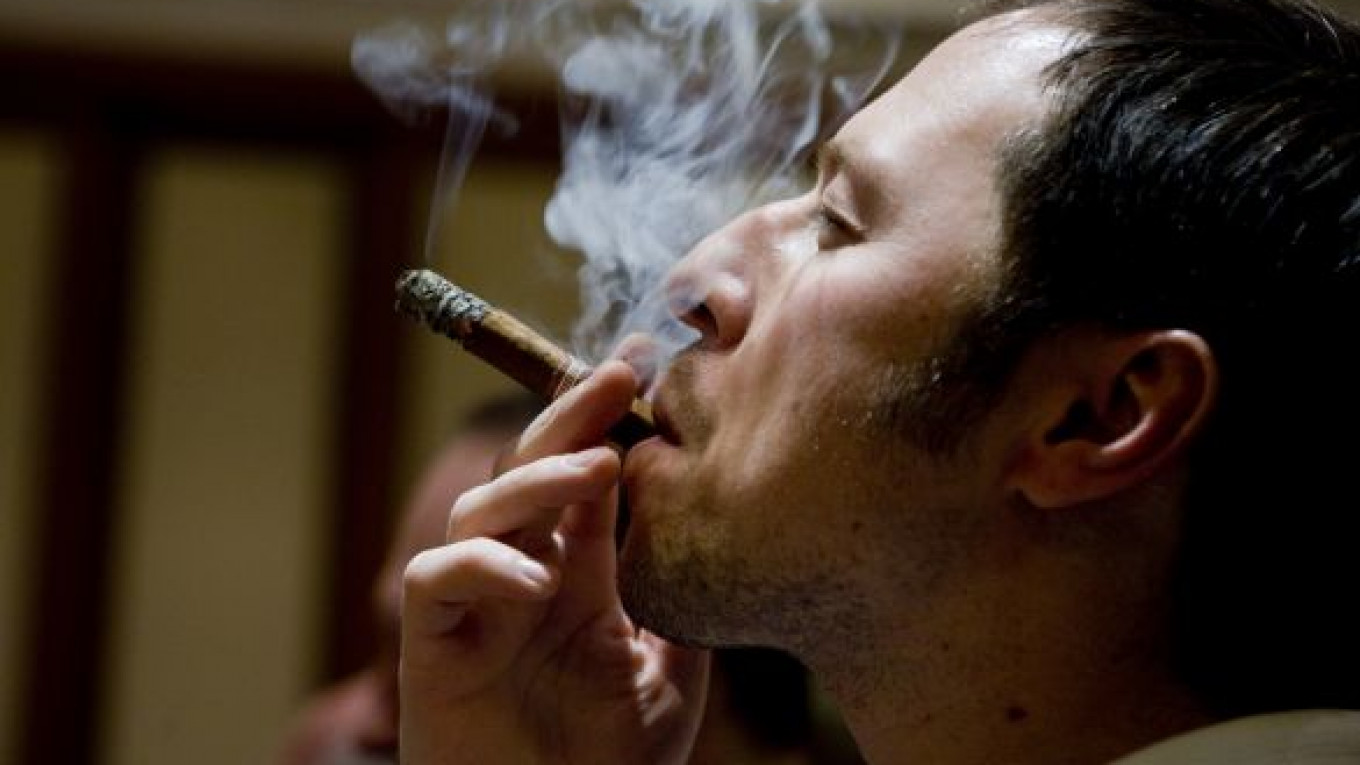
Imports of handmade cigars should return to pre-crisis levels in 2012 after falling by nearly half last year, Russia's exclusive importer of Cuban cigars said Thursday.
The country imported 2.2 million handmade cigars in 2008, but supply plummeted 45 percent to 1.2 million last year, according to data from Top Cigars, the Moscow-based company owned by Cuban cigar export monopoly Habanos.
"We've maintained our regular customer base of genuine smokers," said Alexander, a salesman at the Tobacco Gallery shop on Tverskaya Ulitsa. "But the crisis definitely reduced the number of customers buying cigars as gifts. I guess they just switched back to chocolates."
Luxury cigars remain popular among wealthy Russians looking for flavor and exotic ways to spend their cash. Once featured in Soviet propaganda as the hallmark of the evil Western capitalist, the stogie is staging a comeback.
"For some of our smokers, image is even more important than flavor," said Oleg Chechilov, editor of the magazine Smoke, which has 30,000 readers across the country. He estimates that Russia has 600,000 cigar smokers.
"The typical Russian cigar fan is a male between 30 and 65, smokes once a day, and has a humidor at home," Tamara Teixo-Balinas, the director of Top Cigars, said at a conference her company was hosting, which included lectures and a competition to pair cigars with expensive alcohol.
Habanos now has more than 70 percent of the Russian market for handmade cigars, slightly above its worldwide average, said Gonzalo Fernandez, the company's deputy marketing director.
He attributed the cigars' popularity to Russia and Cuba's "special historical relationship." In Soviet times, cigar imports peaked at 13 million per year, though those were mostly machine-made, Fernandez said.
Russia is the second-fastest-growing market for Habanos after China, he said. Cuba has a warehouse with tobacco in reserve and land to grow more if demand continues to rise or the lucrative U.S. market ends its embargo.
The company has built up a network of 260 retailers throughout the country, with stores concentrated in Moscow and St. Petersburg.
Fernandez said anti-smoking trends and hectic lifestyles had not really affected overall sales, although preference for specific types of cigars has been fluid.
Some smokers are choosing shorter and fatter cigars to get the same enjoyment in less time. Those who are smoking less because of the dwindling number of places they are allowed to smoke in are focusing on larger and more flavorful models, he said.
Prices for handmade cigars keep them out of reach for many Russians, at least on a regular basis. The average Cuban Robusto can cost 240 rubles ($8), while the newly introduced Cohiba Behike costs 2,100 rubles ($70) each.
Cigars have a storied history in Russia, where Catherine the Great is credited with inventing the cigar band to protect her fingers from nicotine stains. Vladimir Lenin is also said to have bought cigars on credit at Davidoff's store in Geneva before returning home to start the Revolution.
The country's lone domestic manufacturer — the Pogar Tobacco Factory in Bryansk — produced 1.5 million cigars last year, most of which were also sold in Russia, chief executive Igor Moiseyev said Thursday by phone.
"The crisis actually helped sales, since people began to look for ways to save money," he told The Moscow Times.
The company's cigars, which retail for 100 rubles to 120 rubles each, also benefited from an issue with excise stamps earlier this year that restricted the flow of imported cigars to the Russian market, he said.
A Message from The Moscow Times:
Dear readers,
We are facing unprecedented challenges. Russia's Prosecutor General's Office has designated The Moscow Times as an "undesirable" organization, criminalizing our work and putting our staff at risk of prosecution. This follows our earlier unjust labeling as a "foreign agent."
These actions are direct attempts to silence independent journalism in Russia. The authorities claim our work "discredits the decisions of the Russian leadership." We see things differently: we strive to provide accurate, unbiased reporting on Russia.
We, the journalists of The Moscow Times, refuse to be silenced. But to continue our work, we need your help.
Your support, no matter how small, makes a world of difference. If you can, please support us monthly starting from just $2. It's quick to set up, and every contribution makes a significant impact.
By supporting The Moscow Times, you're defending open, independent journalism in the face of repression. Thank you for standing with us.

Remind me later.