

Editor's note: This is the second in a series.
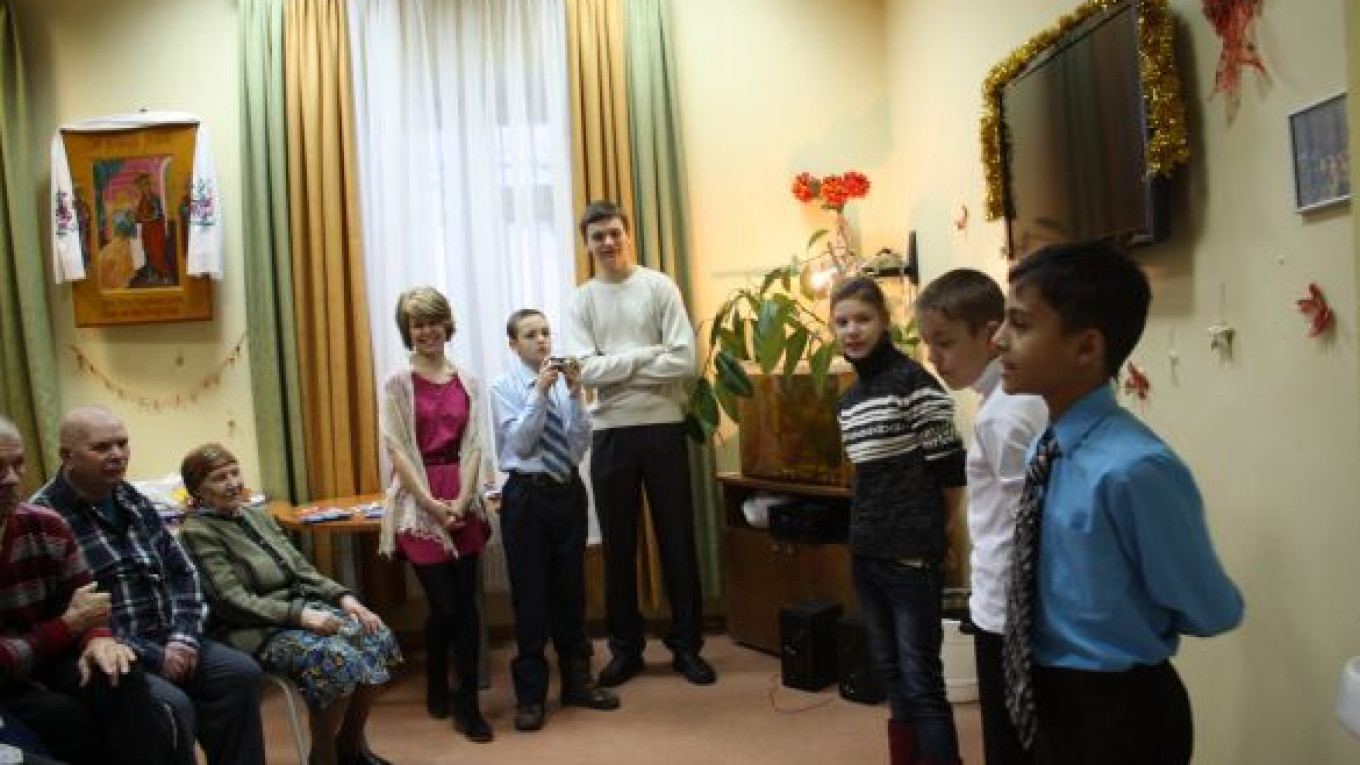
On a windy December afternoon, a group of children living at Boarding School No. 8 gathered in the arts and crafts room to greet four young visitors, Russian alumni of a U.S. government program.
The alumni, from a program called FLEX or "Future Leaders Exchange," had come to provide much-needed interaction with the school residents, all orphans with varying mental disabilities, and to help the children decorate small, plywood picture frames about the size of a small paperback, which would then be given to residents at a state-run elderly home.
"It's extremely important for them to socialize with people from outside the school," said Yelena Sorokina, 40, the school's vice principal.
The school regularly welcomes visitors to work with the children, she said, only some of whom attend regular primary school. The other children spend almost all of their time at the orphanage, where they learn technical skills that can later be turned into careers.
The visit is one of more than 500 volunteer events that the alumni have undertaken this year, said Mary Shea, Eurasia FLEX's alumni manager. American-style volunteerism is relatively rare in Russia, which is something the alumni at the home want to change.
The children sat anxiously before the four strangers as they were shown photographs of the elderly they would meet and listened to stories of their lives.
Then the supplies were distributed, and a frenzy of gluing, glittering and painting began.
"It was difficult to get their attention and quiet them down at first," Nigora Kutbiddinova, 18, an alumna who went on the program from Tajikistan and is now studying in Moscow. "It turns out they just needed more personal attention. The frames turned out beautifully. I was really impressed."
The idea for the project came from an organization called Kraski Detstva, kraskidetsva.ru, with the visit to the home for the elderly organized with the help of the Sofia Fund, sofiafond.ru. The idea is to give the orphans the opportunity to be charitable, rather than be the objects of charity.
"This orphanage project was important to the FLEX alumni community because it allowed us to bring together two socially insecure groups: orphans and elders," said Yevgeny Dzinter, Moscow alumni coordinator.
FLEX is administered by the American Councils for International Education, a Washington-based nongovernmental organization, and funded by the U.S. Department of State. Since 1993, the program has sent 7,308 high school students from Russia, plus many more from other countries in the former Soviet Union, to the United States for a year of study and cultural immersion.
The students are sent to rural towns in the South and Midwest, places most Americans have probably never heard of, let alone visited, where they spend the year living with an American host family and going to an American high school.
When they get back home, an active alumni program maintains networks in 40 Russian cities and tries to help alumni be agents of positive change in their home communities.
Three days after the arts and crafts session, the same children who had greeted the alumni timidly the first time around rushed into their arms, as if greeting a big brother or sister. They exchanged candy and gum and played pop music on their cell phones, and danced and snapped photographs before heading to the home for the elderly just outside Moscow where the frames would be handed over and the children would sing for the residents.
At the home, one elderly man inched his slow way forward and the children rushed to clear a path for him through the chairs.
When they were all seated, Maxim from the boarding school stepped forward and began in a meek voice that grew as he went along to sing "How the Soldier Served," an achy ballad about a soldier who returns home after 25 years of military service and mistakes his daughter for his deceased wife. Then four others sang "Rus," a traditional Russian song.
The elders clapped enthusiastically after each number, whispering "good job" and "good boy!"
One of the girls, who did not sing, leaned her head against alumna Katya Vedernikova's shoulder and listened.
A Message from The Moscow Times:
Dear readers,
We are facing unprecedented challenges. Russia's Prosecutor General's Office has designated The Moscow Times as an "undesirable" organization, criminalizing our work and putting our staff at risk of prosecution. This follows our earlier unjust labeling as a "foreign agent."
These actions are direct attempts to silence independent journalism in Russia. The authorities claim our work "discredits the decisions of the Russian leadership." We see things differently: we strive to provide accurate, unbiased reporting on Russia.
We, the journalists of The Moscow Times, refuse to be silenced. But to continue our work, we need your help.
Your support, no matter how small, makes a world of difference. If you can, please support us monthly starting from just $2. It's quick to set up, and every contribution makes a significant impact.
By supporting The Moscow Times, you're defending open, independent journalism in the face of repression. Thank you for standing with us.

Remind me later.