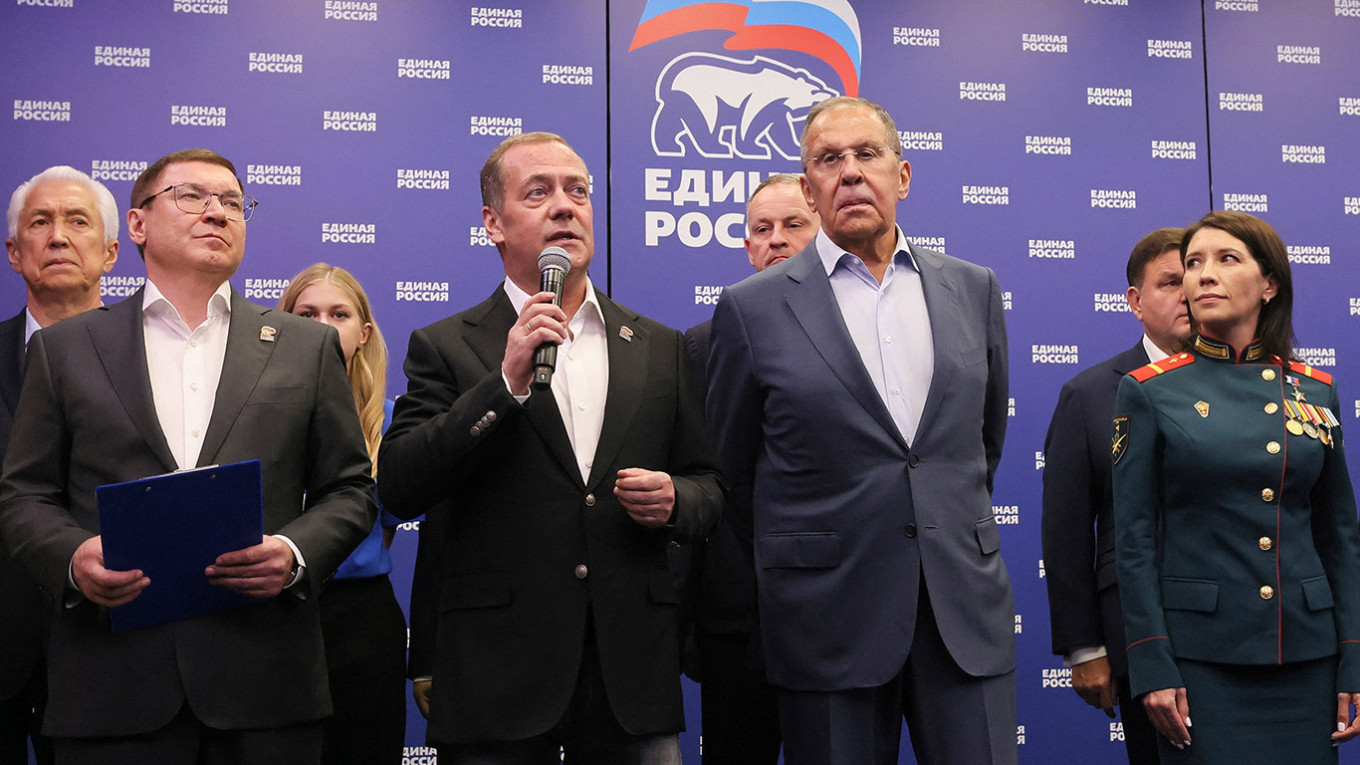
Russia’s ruling party, United Russia, won a record number of seats in the lower-house State Duma, election officials announced Friday in confirming the final results of the country’s first wartime parliamentary election, an outcome that was all but predetermined in Russia’s tightly controlled political system, where true opposition had been barred from the ballot and public criticism of the war remains illegal.
Central Election Commission (CEC) Chairwoman Ella Pamfilova said United Russia received 349 seats in the 450-seat State Duma, beating its previous record of 343 seats set in 2016. Nominally opposition parties captured the remaining seats, led by the Communist Party with 37, the Liberal Democratic Party with 23, New People with 19, and A Just Russia with 17.
Pamfilova also said that, for the first time ever, Ukraine war veterans won 46 seats. President Vladimir Putin has repeatedly hailed veterans-turned-politicians as Russia’s “new elite.”
Responding to the veterans’ election victories, Kremlin spokesman Dmitry Peskov told reporters Friday that “each one of them will naturally make contributions in any of the initiatives that they take on.” Independent Russian media reported that several of the newly elected veteran lawmakers have been accused of committing war crimes in Ukraine.
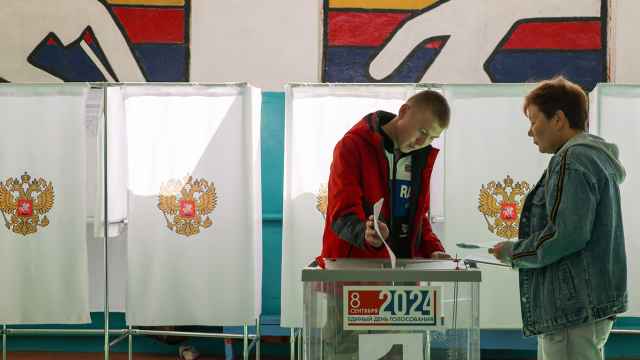
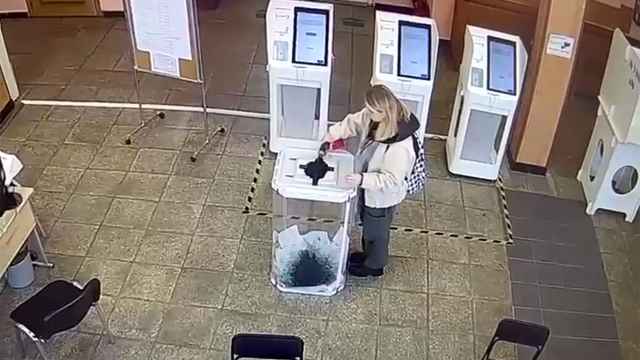
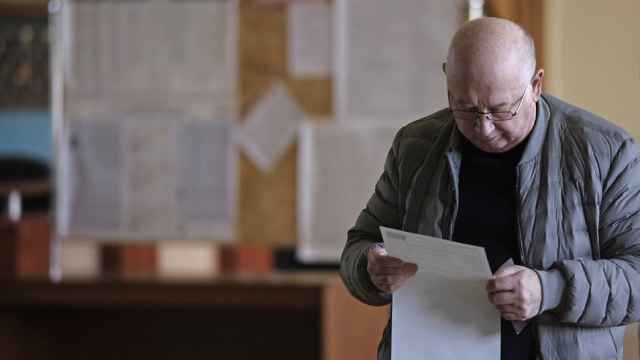
Election officials placed voter turnout, which included voting staged in occupied Ukrainian territories claimed by Moscow, at 59.8% — the highest since the 2011 State Duma elections.
“This was made possible despite all the everyday difficulties caused by sanctions, terrorist threats and drone strikes,” Pamfilova said at a press conference on Friday afternoon. “Our wonderful people put all of this aside, rose above it and demonstrated the highest level of civic responsibility.”
The CEC also reported that over 280,000 Russians voted abroad at 333 polling stations across 152 countries. Pamfilova said United Russia received 58% of the votes cast abroad, adding that attempts by exiled opposition figures to disrupt the elections had “failed.”
The results of Russia’s first wartime parliamentary elections, which independent experts have said were the most uncompetitive in the country’s modern history, will not come as a surprise to anyone.
United Russia has long served as a central pillar of Vladimir Putin’s quarter-century rule, making the party’s dominance in the State Duma vital to maintaining total control over the legislative process.
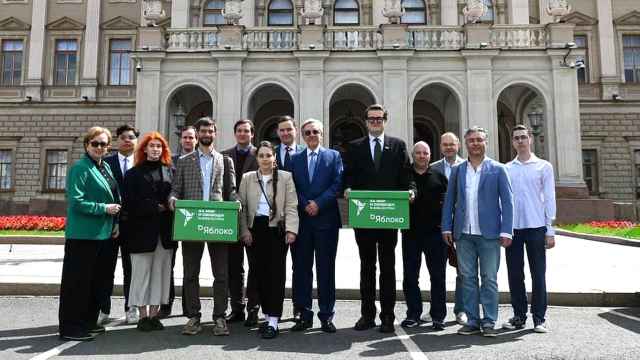
Voters this time were left with virtually no real opposition option. Yabloko, Russia’s oldest liberal party and the only registered political force campaigning for peace, was struck from the party-list ballot by the Russian Supreme Court in August. Even in single-member constituencies where members of the party could still run, candidates faced interference, police detentions and disqualification.
A Message from The Moscow Times:
Dear readers,
We are facing unprecedented challenges. Russia's Prosecutor General's Office has designated The Moscow Times as an "undesirable" organization, criminalizing our work and putting our staff at risk of prosecution. This follows our earlier unjust labeling as a "foreign agent."
These actions are direct attempts to silence independent journalism in Russia. The authorities claim our work "discredits the decisions of the Russian leadership." We see things differently: we strive to provide accurate, unbiased reporting on Russia.
We, the journalists of The Moscow Times, refuse to be silenced. But to continue our work, we need your help.
Your support, no matter how small, makes a world of difference. If you can, please support us monthly starting from just $2. It's quick to set up, and every contribution makes a significant impact.
By supporting The Moscow Times, you're defending open, independent journalism in the face of repression. Thank you for standing with us.

Remind me later.