Russia’s economy returned to growth in the second quarter after contracting for the first time since 2023 at the start of the year, official data showed on Wednesday, outperforming government and Central Bank forecasts.
Gross domestic product grew 1.3% in April-June despite Ukrainian strikes on oil refineries that pushed refining volumes to their lowest level in two decades, according to state statistics agency Rosstat. GDP expanded 0.6% in the first half of the year.
The data suggest that government spending on the military and a temporary rise in oil revenues are continuing to support Russia’s wartime economy. But economists said high interest rates, disruption from Ukrainian drone strikes and weakness across civilian industries made a sustained recovery unlikely.
First-half growth was half the pace recorded a year earlier and almost seven times slower than during the wartime economic boom of 2023-24.
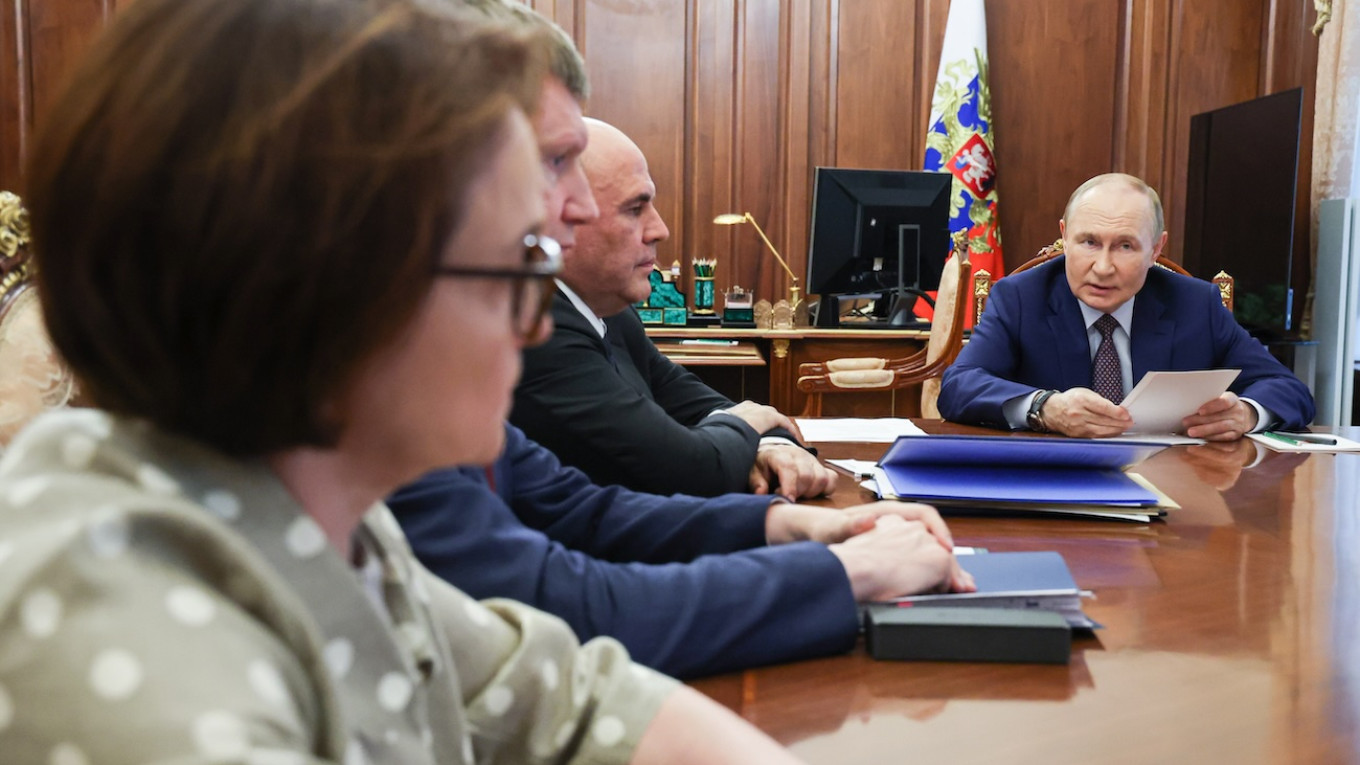
In April, after Russia’s economy contracted 0.2% in the first quarter, President Vladimir Putin publicly remanded economic officials over forecasts that had failed to materialize and demanded “concrete measures” to restore growth. He later called for growth to become “substantial” and “sustainable.”
The second-quarter result was stronger than officials had expected, with the Economic Development Ministry having estimated growth at 0.9% and the Central Bank projecting 0.8%. According to Rosstat, the economy recorded its strongest quarterly growth in six quarters.
Economist Yegor Susin said growth was supported by a greater number of working days, improved external conditions and a fiscal boost.
The war in Iran temporarily pushed Russia’s oil revenues to their highest level since the start of the war in Ukraine, while federal budget spending rose 16%, with about one-third going to the military and weapons production, Susin said.
As a result, Russia’s military-industrial sector has continued to expand. Civilian manufacturing, however, remained in contraction, falling 3.2% from a year earlier and 4.6% compared with 2024 levels, according to May estimates from the Center for Macroeconomic Analysis and Short-Term Forecasting.
The second-quarter rebound is unlikely to develop into a lasting trend, said Liam Peach, an economist at Capital Economics, who expects Russia to “remain in a state of stagnation” for the foreseeable future.
High interest rates and the country’s fuel crisis will continue to weigh on the economy, Peach told Bloomberg.
Long-range Ukrainian drone strikes, which initially targeted oil refineries and later burned down nearly all of Wildberries’ largest warehouses, are also “quite seriously undermining the Russian economy,” economist Vladislav Inozemtsev said.
He forecast that inflation would rise 2-3 percentage points above previous expectations, living standards and real incomes would stop increasing, economic growth would stall and thousands of business owners would go bankrupt.
But Inozemtsev said the Kremlin’s own policies posed an even greater threat to the economy, pointing to tax increases, the seizure of private businesses, increasingly onerous regulation and the possibility of another military mobilization.
“If it begins, it will be the end of the entire Russian economy,” he said.
This article was translated with the help of artificial intelligence and was reviewed by a Moscow Times editor before publication. Learn more about our newsroom's AI policy here.
Read this article in Russian at The Moscow Times' Russian service.
A Message from The Moscow Times:
Dear readers,
We are facing unprecedented challenges. Russia's Prosecutor General's Office has designated The Moscow Times as an "undesirable" organization, criminalizing our work and putting our staff at risk of prosecution. This follows our earlier unjust labeling as a "foreign agent."
These actions are direct attempts to silence independent journalism in Russia. The authorities claim our work "discredits the decisions of the Russian leadership." We see things differently: we strive to provide accurate, unbiased reporting on Russia.
We, the journalists of The Moscow Times, refuse to be silenced. But to continue our work, we need your help.
Your support, no matter how small, makes a world of difference. If you can, please support us monthly starting from just $2. It's quick to set up, and every contribution makes a significant impact.
By supporting The Moscow Times, you're defending open, independent journalism in the face of repression. Thank you for standing with us.

Remind me later.