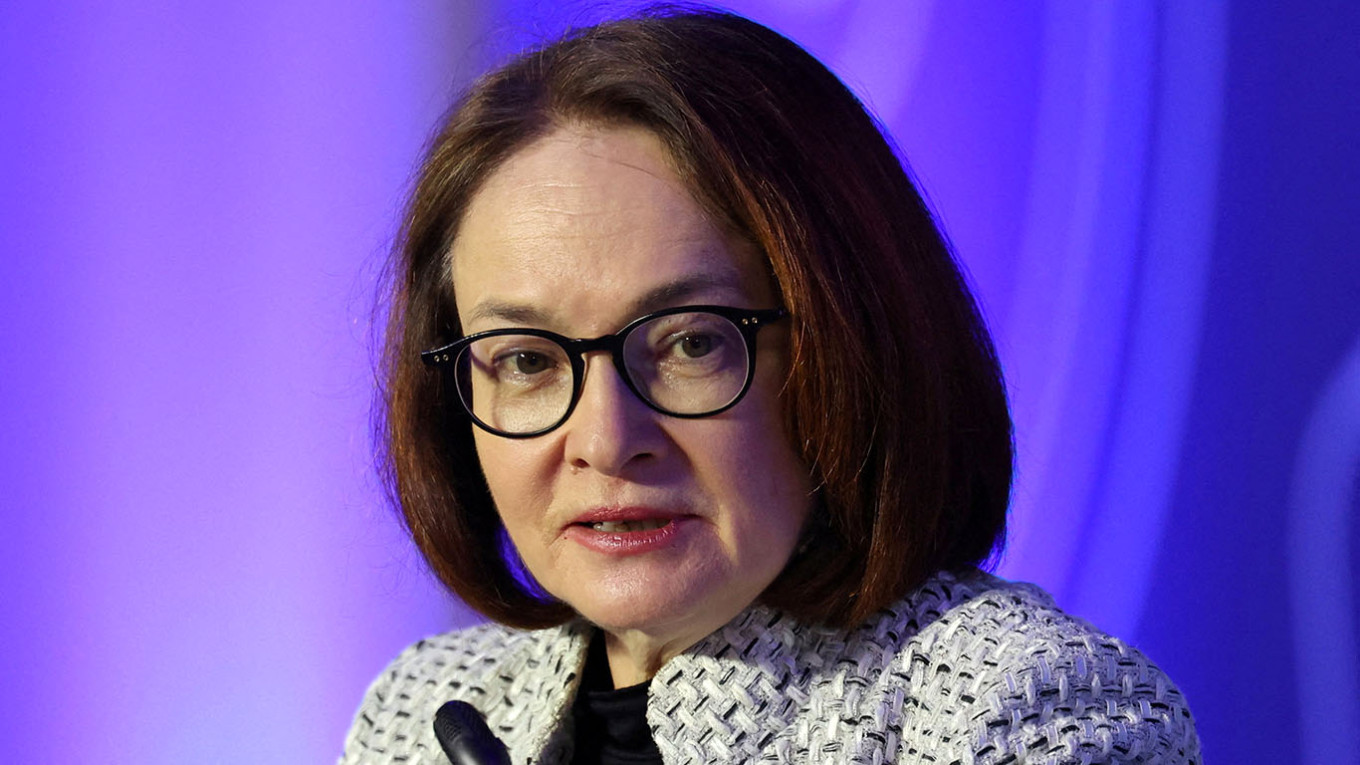
Russia's Central Bank lowered its key interest rate from 14.25% to 14% on Friday as it continues down a cautious path of monetary easing despite concerns that Ukrainian attacks on Russian oil refineries and commercial sites could fuel a renewed inflation surge.
The 25-basis-point cut was not guaranteed. While some analysts had predicted the modest lowering, others leaned toward the possibility of the Central Bank leaving its key rate unchanged due to disruptions to domestic oil refining capacity and higher fuel costs.
In a press release, policymakers said Friday that annual inflation rose to 5.9% as of July 20. The Central Bank also significantly revised its inflation outlook, warning that it now expects consumer prices to climb to between 6% and 7% later this year.
"Given the direct and second-round effects of the temporary decline in production capacities in certain sectors and more expansionary fiscal policy over a three-year horizon than projected in April, a smoother key rate decrease is required," the press release read.
It said it still aims to bring inflation back to its 4% target in 2027.
Policymakers also downgraded their economic growth projection, forecasting annual GDP growth of 0% to 1% by the end of 2026, down from an earlier estimate of 0.5% to 1.5%.
Natalya Orlova, chief economist at Alfa Investments, said Friday's rate cut signals that the Central Bank views the recent uptick in inflation as temporary and is now more concerned about the risk of an economic slowdown down the road due to high borrowing costs.
"I wouldn't rule out the possibility that the key rate could follow a higher trajectory and end the year at 14%. But for now, that isn't our baseline scenario, nor is it what the Central Bank is signaling," Orlova said.
Russian stocks rose following the rate-cut announcement. The ruble-denominated MOEX benchmark was up around 1.8% in afternoon trading
Since hiking borrowing costs to a two-decade high of 21% to tame wartime inflation, Russia's Central Bank has gradually eased its key rate amid mounting signs of an economic slowdown. Friday's rate cut marks the tenth since October 2024.
Russia has been grappling with weaker oil and gas revenues and rising government spending, largely linked to its wartime economy. The growing deficit has fueled concerns about the sustainability of state finances after the government missed its budget targets by a wide margin last year.
The Central Bank will hold its next key rate meeting on Sept. 11.
A Message from The Moscow Times:
Dear readers,
We are facing unprecedented challenges. Russia's Prosecutor General's Office has designated The Moscow Times as an "undesirable" organization, criminalizing our work and putting our staff at risk of prosecution. This follows our earlier unjust labeling as a "foreign agent."
These actions are direct attempts to silence independent journalism in Russia. The authorities claim our work "discredits the decisions of the Russian leadership." We see things differently: we strive to provide accurate, unbiased reporting on Russia.
We, the journalists of The Moscow Times, refuse to be silenced. But to continue our work, we need your help.
Your support, no matter how small, makes a world of difference. If you can, please support us monthly starting from just $2. It's quick to set up, and every contribution makes a significant impact.
By supporting The Moscow Times, you're defending open, independent journalism in the face of repression. Thank you for standing with us.

Remind me later.