

 | |
|
To Our Readers | |
|
The Moscow Times welcomes letters to the editor. Letters for publication should be signed and bear the signatory's address and telephone number.
| |
| | |
These principles were articulated in the U.S. Declaration of Independence, which celebrated its 233rd anniversary on Saturday. The declaration’s second sentence contains what many historians believe to be the most potent and consequential words in U.S. history: “We hold these truths to be self-evident, that all men are created equal, that they are endowed by their Creator with certain unalienable Rights, that among these are Life, Liberty and the pursuit of Happiness.” On the chance that somebody has forgotten, I will remind them that Russians have also sacrificed their share of blood at different points in history in defense of these universal rights.
Nobody has the right to say that Russians are genetically unfit for freedom or democracy. Sooner or later, the Russian people will definitely build a true democracy for themselves and their children, whether or not the so-called “realists” from abroad help us or hinder us in the task. Pragmatism, self-interest and a clean conscience are not necessarily mutually exclusive.
During the summit, the leaders of the United States and Russia will discuss a range of important questions. After working in business for 20 years, I know for a fact that it is impossible to achieve success without mutual trust. But one of the biggest problems facing Russia today is a lack of trust — among citizens and in our state institutions.
We need to start building this trust. Last year, President Dmitry Medvedev proposed starting with the country’s judicial system and establishing the rule of law. This is a starting point from which Russia’s authoritarian traditions would be finally dismantled.
Was Medvedev sincere when he made those statements? Is he ready and able to take the necessary actions to make this a reality? This is the only way the people will begin trusting the judicial system. If Medvedev is successful, this trust will reinforce society’s confidence in its own strength, stimulate entrepreneurial activity and help boost long-term investment from both foreigners and Russians.
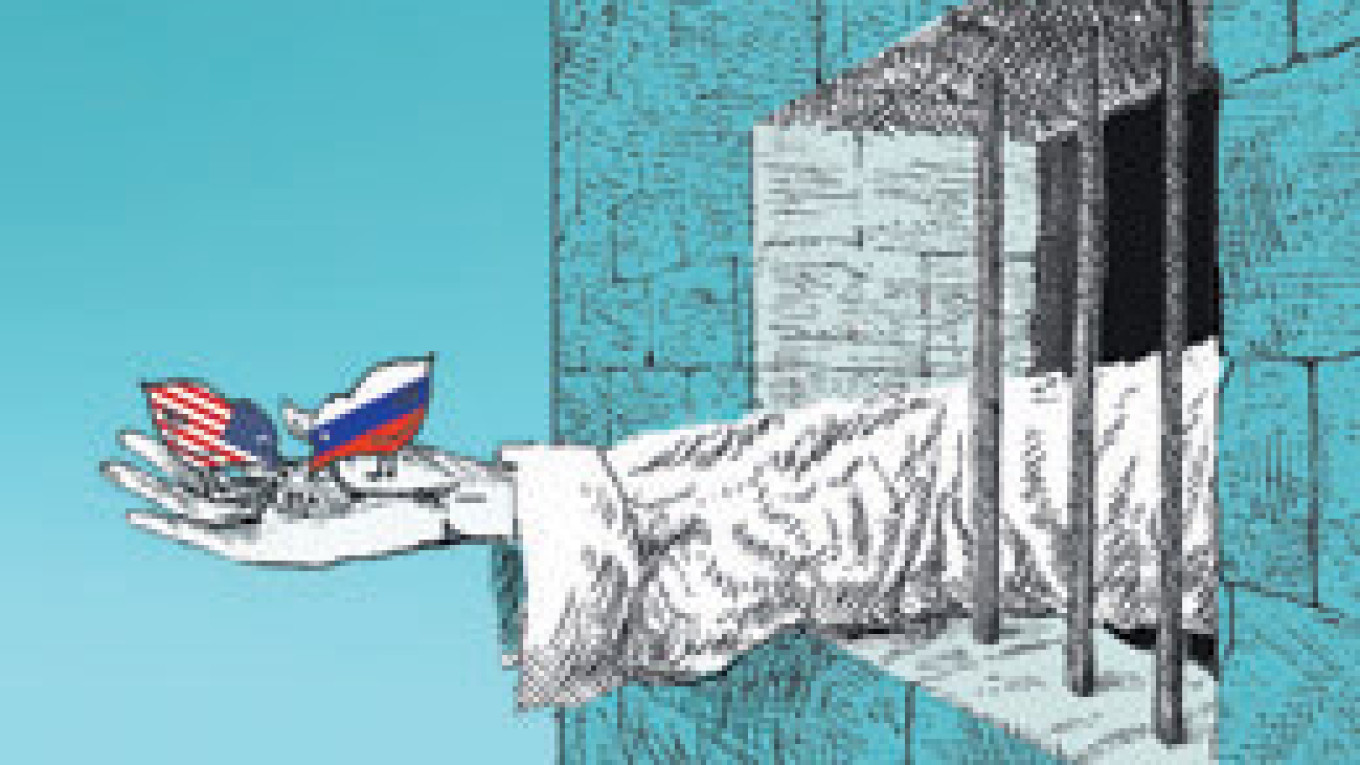
The other crucial aspect of judicial reform that Medvedev needs to undertake is to free the tens of thousands of people — if not hundreds of thousands — of people who have been unjustly convicted of crimes by the country’s biased or corrupt courts. These people are sitting behind bars as a result of the whim of government officials who in exchange for a false conviction received either a new star on their epaulets or a nice sum of money.
For some, the fate of these people may seem a triviality. And unfortunately, this is true not only in Russia. But there is nothing trivial about creating a humane society, establishing the rule of law and, most of all, building trust.
There can be no positive leadership without trust. As I understand it, the presidents of both countries consider themselves positive leaders. If this is true, they must offer the world an attractive model for building a civilized, modern and developed society. And this is impossible without first establishing a society in which human rights are guaranteed, including the right to be protected by a fair and unbiased legal system.
I hope the U.S. and Russian leaders who have gathered in Moscow will find time to discuss these problems. There is definitely a lot worth discussing.
Mikhail Khodorkovsky is the former CEO of Yukos.
A Message from The Moscow Times:
Dear readers,
We are facing unprecedented challenges. Russia's Prosecutor General's Office has designated The Moscow Times as an "undesirable" organization, criminalizing our work and putting our staff at risk of prosecution. This follows our earlier unjust labeling as a "foreign agent."
These actions are direct attempts to silence independent journalism in Russia. The authorities claim our work "discredits the decisions of the Russian leadership." We see things differently: we strive to provide accurate, unbiased reporting on Russia.
We, the journalists of The Moscow Times, refuse to be silenced. But to continue our work, we need your help.
Your support, no matter how small, makes a world of difference. If you can, please support us monthly starting from just $2. It's quick to set up, and every contribution makes a significant impact.
By supporting The Moscow Times, you're defending open, independent journalism in the face of repression. Thank you for standing with us.

Remind me later.