

"I even read books in the tub. Any other place in the apartment is too cold for me," said Shuvalova, a 36-year-old nanny.
Moscow is caught in the grip of an unusually early winter chill and, with most apartments hooked up to the city's centralized heating system, residents are just plain cold. Authorities have avoided turning on the heat because of a rule that requires the outside temperature to remain below 8 degrees Celsius for more than five days in a row.
But City Hall decided this week to make an exception and turn on the heat for all apartments by next Wednesday -- two weeks earlier than usual. In the meantime, residents are shivering, buying electric heaters or just slipping into the hot tub, like Shuvalova.
Shuvalova lives in a typical 12-story Soviet-era apartment building on Ulitsa Mnyovniki in northwestern Moscow. Like most apartment buildings, it gets heating, hot water and electricity through a complicated system in which extra hot water used for power generation is pumped through the main pipes to neighborhood heat-exchange points. There, through special heat-exchange equipment, household water and the heating system are warmed up -- but not mixed with -- water from the power plants. The cooled-off steam is returned to the plants and reused for electricity production.
Central heating is installed in most new housing in Russian cities, as well as many places in northern Europe, where people seldom require air conditioning in their homes because of the temperate climate. But that means, of course, entire cities stay warm when the heating is turned on and shiver when it is off and the temperature falls.
Moscow temperatures were 8 to 10 C in the second and third weeks of September, 1 to 2 degrees lower than average for this time of year, said Nikolai Volobuyev, deputy head of the federal weather bureau.
"This is a considerable drop for the fall, when every degree is important," he said.
The temperature on Sept. 1, the first day of school, when outdoor welcoming ceremonies are held on school grounds around Moscow, was 8 C.
When Shuvalova brought Mark Latukhin, the 9-year-old boy she cares for, to School No. 142 in central Moscow, she saw some first graders being taken inside the building before the ceremony was over. "The small kids, the girls especially, were shivering while listening to the principal's welcome speech," she said.
Schools, hospitals and kindergartens have been able to receive heating since Sept. 16 if they applied for it, according to City Hall's fuel and energy department, which oversees the heating supply.
Under city rules, the heat is turned on for residential buildings after the temperature is lower than 8 C for more than five days, which is usually the case in mid-October, department spokeswoman Marina Gaze said.
City Hall decided Tuesday to turn on the system earlier, even though there have not been five full days with temperatures below 8 C, she said.
About 2,000 Moscow apartments, many of them in the Tverskoi and Fili districts, started receiving heat Wednesday in a check of the general condition of the system.
Gaze said changing the system was out of the question because it would require a major infrastructure overhaul. First, giant heating plants would need to be replaced with small boilers for each apartment building or each district. This would essentially involve doubling the number of pipes currently used to provide the city's hot water -- adding or reconstructing 4,000 kilometers of pipelines and replacing all old pipes with new ones made of modern materials, such as polyethylene and steel pipes in urethane isolation, according to Moscow United Energy, which holds the city administration's energy assets.
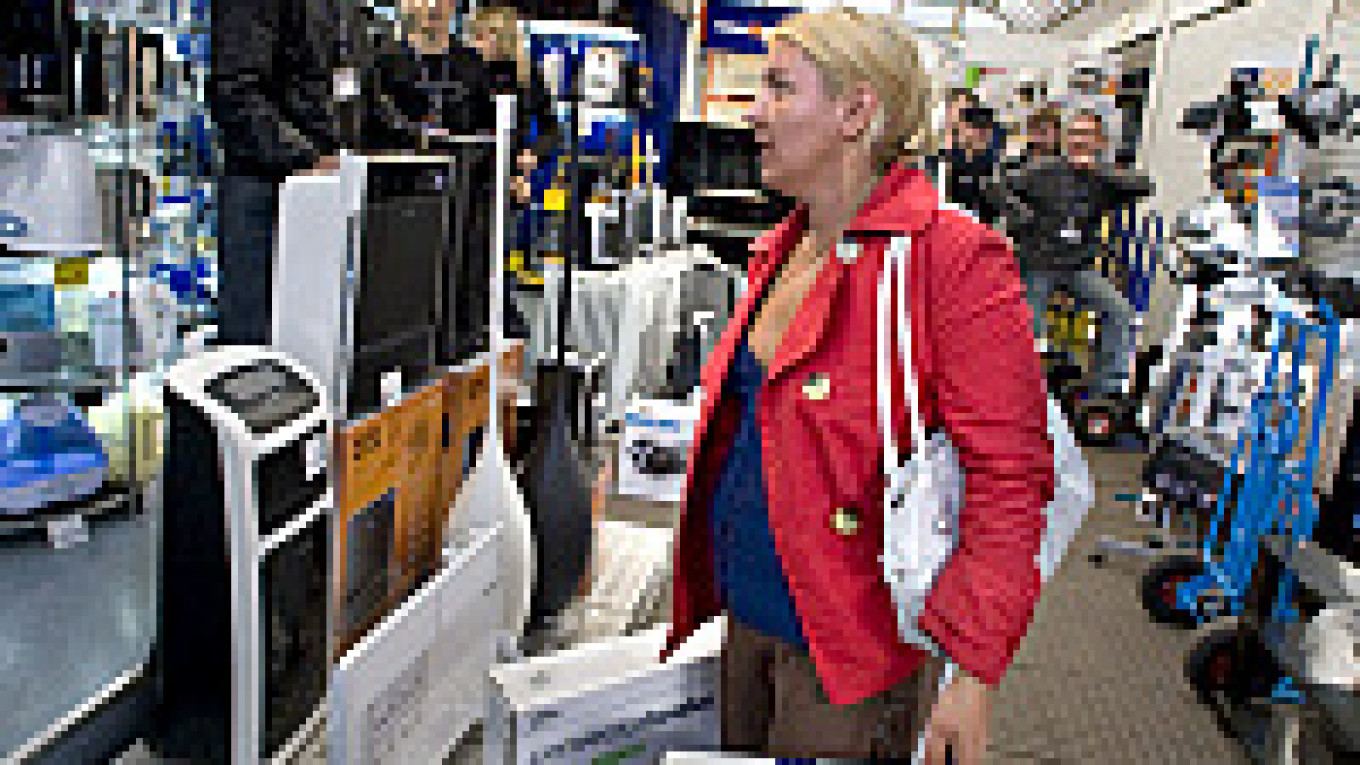
Some residents are fed up with the system. "I would prefer to decide for myself whether it is cold or warm in my apartment to start heating it," said Yelena Rusakova, a high school teacher browsing electric heaters at the Rizhsky market on Thursday. Rusakova, who bought two heaters, added that she was also tired of the centralized hot water system, which leads to hot water being turned off for several weeks every summer.
Moscow stores, meanwhile, are seeing the sale of electric heaters soar as people try to fight off the September cold. Sales at the Tekhnosila electronics chain have jumped more than 150 percent in the first three weeks of September in comparison to the same period last year, said store spokeswoman Nadezhda Senyuk. "We are really busy day and night trying to supply our stores with these kinds of things. On weekends, everything is usually sold out," she said.
The weather forecast for the next few days does not promise any relief. Rain is predicted for Saturday, and the temperature is expected to hover around 8 to 10 degrees throughout the next week.
But there is some good news, too. The cold spell came from the north, not the Atlantic, raising the possibility of an Indian summer with temperatures of up to 20 C in October, the federal weather bureau said.
The city administration, however, will not turn off central heating. Once it is turned on, it remains on until late spring.
A Message from The Moscow Times:
Dear readers,
We are facing unprecedented challenges. Russia's Prosecutor General's Office has designated The Moscow Times as an "undesirable" organization, criminalizing our work and putting our staff at risk of prosecution. This follows our earlier unjust labeling as a "foreign agent."
These actions are direct attempts to silence independent journalism in Russia. The authorities claim our work "discredits the decisions of the Russian leadership." We see things differently: we strive to provide accurate, unbiased reporting on Russia.
We, the journalists of The Moscow Times, refuse to be silenced. But to continue our work, we need your help.
Your support, no matter how small, makes a world of difference. If you can, please support us monthly starting from just $2. It's quick to set up, and every contribution makes a significant impact.
By supporting The Moscow Times, you're defending open, independent journalism in the face of repression. Thank you for standing with us.

Remind me later.