

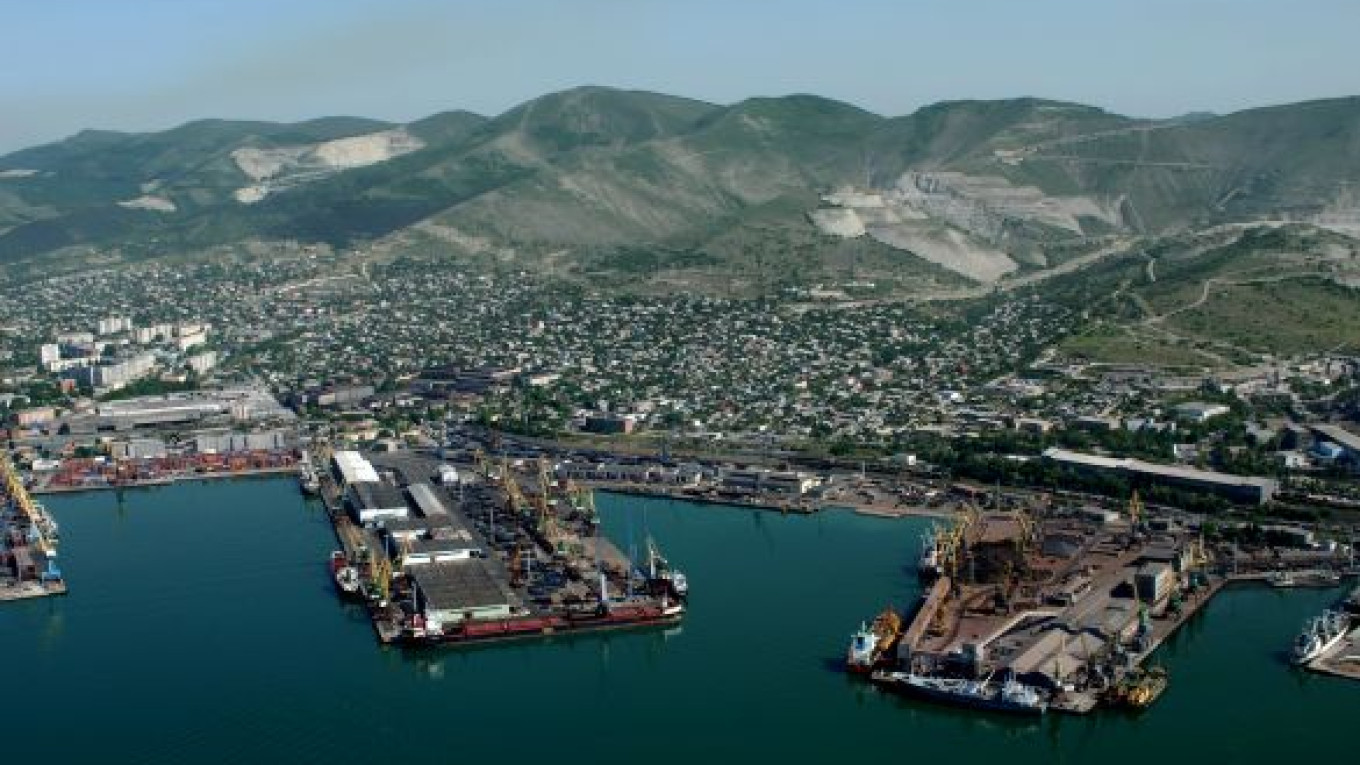
Transneft and Ziyavudin Magomedov's investment group Summa Capital are purchasing a controlling stake in Novorossiisk Commercial Sea Port to merge it with their Primorsk port, giving the partners control of almost all crude loaded for export from European Russia.
The deal will be in two phases, NCSP said in a statement Wednesday. NCSP will buy 100 percent of Primorsk Oil Terminal, also known as PTP, from Transneft and Summa Capital. The partners will then buy a controlling stake in NCSP, the statement said.
The terms of the deal have not yet been agreed upon, and NCSP's board of directors will need to meet. Both deals require approval from the Federal Anti-Monopoly Service and the government's commission on foreign investment, the port said.
Based on NCSP's market capitalization, a controlling stake would be worth $1.5 billion. Analysts interviewed by Vedomosti were unable to estimate what the Primorsk port is worth, but in an interview with Kommersant in December, Transneft president Nikolai Tokarev valued it at "something like $5 billion."
At that price, Transneft and Summa Capital would leave the deal with additional cash.
Finalizing the purchase could take three to six months, a source close to NCSP told Vedomosti. Transneft and Summa Capital will own equal stakes in the 50.1 percent of NCSP, Interfax reported.
Currently, the 50.1 percent of NCSP belongs to Kadina Ltd., while the state owns 20 percent, and units of Russian Railways own 5 percent. Kadina is 80 percent owned by family members of NCSP chairman Alexander Ponomarenko and State Duma Deputy Alexander Skorobogatko. The remaining 20 percent in Kadina belongs to companies controlled by Arkady Rotenberg.
Rotenberg is a childhood friend and judo partner of Prime Minister Vladimir Putin. The businessman also heads the St. Petersburg judo club Yavara-Neva, whose honorary president is Putin and whose board of trustees includes First Deputy Prime Minister Viktor Zubkov.
Rotenberg acquired a stake in NCSP in 2008, in part thanks to Transneft. Tokarev had just become president of the oil pipeline monopoly, which was trying to get NCSP to sell its infrastructure for the Sheskharis oil-loading terminal. Loading crude for export provides the port with at least half of its revenue.
The conflict ended once Rotenberg became a shareholder.
Transneft has long been unhappy with the tariffs it pays for oil loading at NCSP, said Kirill Kazanli, an analyst at Troika Dialog. Now, the state company will be able to set the rates itself, he said.
This is not the best time for NCSP's private shareholders to exit the business, which was valued at $5 billion in its 2007 initial public offering, Kazanli said. He suggested that the decision may have come under pressure from Transneft.
The deal would let Transneft and Summa Capital control crude oil loading at the two largest ports in European Russia. Primorsk operates the terminal that receives oil from the Baltic Pipeline System, and it loads about 75 million tons of oil per year.
In late 2009, Tokarev said Transneft and Summa Capital control the Primorsk port on a 50-50 basis.
NCSP will essentially have a monopoly on crude exports to Europe, said Georgy Tarakanov, an analyst at VTB Capital. It is a good deal for the port, since NCSP will gain access to the Baltic Sea, he said. The Primorsk port is new and handling stable volumes of crude, which will help improve NCSP's slightly declining volumes of oil loaded, he said.
NCSP had a net profit of $252.2 million last year on revenue of $675 million.
Spokespeople for NCSP, its private shareholders, Transneft and Summa Capital declined to comment.
A Message from The Moscow Times:
Dear readers,
We are facing unprecedented challenges. Russia's Prosecutor General's Office has designated The Moscow Times as an "undesirable" organization, criminalizing our work and putting our staff at risk of prosecution. This follows our earlier unjust labeling as a "foreign agent."
These actions are direct attempts to silence independent journalism in Russia. The authorities claim our work "discredits the decisions of the Russian leadership." We see things differently: we strive to provide accurate, unbiased reporting on Russia.
We, the journalists of The Moscow Times, refuse to be silenced. But to continue our work, we need your help.
Your support, no matter how small, makes a world of difference. If you can, please support us monthly starting from just $2. It's quick to set up, and every contribution makes a significant impact.
By supporting The Moscow Times, you're defending open, independent journalism in the face of repression. Thank you for standing with us.

Remind me later.