

The report turned out to be premature, as negotiations are in the early stages, but Moscow did receive an official request late Tuesday and is considering the loan, a gesture that may be motivated more by politics than economics.
"We will consider it," Finance Minister Alexei Kudrin said Tuesday, Interfax reported. "Iceland has a reputation for strict budget discipline and has a high credit rating," Kudrin said. "We're looking favorably at the request."
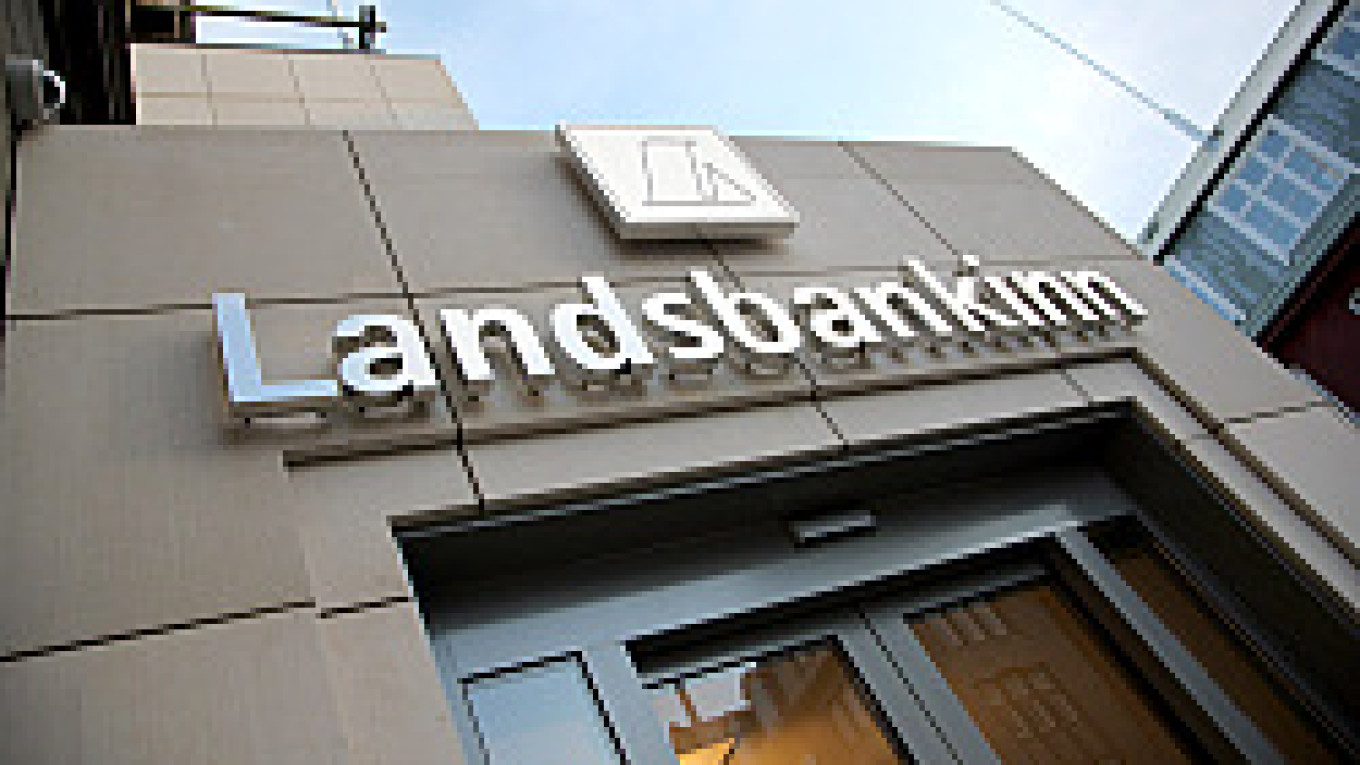
In a last-ditch effort Tuesday to save its banking sector, the government of the tiny country, with a population of just 310,000, nationalized its second-largest bank, Landsbanki, and loaned Kaupthing, its largest bank, 500 million euros ($680 million). The measures came after the country's currency, the krona, plunged by 30 percent against the euro on Monday. The country's third-largest bank, Glitnir, was nationalized last week.
Jon Thorisson, CEO of VBS, an Icelandic investment bank, said a $4 billion euro loan could "help Iceland a lot," but admitted that he was surprised the source might be Russia.
"We have been calling for aid from neighboring countries and have been turned down," Thorisson said.
"This is looking like the beginning of relations between Russia and Iceland."
Icelandic Prime Minister Geir Haarde said Tuesday that in times of crisis "one has to look for new friends," The Associated Press reported.
Russia's own banks have been weathering liquidity problems, with the Central Bank stepping in to offer nearly $190 billion in funding for the financial sector, but it looks like the country is still in a good enough position to help Iceland cover some of the costs of bailing out its own banks.
"Russia is not in the same situation as Iceland. Their banks are extremely leveraged," said Vladimir Krendel, an analyst from the Institute of Financial Research in Moscow.
"In Russia, we are comparatively pretty stable. We have not been involved in subprime banking. It used to be a drawback, but now it's our advantage."
Krendel said that providing financial backing in Europe would also be of "great political advantage."
"We had a long-standing relationship with Iceland in the times of the Soviet Union, when we provided them with oil," Krendel said.
"This was very? unusual because Iceland was part? of NATO, and NATO was the enemy."
He warned, however, that should economic difficulties in Russia grow, it? would forego such political projects.
"The most important thing is to bail? out our own banking sector," he said.
Natalya Orlova, an analyst with Alfa Bank, also said such a loan would be more political than economic in nature.
"The size of this loan is not very significant for Russia's Central Bank," Orlova said.
"Mostly, it shows that Russia is willing to cooperate with the rest of the world."
A Message from The Moscow Times:
Dear readers,
We are facing unprecedented challenges. Russia's Prosecutor General's Office has designated The Moscow Times as an "undesirable" organization, criminalizing our work and putting our staff at risk of prosecution. This follows our earlier unjust labeling as a "foreign agent."
These actions are direct attempts to silence independent journalism in Russia. The authorities claim our work "discredits the decisions of the Russian leadership." We see things differently: we strive to provide accurate, unbiased reporting on Russia.
We, the journalists of The Moscow Times, refuse to be silenced. But to continue our work, we need your help.
Your support, no matter how small, makes a world of difference. If you can, please support us monthly starting from just $2. It's quick to set up, and every contribution makes a significant impact.
By supporting The Moscow Times, you're defending open, independent journalism in the face of repression. Thank you for standing with us.

Remind me later.