

Supplies to Europe have been cut off for almost a week in freezing temperatures after Russia turned off the tap to Ukraine in a long-running feud. Even though a deal was reached Monday, the second in two days, gas supplies still failed to restart on Tuesday.
The Balkans took Europe's biggest hit, with hundreds of thousands of households initially losing heat and dozens of businesses forced to halt production.
Analysts said it was premature to assess the impact on growth, but lower industrial output for the month of January was possible. The midterm outlook depends on global economic conditions and the impact of falling global demand.
"Given lower demand, many firms have piled stocks in the last few months, and I don't think demand or sales will suffer," said Raiffeisenbank analyst Zdeslav Santic in Zagreb.
"But some producers, like those of construction materials, may be forced to reduce or stop production, which would lead to job losses," he said.
The economic impact could become more visible if the latest deal in restoring gas supplies hits a snag, especially for countries with little or no reserve, said Vladimir Gligorov of the Vienna Institute for International Economic Studies. "Croatia has had its own reserves to rely on at the time of crisis, Bulgaria may not have sufficient gas reserves, but they've got the European Union to turn to for assistance and Serbia has no reserves and no one to turn to," Gligorov said.
With politicians focusing on restoring heat to households, some factories reliant on natural gas have halted production. After a few days, Hungary and Germany agreed to sell some gas to EU-hopeful Serbia, where drugs company Hemofarm, owned by Germany's Stada, and fertilizer manufacturer Azotara suspended production.
The gas disruption has hurt the backbone of Bulgaria's industry, where steelmakers, chemical and fertilizer producers as well as food processors use natural gas. The national employers' organization has estimated daily losses at 500 million levs ($367 million), but direct losses were lower, at around 13 million levs a day, Economy Minister Petar Dimitrov said.
Neighboring Macedonia's main steel exporter halted work.
In Croatia, steel mills, sugar plants, chemical industry and construction material producers have been the most exposed as they rely on gas, the Croatian Chamber of Commerce said.
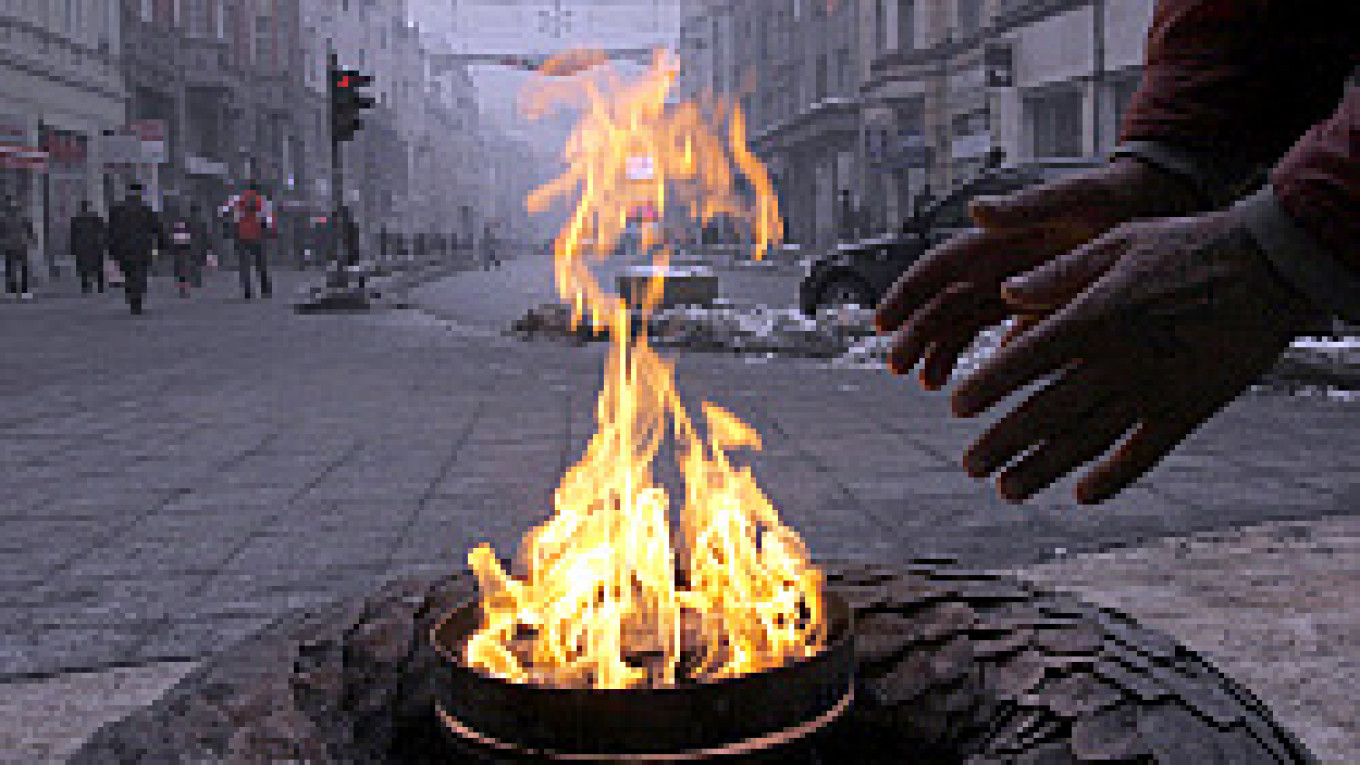
Incidentally, the gas outage even caused Sarajevo's eternal flame -- a monument to victims of World War II -- to go out last week. The flame came on again when Hungary started shipping gas to Bosnia.
But a major impact on the Balkans' economic growth is seen as unlikely.
"The gas crisis is likely to have a modest measurable impact on growth in the first quarter, and the impact will be more sizable if the shutoff continues beyond this week," said Richard Segal, a UBA Capital analyst based in London.
A Message from The Moscow Times:
Dear readers,
We are facing unprecedented challenges. Russia's Prosecutor General's Office has designated The Moscow Times as an "undesirable" organization, criminalizing our work and putting our staff at risk of prosecution. This follows our earlier unjust labeling as a "foreign agent."
These actions are direct attempts to silence independent journalism in Russia. The authorities claim our work "discredits the decisions of the Russian leadership." We see things differently: we strive to provide accurate, unbiased reporting on Russia.
We, the journalists of The Moscow Times, refuse to be silenced. But to continue our work, we need your help.
Your support, no matter how small, makes a world of difference. If you can, please support us monthly starting from just $2. It's quick to set up, and every contribution makes a significant impact.
By supporting The Moscow Times, you're defending open, independent journalism in the face of repression. Thank you for standing with us.

Remind me later.