

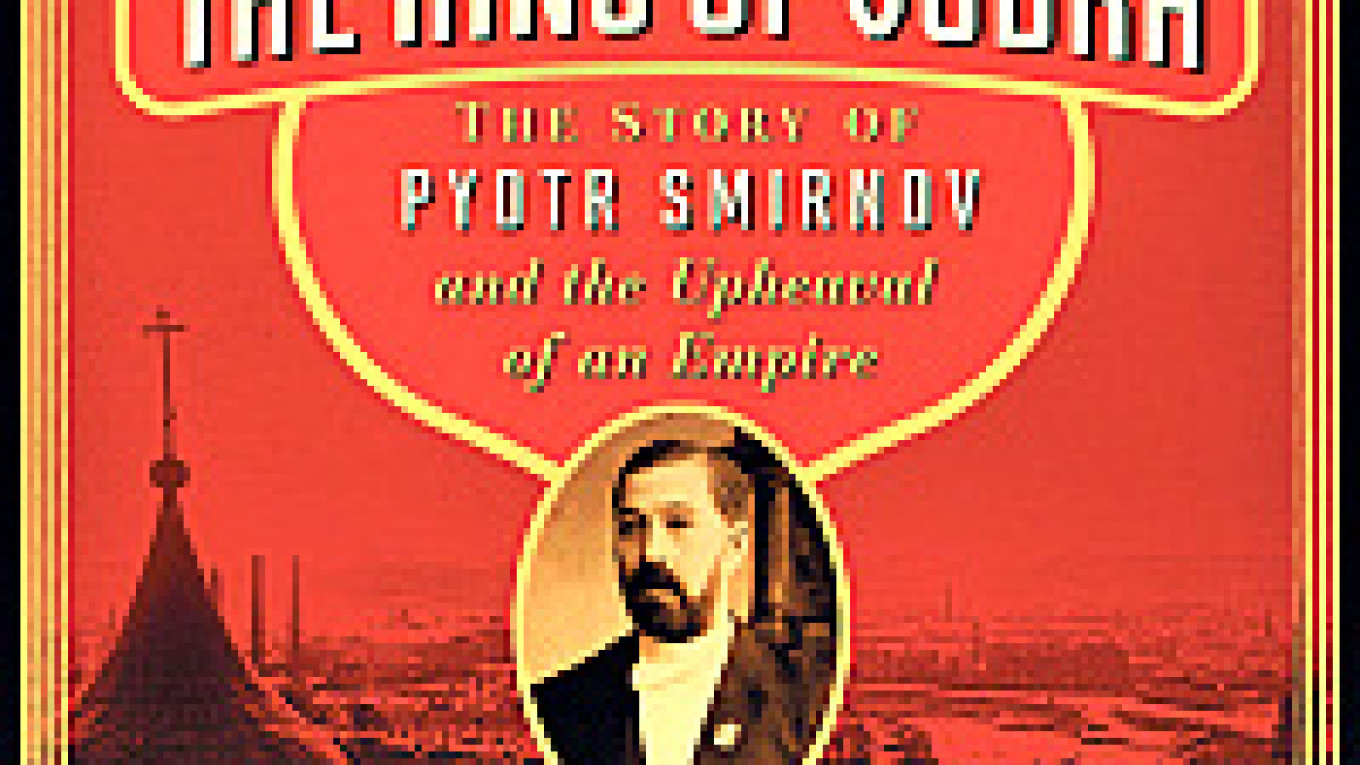
"The King of Vodka" by U.S. journalist Linda Himelstein, is the tale of its creator, serf turned dogged merchant Pyotr Smirnov.
"He was written about by Chekhov, a foe of Tolstoy's and a purveyor to the tsar. The story was just too compelling to resist," Himelstein said of her subject.
Smirnov first came to Himelstein's attention in 1996, when a representative of his family came to see her in New York, unrolled the family tree and said they were fighting to win back the brand, which they had lost after the Russian Revolution.
As upper-class merchants, Smirnov's descendents were reduced to poverty in Soviet times. After many attempts to re-establish the business from Turkey to Bulgaria, his son moved to France and sold the name to a U.S. entrepreneur in 1933, who made the brand global.
Until the 1970s, his relatives behind the Iron Curtain had no clue that their great-grandfather's drink had become the world's best-selling spirit.

for MT
Author Linda Himelstein.
|  |
| |
By then, it was the tipple of choice of the West's most famous fictional Cold War spy, James Bond, who is seen drinking Smirnoff vodka in 21 of the 22 films that bear his name, according to Himelstein's calculations.
Lawsuits over the brand's ownership persisted until 2006, when Russian consortium Alfa Bank signed a joint venture deal with British drinks company Diageo.
Pyotr Smirnov was born in 1831 in the Yaroslavl region, some 250 kilometers east of Moscow, and as a young man he moved to Moscow to join his uncle, who had previously bought himself freedom with earnings from making vodka.
With the freeing of serfs in 1861, the state monopoly on spirits production was also lifted and made public, allowing Smirnov to set up shop in the center of Moscow just as the government set its tax at zero, causing the city to descend into drunken madness.
As Russia's merchant class steadily developed, so did Smirnov's business and prestige: In his first 10 years in Moscow, he employed a quarter of the city's vodka factory workers and had revenue of $11.6 million in today's money.
"He thrived at the very act of striving, strategically assessing his current circumstance and then looking beyond it to pinpoint his next manoeuvre," Himelstein writes.
Though he became purveyor to Tsar Alexander III's court in 1886, his chosen profession brought public scorn, urging writers Anton Chekhov and Leo Tolstoy to accuse him of encouraging Russia's deadly obsession with drink.
With regular threats of a return to the state monopoly system, which would crush his business, and fears of countrywide alcohol bans, Smirnov had his eye constantly on the business, which operated in a fast-changing, little-regulated industry.
He took the brand abroad several times, gave money to charity and took up positions in guilds to gain public support.
He became a true oligarch of his time, one of Russia's richest men with assets worth what would be $133 million today. After Smirnov's death in 1898, his sons squandered large amounts of their inheritance on drinking, philandering and aristocratic hobbies such as horse rearing.
In 1901, when the Moscow vodka trade came under state control, profits at the Smirnov company slumped.
In the chaos of the Revolution, Smirnov's grandchildren fled west.
Russia's centuries-long battle with alcoholism is still being waged today, and Himelstein sees parallels in the past to attempt to resurrect the vodka monopoly in 2005.
"The tsar decided to take control of the vodka industry because he said it was corrupt," Himelstein told Reuters. "At the same time, though, the government stood to reap hundreds of millions of dollars from the sale of vodka.
"Some of these same arguments and benefits have been used in [then-President Vladimir] Putin's takeover of companies and industries."
A Message from The Moscow Times:
Dear readers,
We are facing unprecedented challenges. Russia's Prosecutor General's Office has designated The Moscow Times as an "undesirable" organization, criminalizing our work and putting our staff at risk of prosecution. This follows our earlier unjust labeling as a "foreign agent."
These actions are direct attempts to silence independent journalism in Russia. The authorities claim our work "discredits the decisions of the Russian leadership." We see things differently: we strive to provide accurate, unbiased reporting on Russia.
We, the journalists of The Moscow Times, refuse to be silenced. But to continue our work, we need your help.
Your support, no matter how small, makes a world of difference. If you can, please support us monthly starting from just $2. It's quick to set up, and every contribution makes a significant impact.
By supporting The Moscow Times, you're defending open, independent journalism in the face of repression. Thank you for standing with us.

Remind me later.