

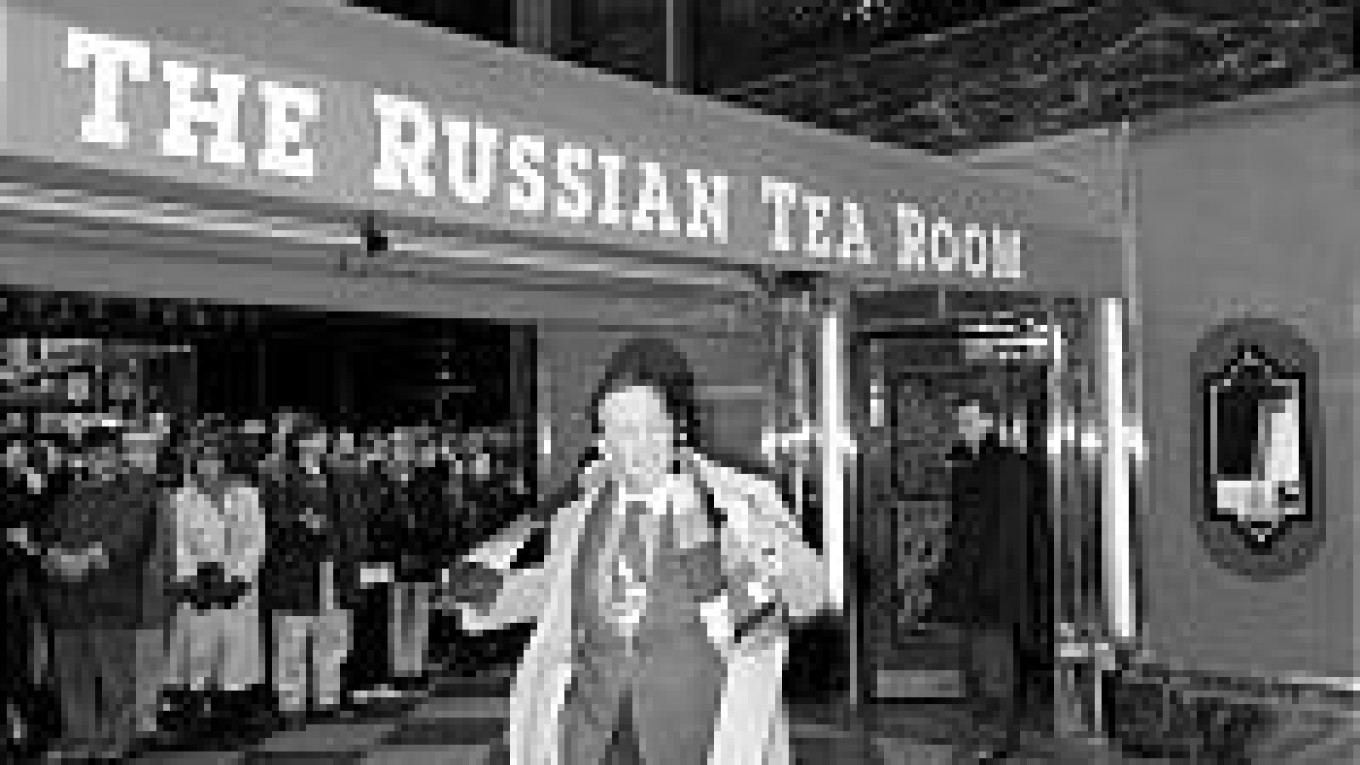
News of its imminent closing was broken to the staff on Friday by owner Jennifer LeRoy, who inherited the restaurant from her impresario father, Warner LeRoy. She blamed the slow economy and high operating costs for "the hardest and saddest decision" she has ever had to make.
The Tea Room was doing a brisk luncheon business on Saturday, with a steady stream of patrons.
Maryanne, a fan since the early 1960s, recalled seeing Marilyn Monroe in the restaurant, which has served as the backdrop for scenes from Woody Allen movies to popular television episodes.
Now almost anachronistic in its flamboyance, it opened in 1926 as a conventional tearoom for Russian immigrants as well as a hangout for expat members of the Imperial Ballet.
It soon became a global magnet for tourists and the in-place for celebrities and socialites. LeRoy's decision to close was taken only after exploring "every possible avenue available."
Visual and sensory overload were always part of the attraction: Red banquettes, antique samovars, mirrors, Tiffany glass leaded ceiling, ornately framed paintings, giant floral arrangements and an ice-like sculpture of a dancing bear. The restaurant's etched-glass elegance and shiny brass splendor, combined with an extravagant menu with fine wines and vodkas, strained patrons' vocabulary for superlatives and elicited reveries of "champagne wishes and caviar dreams" from restaurant reviewers.
Russian music set the mood.
Former owner Faith Stewart Gordon described it as "A hoot! -- Old Russia as we dream of it. Right out of Dr. Zhivago."
In 1995, she sold the building for $6.5 million to the flamboyant Warner LeRoy, on the promise that he would preserve its character.
He closed it for extensive renovation in which he poured over $20 million dollars into the ambitious new version, which reopened in 1999.
It was clear he had spared no expense to keep his word with extravagant French Russian cuisine, multinational red-uniformed waiters and general old-world atmosphere, albeit with high-tech toilets. But LeRoy, then his heirs struggled to turn a profit on the opulent restaurant.
Desiderio said it had not been decided what to do with the contents of the restaurant, which include Chagall and Kandinsky paintings.
A Message from The Moscow Times:
Dear readers,
We are facing unprecedented challenges. Russia's Prosecutor General's Office has designated The Moscow Times as an "undesirable" organization, criminalizing our work and putting our staff at risk of prosecution. This follows our earlier unjust labeling as a "foreign agent."
These actions are direct attempts to silence independent journalism in Russia. The authorities claim our work "discredits the decisions of the Russian leadership." We see things differently: we strive to provide accurate, unbiased reporting on Russia.
We, the journalists of The Moscow Times, refuse to be silenced. But to continue our work, we need your help.
Your support, no matter how small, makes a world of difference. If you can, please support us monthly starting from just $2. It's quick to set up, and every contribution makes a significant impact.
By supporting The Moscow Times, you're defending open, independent journalism in the face of repression. Thank you for standing with us.

Remind me later.