

 | To Our Readers |
The Moscow Times welcomes letters to the editor. Letters for publication should be signed and bear the signatory's address and telephone number. |
Two hundred years ago, the fledgling United States of America was struggling to make its mark on the world. The European powers weren't giving it much respect, and the threat of new conquest in the Americas was ever present -- and not only from the direction of Europe. Russia was pressing south from its imperial outposts in Alaska, and Spain was pressing north out of Mexico.
U.S. leaders wrestled these problems in two ways. The first was to project power abroad, and the second was to insist on a sphere of influence in the Americas. President Thomas Jefferson drove decisions to build a U.S. navy capable of taking on threats to U.S. commerce, and the worst threats of the day were the Barbary pirates off North Africa. President James Monroe declared a policy defying European countries to colonize or meddle in either North or South America -- the Monroe Doctrine.
Today, pirates and the Monroe Doctrine are in the news again, and it seems like we haven't progressed much in 200 years. This time, though, it is Russia that is struggling to make its mark on the world. After the August incursion into Georgia, the Kremlin declared that it would challenge any country that questioned its sphere of influence in the region. Following visits by U.S. Navy ships to Georgia, Moscow threw down the gauntlet to Washington, first sending bombers and then its own ships for exercises with the Venezuelan Navy. The Russians are calling it a challenge to the Monroe Doctrine, although the United States has so far either ignored or ridiculed the effort.
Across the world, modern-day Barbary pirates -- this time operating out of Somalia -- are threatening commerce by escalating attacks on maritime trade in the Gulf of Aden. This affects Russia's interests. When the Ukrainian ship Faina, which had Soviet-designed military equipment on board, was seized in late September, Moscow dispatched the frigate Neustrashimy to the region, to work with the U.S. 5th Fleet and a European Union task force that includes ships from the British, French and Spanish navies.
The contrast with the Venezuelan escapade could not be greater. Although Russia has not officially joined the task force, it is working with the other navies in a kind of division of labor. U.S. ships have surrounded the Faina to keep its cargo of weapons from being offloaded and, possibly, sold on to Islamist terrorist groups. The Neustrashimy, meanwhile, has joined the British Navy in escorting merchant ships and preventing pirate attacks. In mid-November, the Neustrashimy, together with the British frigate HMS Cumberland, thwarted two attacks on a Danish vessel.
Russia's partners have praised Moscow's efforts. As the spokesman for the 5th Fleet commented, "Just the fact that the Neustrashimy is ... supporting the counterpiracy efforts in the Gulf of Aden ... helps to counter the destabilizing impact on all of our international trade." Russia has responded by promising to increase its contribution. On Nov. 20, the commander-in-chief of the Navy, Admiral Vladimir Vysotsky, announced that the country would deploy warships on a regular basis to prevent pirate attacks.
What a contrast in Russian policies. In the Western hemisphere, Moscow conjures up the great power politics of the 19th century and attempts to replay Cold War games. Mercifully, the United States has responded with a light touch so far. Off the coast of Africa, however, Russia has joined with the navies of the United States, EU countries and India to confront a dire threat to the international order.
The Kremlin needs to decide which model to pursue, because it has painfully few resources available to defend its national interests. Should those scarce resources chase an ephemeral challenge to the United States, or should they concentrate on really tough problems that threaten the country's economic health and security? The answer is not difficult, especially since the tough problems allow Russia to develop a new way of working with its former adversaries from the Cold War.
Russia is in on the ground floor of international efforts to confront Somali piracy. If it plays its cards right, Russia's fleet could find its NATO counterparts, in effect, blessing Moscow's new interest in projecting naval power. They need help, and the Russian navy can provide it.
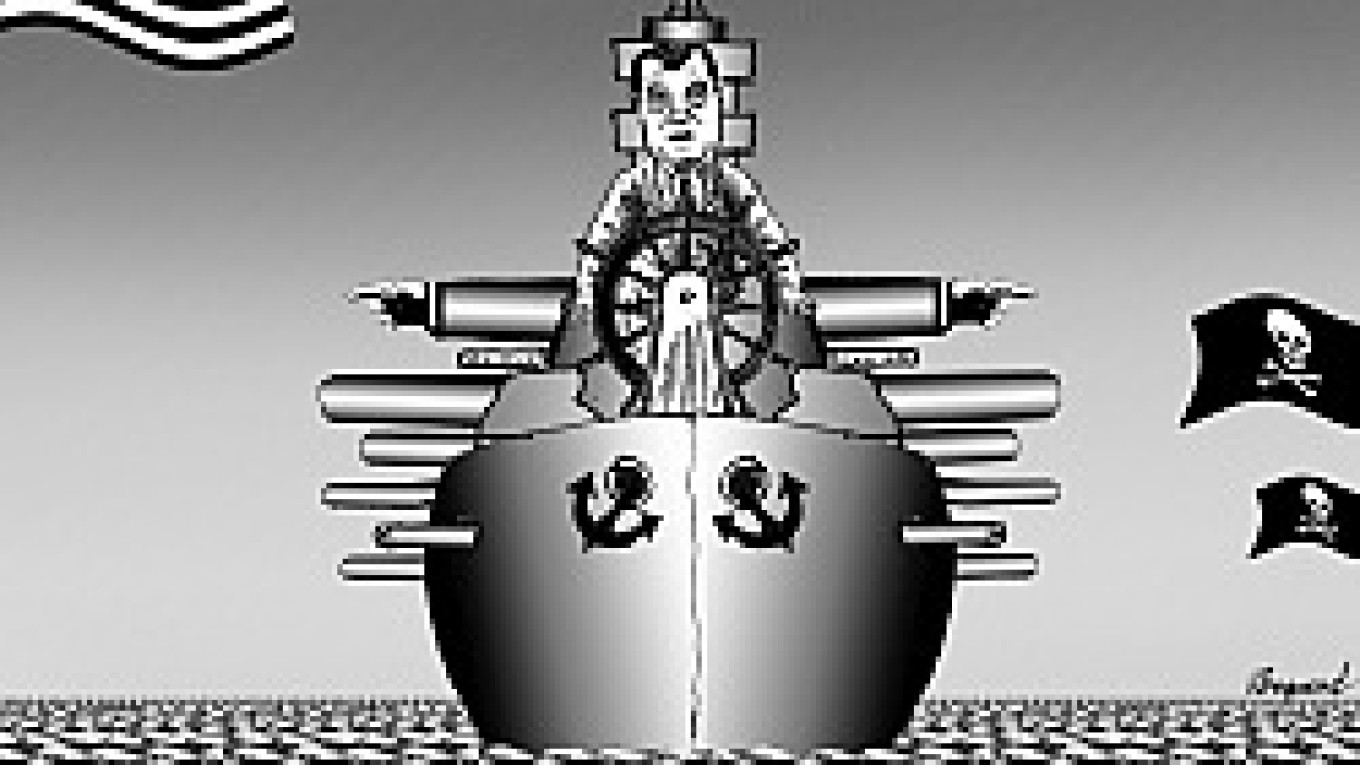
Dmitry Medvedev, who returned not long ago from Venezuela, has a serious choice to make. He can choose the Barbary pirates or the Monroe Doctrine. If I were him, I'd go with the pirates.
Rose Gottemoeller is director of the Carnegie Moscow Center.
A Message from The Moscow Times:
Dear readers,
We are facing unprecedented challenges. Russia's Prosecutor General's Office has designated The Moscow Times as an "undesirable" organization, criminalizing our work and putting our staff at risk of prosecution. This follows our earlier unjust labeling as a "foreign agent."
These actions are direct attempts to silence independent journalism in Russia. The authorities claim our work "discredits the decisions of the Russian leadership." We see things differently: we strive to provide accurate, unbiased reporting on Russia.
We, the journalists of The Moscow Times, refuse to be silenced. But to continue our work, we need your help.
Your support, no matter how small, makes a world of difference. If you can, please support us monthly starting from just $2. It's quick to set up, and every contribution makes a significant impact.
By supporting The Moscow Times, you're defending open, independent journalism in the face of repression. Thank you for standing with us.

Remind me later.