Install

Get the latest updates as we post them — right on your browser

Today's paper. Last Updated: 05/28/2012

Coming to Terms With the Soviet Past

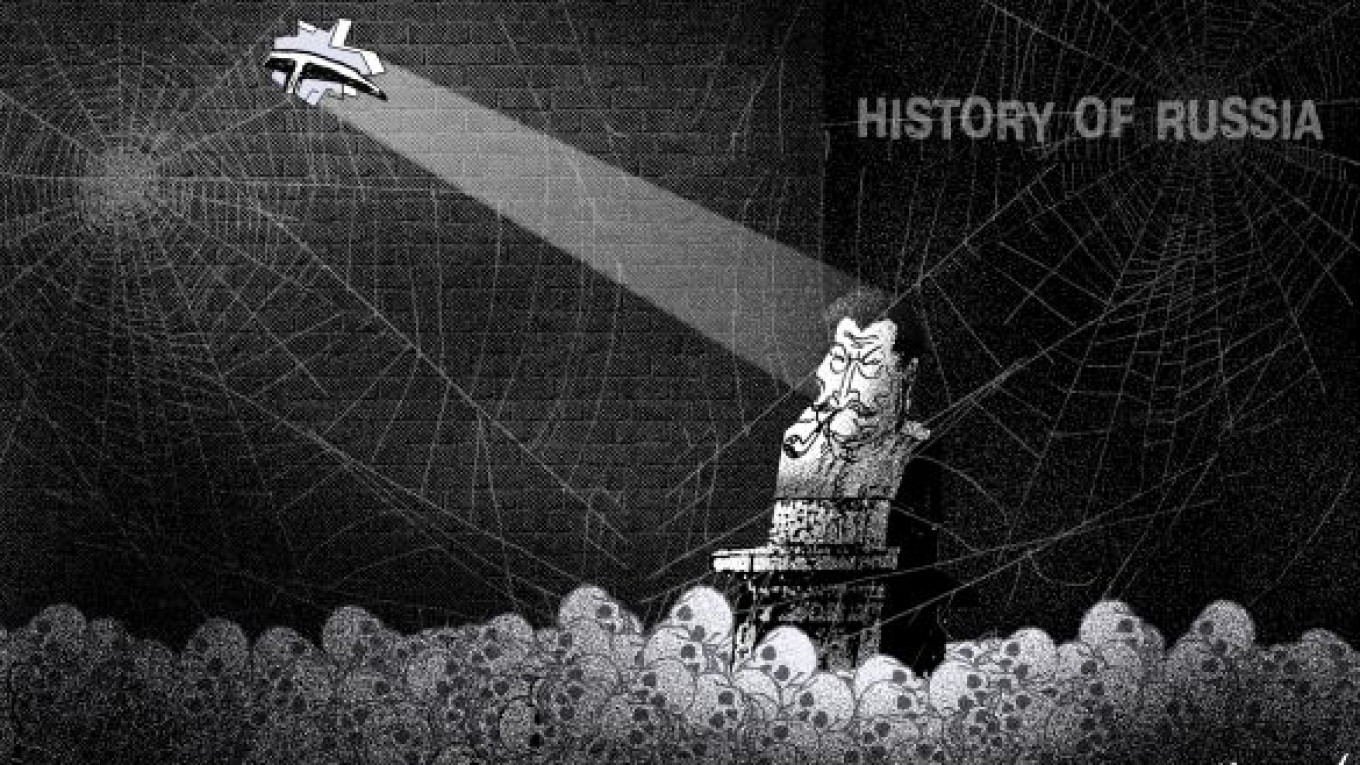
On Oct. 30, Russia commemorated the victims of political repression, including tens of millions of innocent Soviet citizens arrested, brutalized, sent to labor camps or executed under Stalin. Until recently, the date has passed with scant notice outside small groups of dedicated human rights activists. The lack of fanfare symbolizes a larger reluctance of contemporary Russia to come to terms with the horrors of the Soviet period. Russia is hardly an exception. Many societies have trouble acknowledging unpleasant aspects of their recent histories, substituting uncomfortable silence or outright denial for frank and painful discussion.

At the same time, however, the process of Russia’s recognition of its tragic Soviet past has started. For example, President Dmitry Medvedev marked Oct. 30, 2009, with a recorded video blog in which he unambiguously denounced the Stalin-era repressions: “Millions of people died as a result of terror and false accusations — millions. … There is no justification for repressions.” Medvedev also decried the lack of knowledge about this dark episode, particularly among young people. His simple message: Russia must do more to commemorate the victims of Stalinism.

Earlier this year, after decades of official denials, Russian authorities acknowledged that Soviet NKVD troops — not the Nazis — murdered 22,000 Polish officers and others at the Katyn forest massacre in 1940. They delivered secret files concerning the incident to Polish investigators.

The need for public truth and openness about the Soviet past was a main theme during the Valdai Discussion Club in September, an annual gathering of Russian and Western pundits. In addition, Sergei Karaganov, who has close ties to the authorities, characterized Russia in a  comment in the July 27 issue of Russia in Global Affairs as “a big Katyn, strewn with nameless graves of the millions of victims of the regime.”  Karaganov warned that silence regarding the crimes of Stalin continues to thwart Russia’s political progress.

These and other recent developments demonstrate growing support among Russia’s political and intellectual elites for a more open and far-reaching public discussion of the Stalin era, something that the country’s human rights activists have been advocating for years. But where does the public stand on this issue? To find out, we surveyed 2,009 Russians ages 20 to 59 as part of a project funded by the Ford Foundation and carried out by the Center for Strategic and International Studies. The Moscow polling firm, Levada Center, conducted the survey.

Our data verify that Russians have limited knowledge about the Stalin-era repressions. Only 28 percent correctly indicated that “millions or tens of millions” suffered, 31 percent cited lower figures, 24 percent simply did not know, and 17 percent had never even heard about them. This manifestation of “absent memory” is especially pronounced among 20-year-olds: 35 percent of them have not heard of the repressions. Analogies are problematic, but imagine if 35 percent of Germans in their 20s had never heard of Hitler’s genocidal actions. The best informed are the 14 percent of respondents who knew of a relative who had been unjustly arrested — particularly the 8 percent whose relatives were sent to a camp, executed or disappeared. They know more about the Stalin era and hold more critical views.

Our data also show a robust desire to learn more. Forty-five percent agree that “it is important to learn about the Stalin era to avoid repeating the mistakes of the past,” while only 24 percent said the country should “move forward and avoid stirring up the past.” Among those who had heard of the repressions, 72 percent agreed that the government should do more to make people understand their true scale, and 83 percent agreed that the government should do more to commemorate the victims.

Overall, our survey reveals widespread public interest in starting a national conversation about the Stalin era, as Medvedev attempted one year ago. Human rights activists should take heart that their efforts to encourage such a conversation resonate with the public and have received some support from the top. Indeed, we found that the public views human rights activists on these issues with admiration and respect. All of these data suggest that a coalition of activists, scholars and officials might come together to devise national and local strategies to promote greater knowledge both about victims and perpetrators through schools, public monuments, the arts and mass media. One approach might be to encourage the 16 percent who do not know whether any relatives were victimized to obtain information about their families using the country’s freedom of information act, which came into force in January 2009.

Knowing more about what happened is a necessary first step to genuine de-Stalinization. Russia’s politicians, public and human rights activists have a great opportunity to work together to explore the truths about the Soviet past. If they seize this opportunity, Russians will be poised to teach other countries valuable lessons about both the necessity and the possibility for societies to reconcile with painful episodes of their past. Let’s hope they choose the truth over silence.

Sarah E. Mendelson is deputy assistant administrator in the Bureau for Democracy, Conflict and Humanitarian Assistance at the U.S. Agency for International Development . Theodore P. Gerber is professor of sociology at the University of Wisconsin-Madison. This comment appeared in Vedomosti.


This article has 7 comments on TheMoscowTimes.com and 0 comments on Facebook.

Leave a comment


Discussion
The Moscow Times welcomes your comments and invites you to discuss topics with other readers. Your comment will be posted automatically to enable a live discussion. If you aren't familiar with our comments policy, you can read it here.

If you're a registered user, you can start typing your comment below. If not, take a moment to sign up. and then return to the article.

If your comment doesn't appear, contact us by using our web form.

Comments


Coming to Terms With the Soviet Past

I am a British teacher of English in the Ural Mountains area. Recently I set a project for my 14-16 year old students to make a list of the 10 greatest people in history. It was no surprise to see that Newton, Tolstoi and Einstein made it on to almost everyone's list. What was somewhat galling was to see that lenin and Stalin were on everyone's list and mostly at the top.

By the way, Jesus Christ was mentioned in one girl's list. There is some hope, after all.

Neal Hoy.

Coming to Terms With the Soviet Past

We have recently seen a number of articles making the point that Russia cannot build an advanced civil culture without full recognition of and atonement for its brutal past. It is psychologically necessary to avoid the contradictions inherent in the promotion of healthy social ideas while still subconsciously carrying and defending past transgressions that happened on a staggering scale. It is also necessary in order to move from a nation-building model based on personality cults and autocratic rulers to a new model based on a set of nationally inculcated and institutionalized values. National values provide the only lasting and universally supported foundation for intelligent law and self-government. Another area that must be studied and looked squarely in the eye is the violent and cruel societies engendered by Czarist rule going back hundreds of years, which molded the Russian psyche. And finally, it must be acknowledged that Lenin was Stalin's teacher, a man who himself killed millions, and who created the gulags and the most efficient systems of state terror copied not only by Stalin, but by subsequent dictators across the planet in the 20th century, including Hitler.

Coming to Terms With the Soviet Past

Perhaps it is still a little early for all Russians to accept and "digest" the truth about the Stalin era.  This is not to say nothing should be disclosed, but there is so much that people would reject because they just could not emotionally accept it.  President Medvedev was right about trying to open up about the past, but it is going to take time.

Russia is not alone in having to face its tragedies from the past.  I just read an interesting book about the abortive attempt to produce a museum exhibit in Washington on the Enola Gay and Hiroshima.  The reaction was a national uproar, and there are still "ruffled feathers" fifteen years later.

I applaud Russia for at least trying to review its past.  Perhaps it will take another generation or two for an objective view to evolve - maybe after we are all dead and gone and nobody has such an emotional investment in the story.

Coming to Terms With the Soviet Past

Òàê õî÷åòñÿ çàïàäíûì ñèîíèñòàì ïðåäñòàâèòü Ðîññèþ òàêèì ìîíñòðîì, òîëüêî çà òî, ÷òî ñâåðãëè èõ ïðàâëåíèå â 2000 ãîäó, êîòîðûå ãðàáèëè Ðîññèþ ñ 1992 ïî 1999ã. Íå ìîãóò ïðîñòèòü Ïóòèíó. Íàäî áûòü ïîëíûì èäèîòîì íàïèñàâøèì "òîëüêî 28% îòâåòèëè ïðàâèëüíî". Ïðàâîçàùèòíàÿ îðãàíèçàöèÿ "Ìåìîðèàë" â Ðîññèè, ôèíàíñèðóåìàÿ àìåðèêàíñêèìè-àíòèðîññèéñêèìè ôîíäàìè íàïèñàëà íà ñâîåì ñàéòå, ÷òî çà âðåìÿ ïðàâëåíèÿ Ñòàëèíà ñ 1929ã ïî 1953ã ðàññòðåëÿíî 985,7 òûñÿ÷ ÷åëîâåê.  


The Western Zionists want to paint Russia as a monster only because they lost power in 2000 after robbing Russia from 1992 to 1999. They can't forgive Putin. You have to be a complete idiot to write "only 28% answered correctly." The human rights organization Memorial — financed by American, anti-Russian funds — writes on its site that during Stalin's reign (1929-1953), 985,700 people were executed.  (Translation by MT)

Coming to Terms With the Soviet Past

Âîïðîñ ê àâòîðàì: ïñåâäîõëåñòêîñòü è ïðèâèðàíèå - ýòî îáÿçàòåëüíûé àòðèáóò "ñâîáîäíîé" æóðíàëèñòèêè?  ïîãîíå çà âïå÷àòëåíèåì ìîæíî è ïðåóâåëè÷èòü â ðàçû, íå òàê ëè. Ðàçóìååòñÿ, ÷òî ñòàëèíñêèå ðåïðåññèè ÷óäîâèùíû è îäíîãî íåâèííî îãèáøåãî æàëü, íî çà÷åì òàê ïðèâèðàòü. Âîò îôèöèàëüíûå äàííûå î ìàñøòàáàõ ðåïðåññèé â ÑÑÑÐ, íî íå â Ðîññèè: " Â ôåâðàëå 1954 ã. íà èìÿ Í.Ñ. Õðóùåâà áûëà ïîäãîòîâëåíà ñïðàâêà, ïîäïèñàííàÿ Ãåíåðàëüíûì ïðîêóðîðîì ÑÑÑÐ Ð. Ðóäåíêî, ìèíèñòðîì âíóòðåííèõ äåë ÑÑÑÐ Ñ. Êðóãëîâûì è ìèíèñòðîì þñòèöèè ÑÑÑÐ Ê. Ãîðøåíèíûì, â êîòîðîé íàçûâàëîñü ÷èñëî îñóæäåííûõ çà êîíòððåâîëþöèîííûå ïðåñòóïëåíèÿ çà ïåðèîä ñ 1921 ã. ïî 1 ôåâðàëÿ 1954 ã. Âñåãî çà ýòîò ïåðèîä áûëî îñóæäåíî Êîëëåãèåé ÎÃÏÓ, "òðîéêàìè" ÍÊÂÄ, Îñîáûì ñîâåùàíèåì, Âîåííîé Êîëëåãèåé, ñóäàìè è âîåííûìè òðèáóíàëàìè 3 777 380 ÷åëîâåê, â òîì ÷èñëå ê âûñøåé ìåðå íàêàçàíèÿ - 642 980, ê ñîäåðæàíèþ â ëàãåðÿõ è òþðüìàõ íà ñðîê îò 25 ëåò è íèæå - 2 369 220, â ññûëêó è âûñûëêó - 765 180 ÷åëîâåê». È ãäå çäåñü "äåñÿòêè ìèëëèîíîâ"? Íå õîðîøî-ñ, ãîñïîäà, âðàòü, äàæå íåñìîòðÿ íà ñâîáîäó ñëîâà.


A question for the authors: are fast-talking and exaggeration essential characteristics of "free" journalism? Do a journalist have the right to blow something out of proportion to make an impression?  It goes without saying that Stalin's repressions were monstrous, and one innocent victim is a shame, but why exaggerate? Here's the official information about the scale of repressions in the USSR: "In February 1954, on the orders of Nikolai Khrushchev, information was prepared, signed by Soviet Prosecutor General R. Rudenko, Internal Minister S. Kruglovy and Justice Minister K. Gorsheniny, which included the number of people convicted of counterrevolutionary activities between 1921 and February 1, 1954. For that entire period, the number convicted by the OGPU, the NKVD "trio," special meetings, military collegiums, courts and military tribunals was 3,777,380. This includes 642,980 executed, 2,369,220 sent to prison camps for less than 25 years, and 765,180 exiled." Where are the "tens of millions" here? Ladies and gentlemen, regardless of freedom of speech, it's not good to lie. (Translation by MT)

Coming to Terms With the Soviet Past

To Mr Neal Hoy !  The real hero here, teaching Russian youths, English, are you, no doubt ! Somewhere between Tjeljabinsk "Tankograd ", and Magnitogorsk ? Those two towns that gave the English Lion a chance to survive Luftwaffe. " Don´t mention the war " , but the kids knowing something of two other small sleepy towns, (Lenin)grad and (Stalin(grad) can´t be blamed either. But on my list Mr Neal Hoy is mentioned, (besides Jesus) There is some hope after all.

Thank you.


Coming to Terms With the Soviet Past

Some people define communism as "paradise on earth;" others define it as "hell on earth." The first definition is often used to seduce--all problems will easily be solved after our next proletarian revolution, according to Marxists. The second definition is a description of what actually happened in the Soviet Union. And now again Marxists promise that problems like exploitation, wars, poverty, alcoholism, anti-semitism, racism, and all other forms of injustice will disappear in classless society.


But what about pollution, limited natural resources, overpopulation of the planet, global warming, etc.? Would they also disappear automatically in a classless society? If not then communism will not be a paradise on earth. The Soviet Union, by the way, probably became more polluted than the US. I am thinking about the sea of Azov disaster, and about Siberian rivers carrying radioactive waste to the Polar seas. 


What evidence do we have that Russians benefitted from proletarian dictatorship? They would probably be better off today if Russia had been allowed to develop like other Western-European countries. So much suffering for nothing ... 


= = = = = = = = = = = = = = = = = = = = 


Ludwik Kowalski, a retired nuclear scientist and the author of a free ON-LINE  book entitled “Diary of a Former Communist: Thoughts, Feelings, Reality.”


http://csam.montclair.edu/~kowalski/life/intro.html 


It  is an autobiography illustrating my evolution from one extreme to another--from a devoted Stalinist to an active anti-communist. This testimony is based on a diary I kept between 1946 and 2004 (in the USSR, Poland, France and the USA).


Why am I distributing these books on-line, instead of selling them for profit? Because I want to share what I know and think about communism. The more people know about proletarian dictatorship less likely will they experience is. Please share the above link with those who might be interested, especially with young people, and with potential reviewers. Thank you in advance.


Report Inappropriate Comment


Comments via Facebook


Also in Opinion

There's Just One Nationality — Mathematician

Nationalism is an infantile disease. It is the measles of mankind."

Russia's New Propaganda Minister

After Monday's announcement that historian Vladimir Medinsky was appointed the culture minister, critics quickly labeled him the new propaganda minister. Medinsky's academic ethics and historical distortions may raise serious questions, but for the Kremlin, he has three important attributes that are much more important: He is a model United Russia leader, a firm Putin loyalist and a skilled sophist.

Spinning Medvedev's Government

Were this 2008 and not 2012 — and had Dmitry Medvedev been named prime minister without having first served a full term as president — then the composition of his new government might have created a generally positive impression.

New Government Faces Old Problems

A longstanding platitude shared by both the Kremlin as well as domestic and foreign analysts is the need for Russia to diversify its economy away from energy dependence and reduce its non-oil budget deficit.

Putin's Postman Delivers Nothing at the G8

In the mid-1990s, former President Boris Yeltsin fought hard for the right to sit as equal at the same table with the leaders of the world's seven leading democracies. Using a lot of political wrangling, Moscow finally secured permanent membership in this elite club where the real heavyweights are supposed to solve the world's most pressing problems.

Russia Stays Home

Just three days before his return to the Kremlin as president, Vladimir Putin met behind closed doors at his residence in Novo-Ogaryovo, outside Moscow, with U.S. National Security Adviser Tom Donilon, who was there to transmit President Barack Obama's renewed determination to strengthen cooperation with Russia.


print


Comments

This article has 7 comments on TheMoscowTimes.com and 0 comments on Facebook.

Leave a comment


To Our Readers

The Moscow Times welcomes letters to the editor. Letters for publication should be signed and bear the signatory's address and telephone number.

Letters to the editor should be sent by fax to (7-495) 232-6529, by e-mail to oped@imedia.ru, or by post. The Moscow Times reserves the right to edit letters.


Most Read
MarketGid
