

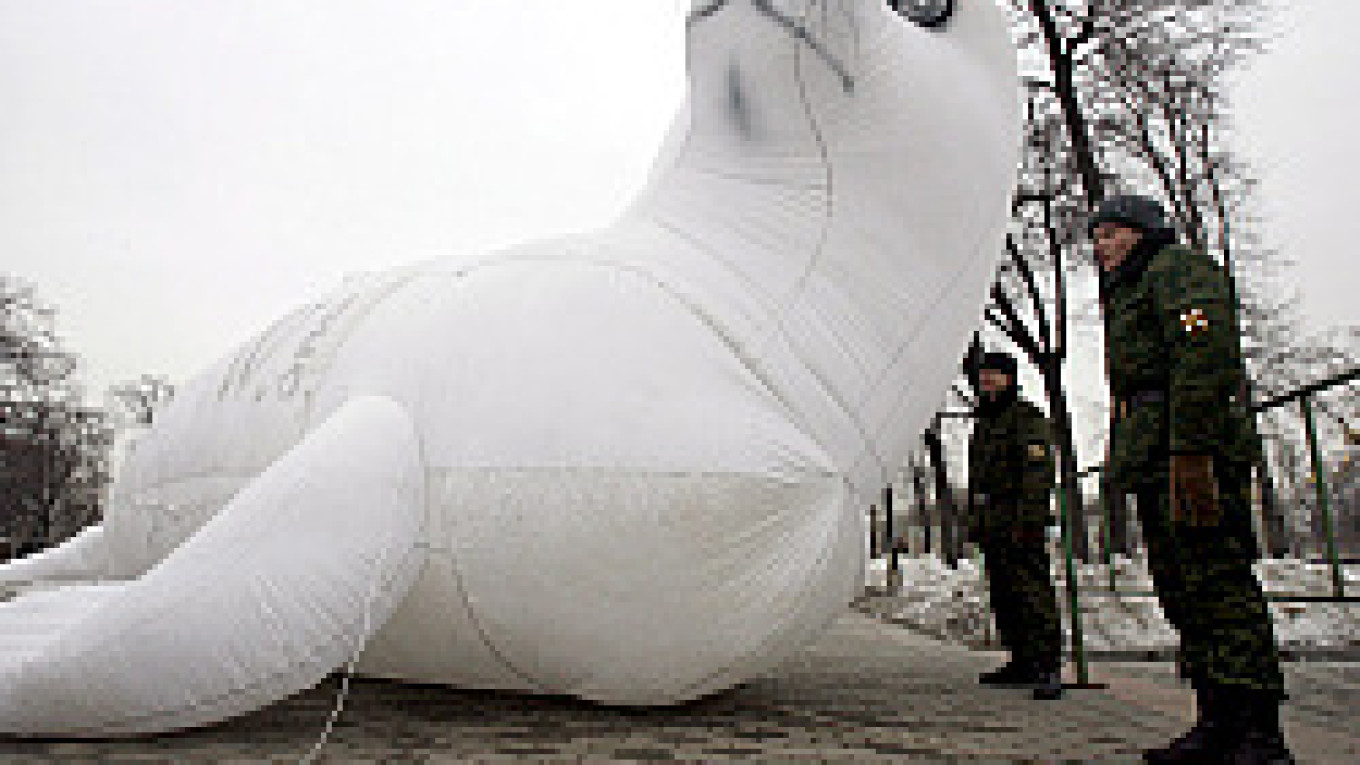
The Natural Resources Ministry said Wednesday that it had banned the hunting of baby harp seals, weeks after Prime Minister Vladimir Putin called it a "bloody industry."
"The bloody sight of the hunting of seals, the slaughter of these defenseless animals, which you cannot even call a real hunt, is banned in our country, just as well as in most developed countries, and is a serious step to protect the biodiversity of the Russian Federation," Natural Resources Minister Yury Trutnev said in a statement.
Seals inhabit Russia's White Sea region in the Arctic. Protests urging a halt to hunting of baby seals took place in 20 cities and towns across Russia this week. On Feb. 27, government daily Rossiiskaya Gazeta quoted Putin as saying, "This is a bloody business, and it's clear that it needs to be stopped."
He said hunters should be compensated for lost earnings.
President Dmitry Medvedev was swept up in a minor seal fur scandal in November 2007, when the Krasnoyarsk television channel TVK reported that Medvedev -- then first deputy prime minister -- bought a coat made from the fur of seal pups from a local shop for 500,000 rubles ($14,500). The report was widely circulated by Russian online news portals and sparked heated debates in the country's blogosphere.
In April, following Medvedev's election, Komsomolskaya Pravda published a statement from the Kremlin press service stating that neither Medvedev nor any members of his family had ever purchased any items made from harp seals.
(Reuters, MT)
Correction: An earlier version of this article published on www.themoscowtimes.com on March 18, 2009 contained incorrect information regarding Canada's policy on the hunting of baby harp seals. It was stated that the practice is legal in Canada, while in fact it is not.
A Message from The Moscow Times:
Dear readers,
We are facing unprecedented challenges. Russia's Prosecutor General's Office has designated The Moscow Times as an "undesirable" organization, criminalizing our work and putting our staff at risk of prosecution. This follows our earlier unjust labeling as a "foreign agent."
These actions are direct attempts to silence independent journalism in Russia. The authorities claim our work "discredits the decisions of the Russian leadership." We see things differently: we strive to provide accurate, unbiased reporting on Russia.
We, the journalists of The Moscow Times, refuse to be silenced. But to continue our work, we need your help.
Your support, no matter how small, makes a world of difference. If you can, please support us monthly starting from just $2. It's quick to set up, and every contribution makes a significant impact.
By supporting The Moscow Times, you're defending open, independent journalism in the face of repression. Thank you for standing with us.

Remind me later.