

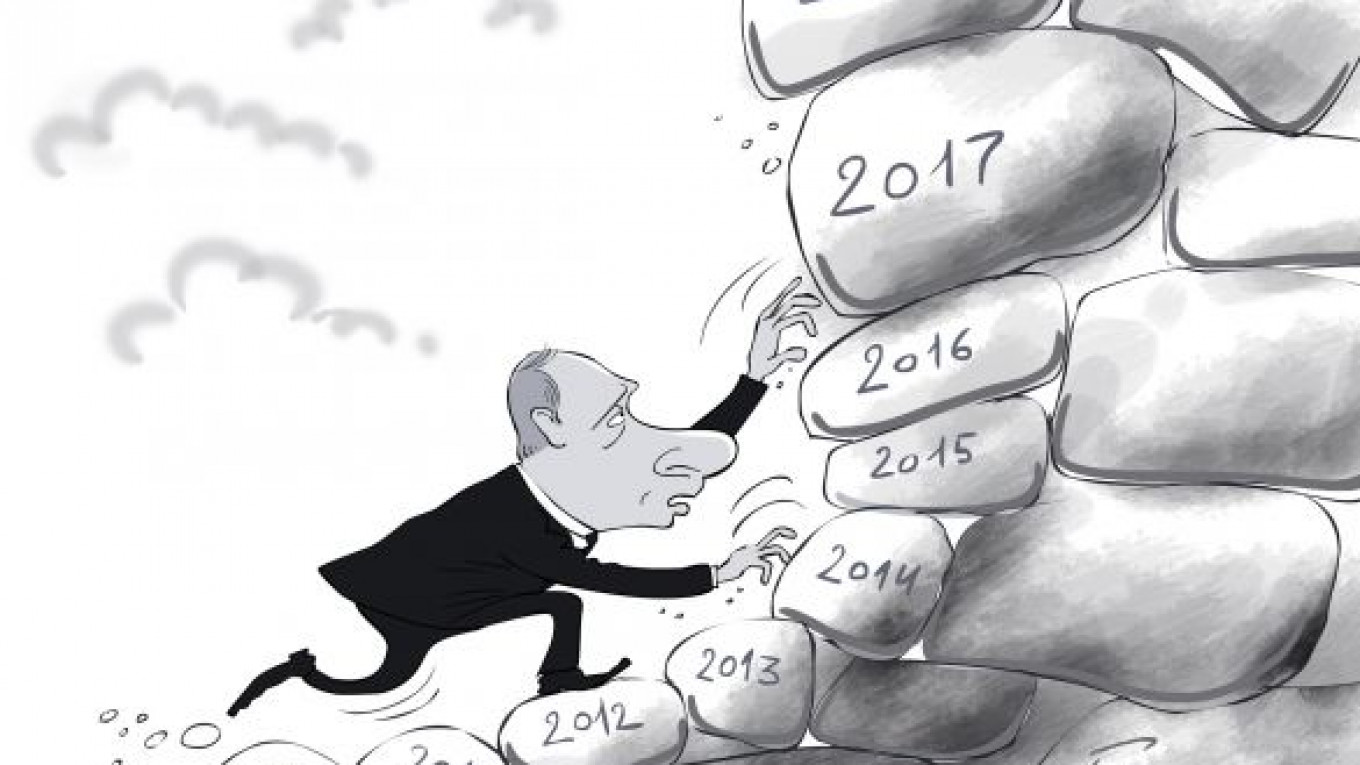
As 2010 and the first decade of the 21st century wind to a close, the dominant social, political and economic trends of the year raise serious doubts about Russia’s future survival as a sovereign country. Chinese analysts, who have been closely observing Russia for the past 20 years, perhaps put it best: Russia is the world’s largest dying power.
If Russia continues down its current path of autocracy, monopolization, corruption and overall economic, political, cultural and technological degradation, it may prove the Chinese correct in their terminal diagnosis.
To be sure, the country’s degradation began before Vladimir Putin’s rise to power, but the nature and causes of this degradation are much different than under Putin’s degradation. During the 1990s, Russia found itself in complete political and economic ruins after the collapse of the Soviet Union and was hampered even further by low world oil prices throughout the decade. But? during the 2000s, Russia enjoyed record-high oil prices. Nonetheless, the oil windfall was not used to modernize, diversify or reform political and economic institutions. Instead, the lion’s share of oil revenue was stolen or wasted on huge pork-barrel projects.
There are four main areas that made 2010 a record year for Russia’s degradation:
1. The country declined on the 2010 United Nations Human Development Index from 57th place five years ago to 65th place this year. This was because of the gap between the rich and poor widened and because the middle class has remained at only 10 percent to 12 percent of the population for the past decade. In addition, education dropped nine positions in the index to 41st place among 60 countries at a time when Russia plans to reduce its investment in education and human capital. The share of gross domestic product spending on science, education and health care will continue to decline, while spending for the military, police, intelligence services and other siloviki structures will increase.
2. The state has become more corrupt and criminalized. The most striking example was the Kushchyovskaya massacre in early November that unmasked the complete fusion of organized crime and the local government, including the regional legislature, the court system and law enforcement agencies. It is no surprise that Russia fell 12 places in the most current World Economic Forum’s Global Competitiveness Report from 51st to 63rd place among 134 countries. Russia’s state institutions were ranked among the very worst in the world at 118th place. While the Kremlin pronounces empty words and slogans about “modernization” and “nanotechnology,” Russia has fallen to 80th place in the ranking for innovation, 126th place in terms of protection of property rights, 125th place for development of the financial market and 128th place for the high burden of state regulation on business. As a result, Russia again had the worst economic performance among the BRIC countries in 2010, including indexes for direct investment and economic growth, with capital flight from the country reaching $29 billion over 11 months.
3. The economy has become more state-controlled and ineffective. The share of the raw materials sector in the economy continued to grow in addition to its already oversized share in the country’s export budget revenues. With the state’s share in the economy now at 50 percent according to government sources — and even higher if you count businesses owned or controlled by state officials — and with state workers now accounting for every second employee, the level of economic competition is woefully low, which means a rise in prices and overall inflation and a drop in quality, productivity and quality of goods.
4. Most Russians are overcome by cynicism and anger over their declining standard of living and the fact that the ruling elite abuse their power and continue to embezzle money and assets from the people and businesses with impunity. In short, Russians have lost all hope for the future under the current leadership. This is reflected in rising crime, xenophobia and violence. The most striking evidence of the people’s growing anger and intolerance and the disintegration of Russian society was the riot by ultranationalists on Manezh Square in early December.
To make matters worse, Moscow’s practice of appointing Kremlin-friendly yet highly unpopular governors from outside the regions only intensifies the provinces’ sense of alienation from the federal center. The Kremlin has taken an imperial approach to governing the regions, laying the foundation for an increase in separatist sentiments, particularly in the North Caucasus, Kaliningrad and in the Far East.
Putin’s desire to remain in power for another 12 years after the 2012 presidential election spells disaster for Russia. In the best case scenario, we can expect long-term economic stagnation and social decline. This will be coupled with a continued rise in corruption, drop in foreign investment and the flight from Russia of both capital and millions of its best and most talented citizens. In the worst case scenario, the continued degradation caused by corruption, monopolization and lawlessness could result in a total collapse and disintegration of the country, and if the country’s leadership doesn’t change this happen in the next decade.
Vladimir Ryzhkov, a State Duma deputy from 1993 to 2007, hosts a political talk show on Ekho Moskvy radio.
A Message from The Moscow Times:
Dear readers,
We are facing unprecedented challenges. Russia's Prosecutor General's Office has designated The Moscow Times as an "undesirable" organization, criminalizing our work and putting our staff at risk of prosecution. This follows our earlier unjust labeling as a "foreign agent."
These actions are direct attempts to silence independent journalism in Russia. The authorities claim our work "discredits the decisions of the Russian leadership." We see things differently: we strive to provide accurate, unbiased reporting on Russia.
We, the journalists of The Moscow Times, refuse to be silenced. But to continue our work, we need your help.
Your support, no matter how small, makes a world of difference. If you can, please support us monthly starting from just $2. It's quick to set up, and every contribution makes a significant impact.
By supporting The Moscow Times, you're defending open, independent journalism in the face of repression. Thank you for standing with us.

Remind me later.