

Russian media started reporting the forest fires in bits and pieces in mid-July, but it only became a full-blown story when Prime Minister Vladimir Putin visited the burned down village of Verkhnyaya Vereya in the Nizhny Novgorod region. He ordered that each fire victim receive the generous sum of 3.5 million rubles ($117,500) in compensation for new housing.
It had seemed that the forest fires, a common phenomenon in Russia, would pass relatively unnoticed this year. But by the time the suffocating smog from the burning forests and peat bogs covered Moscow, the authorities were facing a barrage of questions about the effectiveness of Putin’s power vertical.
State-controlled television revealed as little information as possible to the public about the fires and smog. Its primary goal was to prevent panic. This eerily reminded me of how the Soviet government reacted to the Chernobyl explosion in April 1986. In a similar manner, the authorities withheld information about the extent of the nuclear fallout to “avoid panic.” As a result, thousands of people were exposed to nuclear radiation when they should have been immediately evacuated from the contaminated area.
Nobody knows for sure how many people have died or been hospitalized because of this summer’s smog. While almost every senior bureaucrat has spoken opaquely of only a “modest increase” in the death rate since the fires and smog began, there is one bureaucrat — Andrei Seltsovsky, head of Moscow’s health department — who has gone against the grain of self-
censorship and given figures that appear somewhat closer to the truth. “The average death rate in the city during normal times is between 360 and 380 people per day. Now we have about 700,” he said Monday. Meanwhile, Internet sites are reporting a several-fold increase in deaths, and morgues have filled to capacity.
At the same time, the Moscow city authorities have made no special efforts to alleviate people’s suffering. In similar crises in the West, police officers and national guards pass out bottles of water on the streets to the elderly and others suffering from heat exhaustion and illnesses complicated by smog. This was not done in Moscow. In addition, nobody installed air conditioners in hospitals, where they were badly needed. To make matters worse, Mayor Yury Luzhkov did not return from his European vacation until Sunday, when most of the heat- and smog-related problems had already passed. And, as always happens in Russia in such situations, pharmacies ran out of face masks.
Russia’s leaders finally came up with the idea to mobilize the army to fight fires at the end of July, after the fires had already spread across almost all of European Russia. Even then, official figures show that no more than 10,000 soldiers were assigned to fight the fires. Defense Minister Anatoly Serdyukov ordered the transfer of water supply units from the North Caucasus to Moscow only after burning peat bogs had already suffocated millions of Muscovites for a full week.
As it turns out, Russia has only six amphibious aircraft that could be outfitted for airborne firefighting. The satellite images of fires raging across the country have been provided by U.S., not Russian, satellites. On the basis of the Forest Code, which was rubber-stamped by United Russia in the State Duma in 2007, the once-centralized, nationwide fire protection and firefighting system was virtually destroyed. All firefighting responsibilities were blindly handed over to municipalities, but without the necessary funding.
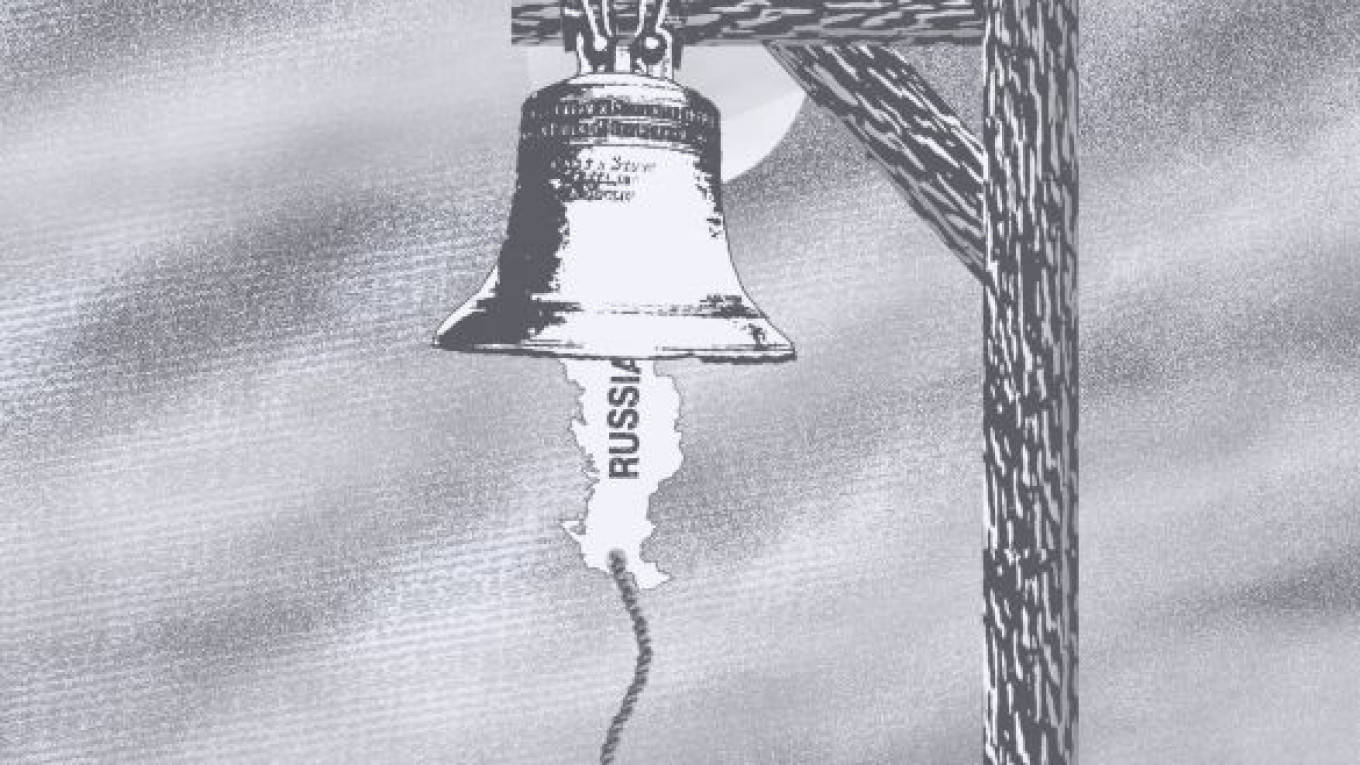
A blogger under the name top_lap from the Tver region wrote about the deplorable state of Russia’s infrastructure in an open letter to Putin. This blogger’s village lacked even a bell to ring to warn authorities when a fire breaks out, its water reservoir for fighting fires has been filled in, and its only firetruck has disappeared. This is typical of thousands of towns and villages across the country.
The summer fires and smog underscore the woeful inability of the country’s leaders to act swiftly and effectively under such conditions, not to mention their complete failure to mobilize additional resources and people to coordinate their actions with nongovernmental and volunteer organizations. In a country that once had an enormous and effective civil defense system with bomb shelters in every town, people on the front lines of the fires today lack the most basic of resources: water reserves, shovels, sand and fire extinguishers.
If the current power vertical is the best Putin can offer in terms of managing a crisis, it is frightening to think what might happen if we are faced with a catastrophe that is much more serious than forest and peat bog fires.
Georgy Bovt is a co-founder of the Right Cause party.
A Message from The Moscow Times:
Dear readers,
We are facing unprecedented challenges. Russia's Prosecutor General's Office has designated The Moscow Times as an "undesirable" organization, criminalizing our work and putting our staff at risk of prosecution. This follows our earlier unjust labeling as a "foreign agent."
These actions are direct attempts to silence independent journalism in Russia. The authorities claim our work "discredits the decisions of the Russian leadership." We see things differently: we strive to provide accurate, unbiased reporting on Russia.
We, the journalists of The Moscow Times, refuse to be silenced. But to continue our work, we need your help.
Your support, no matter how small, makes a world of difference. If you can, please support us monthly starting from just $2. It's quick to set up, and every contribution makes a significant impact.
By supporting The Moscow Times, you're defending open, independent journalism in the face of repression. Thank you for standing with us.

Remind me later.