

Even before President Dmitry Medvedev published his “Go, Russia!” article, observers speculated that he would discuss three major themes in his state-of-the-nation address: Moscow’s relations with the regions, reforming the political system and modernizing the economy. As it turned out, his speech dealt with all three. But one thing was missing that would have been nice to see: a bridge between his wonderful strategic plans and his concrete proposals.
Medvedev’s ideas are either specific and concrete, or strategic and abstract. Whenever he paints an appealing picture, he fails to provide concrete steps for attaining it, and whenever he proposes concrete actions, the end goal remains unclear.
Medvedev’s second annual address last week contained a detailed list of measures for what he said would strengthen the political system. This immediately raises questions about the president’s underlying premise that Russia has already formed a multiparty system. Following the falsification of the Oct. 11 election results in favor of United Russia and the walkout of three State Duma factions in protest, such a claim comes across like an affront to common sense.
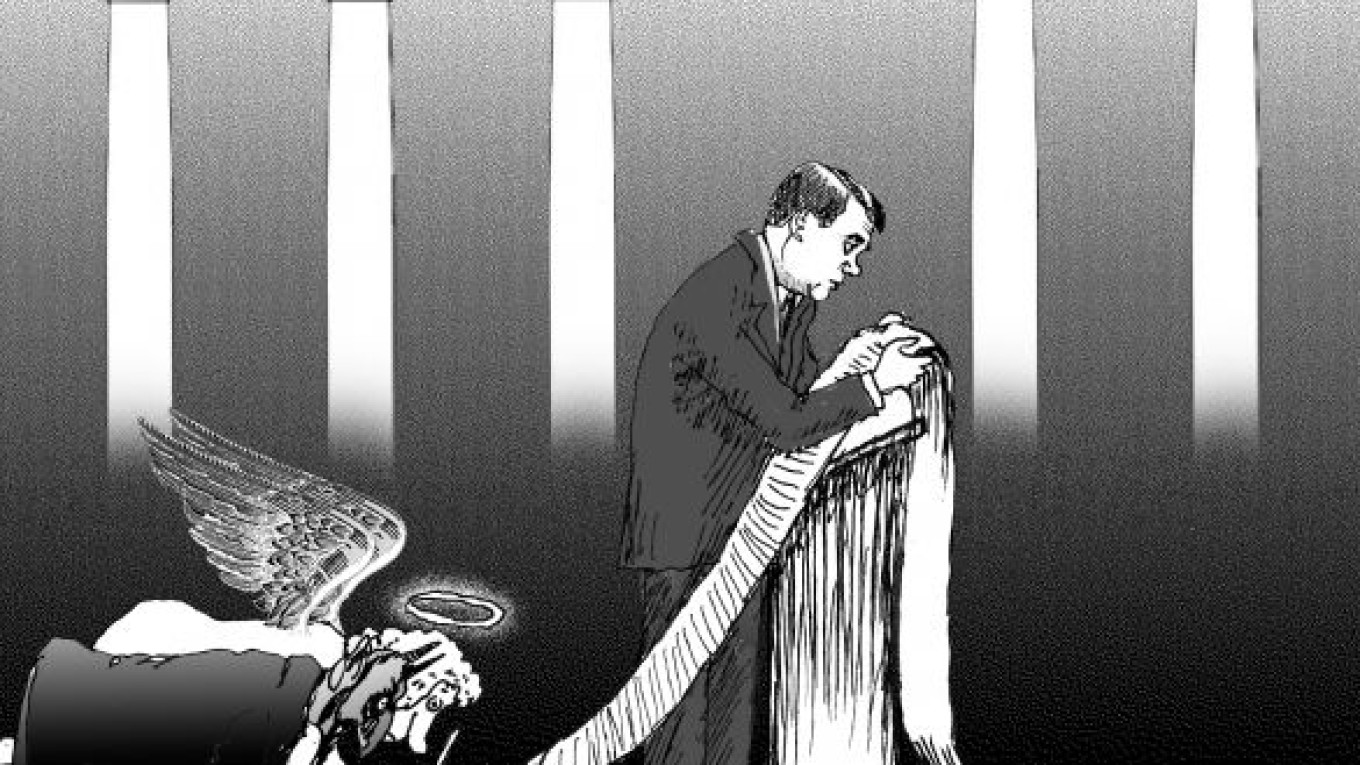
The president asserted that the political system that the Kremlin finished constructing before the crisis hit is adequate to the new social and economic realities and to the enormous task of modernizing the country “based on democratic values and institutions.” But at the same time, Medvedev occasionally issued sharp criticisms of the existing bureaucratic system. This leaves the impression that his speeches are written by several different speechwriters living in different political eras.
What is the reason for this political schizophrenia? It stems from the fact that Medvedev is surrounded by two types of people — a minority who think the current political system is terrible and requires fundamental changes, and a majority who think the system is great because they built it with their own hands. The latter group agrees at most to making a few decorative “refinements” here and there. Speaking with the voice of the first group, the president lashes out at the system. With the voice of the second, he praises it and even adds a few insignificant refinements to it himself.
The program that Medvedev proposed for “strengthening democratic institutions at the regional level” creates a strange impression. Many of the points it contains — such as a universal approach to determining the number of deputies in regional legislatures and the development of a proportional system at all levels of organizing representative authority — appear to be violations of the constitutional authority of the regions. Generally speaking, in a federation such as Russia, the authority of the president and other federal institutions simply does not extend to those issues. Medvedev’s proposed changes raise even greater doubts.
It is hard to believe that the main problem with legislatures at the regional level is the number of deputies — a question the president proposes determining from Moscow. More likely, the problem is in the quality of the deputies and the functioning of the legislature — often little more than a rubber stamp for the executive branch of government. And before applying a strictly proportional system for forming bodies of representative authority at all levels, it would be worthwhile to at least analyze the experience of the State Duma and those regional legislatures that were already formed using such a system. Any advantages shown by that experience are uncertain at best.
United Russia functionaries usually portray any rejection of the single-mandate districts as being almost a gift from them to the other parties, but that is not the case at all. Even if a victory for United Russia is announced in the districts, it is not a win for some faceless “soldier in the party ranks” but for a very strong and relatively autonomous politician. In fact, United Russia often just hands its flag to the strongest candidate before the election. What’s more, elections in the districts — even when violations take place — are a mechanism for obtaining some feedback from voters and makes leaders at least partially responsible to them.
The Kremlin could not avoid responding to all of the complaints directed at it after the October regional elections. However, at a meeting with political party leaders, the president made the ambiguous statement that “overall, the elections were very organized.” “Organized” does not mean honest, even by the usual Russian standards. But the only thing Medvedev found necessary to suggest was to “analyze the use of absentee ballots.” However, the main problem with the elections was not the outdated scheme of cheating with absentee ballots but the use of “virtual” voters — people who simply do not exist and whose votes were counted in numbers reflecting the whims of the local election authorities.
Some analysts concluded that the president’s first address one year ago — which included a proposal to extend the terms of the president and State Duma deputies — was delivered before he had a chance to react to the crisis and contained a range of trivial changes that he had prepared earlier. But the latest address reveals Medvedev’s particular political style. It is characterized by sharp and wide-ranging criticisms, vast rhetorical flourishes and absolutely zilch when it comes to concrete proposals for change.
Nikolai Petrov is a scholar in residence at the Carnegie Moscow Center.
A Message from The Moscow Times:
Dear readers,
We are facing unprecedented challenges. Russia's Prosecutor General's Office has designated The Moscow Times as an "undesirable" organization, criminalizing our work and putting our staff at risk of prosecution. This follows our earlier unjust labeling as a "foreign agent."
These actions are direct attempts to silence independent journalism in Russia. The authorities claim our work "discredits the decisions of the Russian leadership." We see things differently: we strive to provide accurate, unbiased reporting on Russia.
We, the journalists of The Moscow Times, refuse to be silenced. But to continue our work, we need your help.
Your support, no matter how small, makes a world of difference. If you can, please support us monthly starting from just $2. It's quick to set up, and every contribution makes a significant impact.
By supporting The Moscow Times, you're defending open, independent journalism in the face of repression. Thank you for standing with us.

Remind me later.