

The culture and education ministers on Thursday presented a list of 100 Soviet and Russian films that schools will be advised to show students to strengthen their cultural values and to build bonds with their parents and teachers from older generations.
"This is not a list of the best Russian films, and this is not a Russian Oscar. It is an attempt to show a cross-section of culture," Culture Minister Vladimir Medinsky said at a news conference with Education and Science Minister Dmitry Livanov.
The list of films, compiled by the Culture Ministry, includes adaptations of classic novels, patriotic war films, popular 1960s comedies mocking the lives of Soviet bureaucrats and even a spy saga beloved by President Vladimir Putin.
The idea is seen as part of Putin's agenda to boost the moral climate in the country, which he said in his state-of-the-nation address last month lacks "spiritual ties." In a related effort, Putin issued an order in May for the Education Ministry to compile a list of 100 books recommended for school reading.
Medinsky said the films were chosen from submissions by more than 40,000 people who answered an appeal by the ministry for recommendations for the list. Culture experts and professors from the VGIK Institute of Cinematography helped choose which films would make the final cut, he said.
The selections include works by world-renowned directors such as Sergei Eisenstein and Andrei Tarkovsky and winners of Academy Awards and prizes from the Cannes Film Festival, as well as slightly more controversial choices, like "Little Vera," the 1987 film best-known for being the first Soviet movie to contain a sex scene. That film made star Natalya Negoda famous and led to her posing in Playboy magazine in 1989.
The list has drawn more controversy, however, for failing to include foreign titles, although the Culture Ministry has said this is due to uncertainty regarding the rights to show such films.
"Is it necessary to raise barriers between the history of domestic and foreign films?" film critic Valery Kitchin wrote in a recent article in state-owned Rossiiskaya Gazeta.
Medinsky said the ministry will create a list of foreign films sometime in the future.
Mixed Reviews
The list of 100 films, a draft version of which was posted on the Culture Ministry website last week, was met with mixed reactions from critics and filmmakers.
"We need to see how it will be implemented. Only time will tell," said filmmaker Andrei Kavun, whose work includes a Sherlock Holmes television miniseries.
"But you can't win love by force," he said, referring to the tendency of many children to shun school-recommended literature.
Kavun was echoed by film critic Yury Gladilshchikov, who wrote in an opinion piece in Moskovskiye Novosti last week: "Will schoolchildren get mad because the screenings take away their free time, then turn out to be boring?"
In some countries, including the United States, watching films in school is often seen as a relaxed class activity for a Friday afternoon or the week before summer vacation.
But Medinsky said he discussed the idea with his French counterpart, who said that similar classes are held in French schools.
As for how schools would find time to screen the films, some of which are many hours long, Livanov said schools would be allowed to create their own guidelines.
"Nobody will force anyone to watch them. It will be a voluntary thing," he said.
The idea to show films in schools was initially nursed by Nikita Mikhalkov, a celebrated film director and staunch Putin ally, who then proposed it to Medinsky, a former United Russia State Duma deputy known for his conservative views and revisionist books on Russian history.
The fact that Mikhalkov and Medinsky stand behind the project has made some liberal filmmakers question the plan.
"To show films in school is a good idea, though it is not a new one. But I see the current initiatives not as a culture project but as an attempt to turn education into propaganda," said filmmaker Pavel Bardin, who is best-known for "Russia 88," his pseudodocumentary about a neo-Nazi movement, which was awarded a special jury prize at the 2009 Berlin Film Festival.
The list also contains three films by Mikhalkov, including "Burned by the Sun," the drama about a respected Soviet commander who falls victim to the Stalinist purges. The film won the Oscar for best foreign film in 1995.
But critics said the reputation of the once-beloved director has been tainted for many of his fans by his conservative, strongly pro-Kremlin political views, which he laid out in a 2010 political manifesto believed by many to have been conceived by Kremlin spin doctors.
"If you misbehave, you would be forced to stay after class to watch Mikhalkov's films," Gladilshchikov quipped in his opinion piece.
Another film on the list is the 1968 spy saga "The Shield and the Sword," about a Soviet spy in Nazi intelligence that, according to Putin biographers, contributed to his wanting to join the KGB.
That is one of several films focused on World War II, still a formative event for many Russians. The films in that category include "The Cranes Are Flying," from 1957, about a young woman whose beau dies in the war; the prisoner-of-war film "The Fate of a Man," from 1959; and "Liberation," from 1972, a Brezhnev-era miniseries derided by many critics for being full of ideological cliches.
The list contains only one cartoon: the enigmatic and philosophical "Hedgehog in the Fog," shot by renowned animator Yury Norshtein in 1975.
Animator Anna Atamanova said she was not surprised by the lack of classical animation films on the list.
"Animation was always left behind fictional films in the Soviet Union, although it has often generated more income for the country," said Atamanova, the daughter of leading Soviet animator Lev Atamanov.
Shaping Psyches
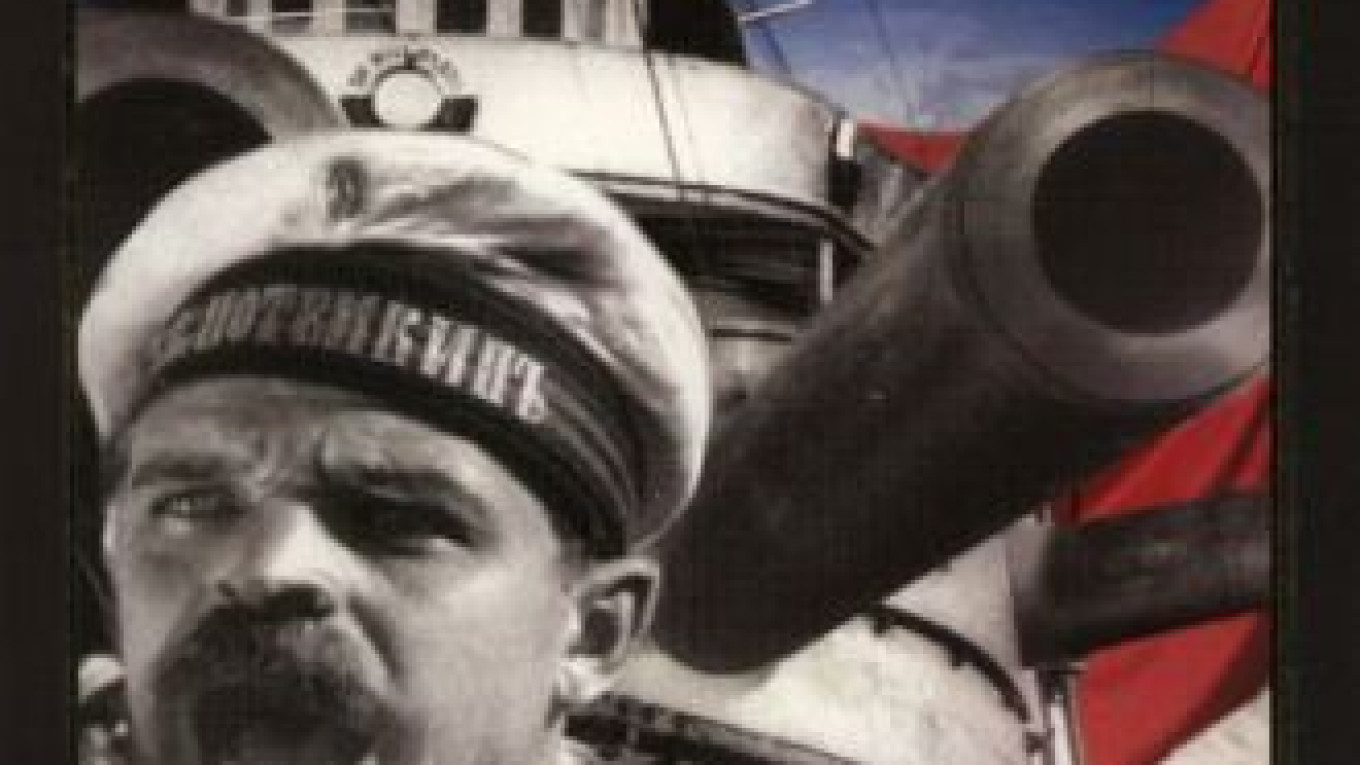
The list contains films that paint the Soviet government in both glowing and highly cynical tones. They range from the classic 1925 propaganda film "Battleship Potemkin," about sailors who mutiny against their tsarist officers, to the 1984 drama "Repentance," a critique of Stalinism set in a small Georgian town. It was banned by Soviet authorities.
Mikhalkov, known for his outspoken anti-Bolshevist views, defended the inclusion of "Battleship Potemkin," a classic of international film, saying it is known for its "cinematographic significance."
Some bloggers said many of the films recommended for schoolchildren showed the events of the civil war from the Bolshevik point of view.
"It is hard to imagine what kind of assumption about the civil war schoolchildren will have after watching those films," a blogger who goes by the name terets92 wrote on LiveJournal.
Medinsky, known for his anti-Communist views, avoided a question about how revolution-inspired films would be received by today's children.
"For us, those films are interesting as being a part of an epoch," he said.
Livanov said the program was aimed in part at developing closer ties between students and teachers of older generations, for whom many of the films are classics.
"The culture gap between cultural foundations is widening," he said.
Asked why no modern Russian films were on the list, Medinsky implied that not enough were included in the public's submissions to justify their inclusion.
He said teachers could explain the significance of a particular film on the list by saying it was the "'Avatar' of its time," a reference to the 2009 James Cameron blockbuster.
Related articles:
A Message from The Moscow Times:
Dear readers,
We are facing unprecedented challenges. Russia's Prosecutor General's Office has designated The Moscow Times as an "undesirable" organization, criminalizing our work and putting our staff at risk of prosecution. This follows our earlier unjust labeling as a "foreign agent."
These actions are direct attempts to silence independent journalism in Russia. The authorities claim our work "discredits the decisions of the Russian leadership." We see things differently: we strive to provide accurate, unbiased reporting on Russia.
We, the journalists of The Moscow Times, refuse to be silenced. But to continue our work, we need your help.
Your support, no matter how small, makes a world of difference. If you can, please support us monthly starting from just $2. It's quick to set up, and every contribution makes a significant impact.
By supporting The Moscow Times, you're defending open, independent journalism in the face of repression. Thank you for standing with us.

Remind me later.