

Correction appended
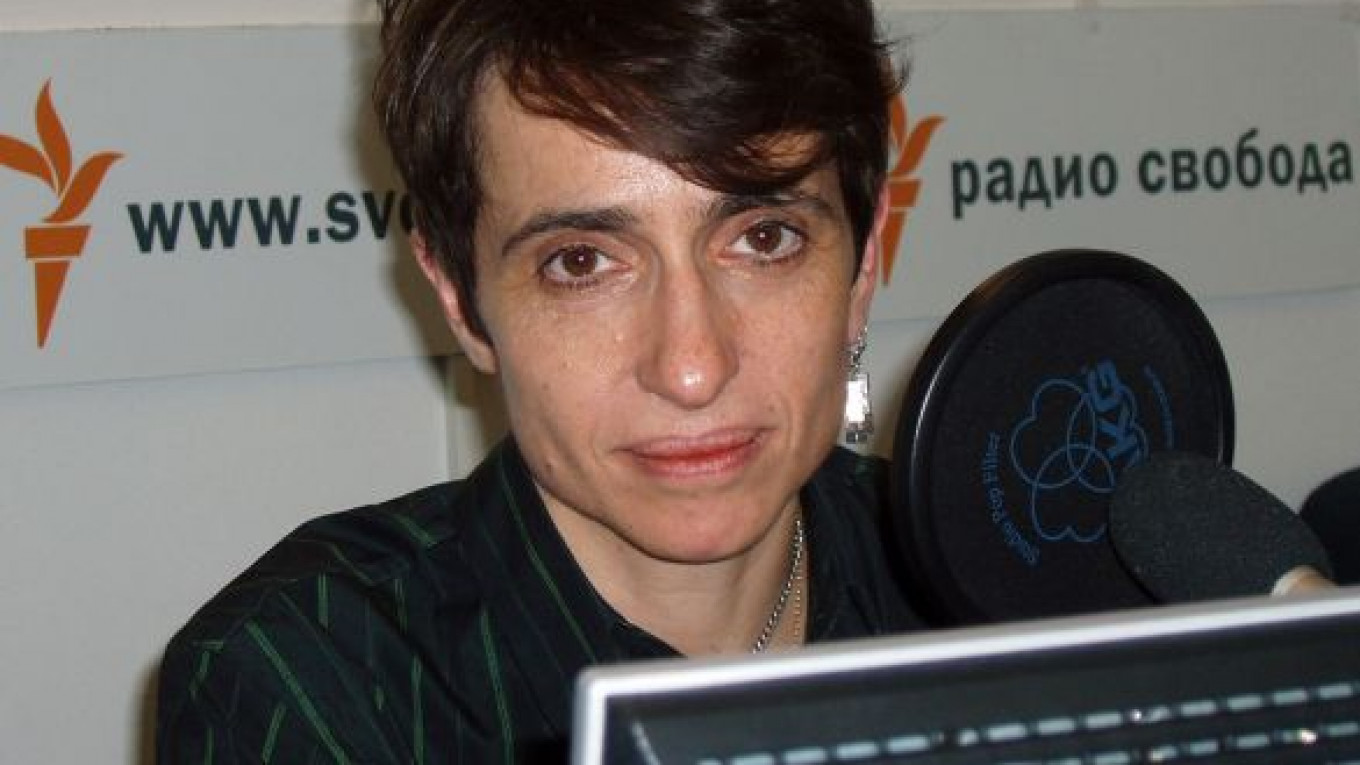
U.S. government-funded Radio Liberty has reiterated its commitment to operating in Russia after Nov. 10, when a new law forces it to discontinue AM broadcasts, and after dozens of journalists and editors left the organization last week.
"We are not giving up on our commitment to provide you with Svoboda's unique perspective on news and events in Russia," wrote Radio Free Europe/Radio Liberty president Steve Korn, referring to the network's Russian name, Radio Svoboda, in a statement posted on the network's website Monday.
The network, founded in 1953 to provide coverage in countries with limited press freedoms, was for generations a thorn in the side of the Soviet government.
Radio Liberty will now focus on digital platforms, including web and mobile devices, and on-demand and live content, Korn wrote.
The network will stop AM broadcasts on Nov. 10, when a law will take effect that makes it illegal for stations more than 48 percent foreign-owned to be on the airwaves.
The law prompted a re-think of Radio Liberty's strategy, which led to the decision to buy-out dozens of employees in the digital content side of the business, said Julia Ragona, a vice president at the station, by telephone on Monday.
About 40-50 journalists and editors were let go last week amid speculation that the broadcaster was clearing house ahead of the arrival of new director Masha Gessen.
"We knew there would be some changes, but we didn't know they would take such a harsh form. … The form was strange, unusual, harsh and unexpected," Mumin Shakirov, who said he was abruptly laid off after 14 years at Radio Liberty.
He said about 40 employees were summoned to the company's legal department on Thursday and asked not to come back to work.
They were each given a severance of between four and six months' pay, he said. "There aren't any legal demands at this point. But from an ethical point of view, it wasn't exactly pretty," he said.
Ragona and Gessen seemed to contradict Shakirov's account. They said employees were offered buy-outs, and their severance packages were generous.
In a remark aimed at Shakirov and others, Korn wrote that Radio Liberty was committed to "acting with fairness toward those of our staff who are leaving."
Former website editor Lyudmila Telen accused Gessen, who has worked as a consultant for Radio Liberty since spring, of directing the firings in an article in Novaya Gazeta.
But Gessen, formerly editor-in-chief of Vokrug Sveta and an editor at Snob, denied this.
"I did not include any recommendations on personnel issues, period. It was a detailed report on the state of the bureau and its functionality and its flaws," she said of recommendations about the Moscow office she sent to the heads of Radio Free Europe in May.
Shakirov and Yury Timofeyev, another journalist who lost his job at Radio Liberty, blamed the decision on the organization's U.S. bosses.
"But naturally they consulted with those who will take the reigns of Radio Liberty," Shakirov said. "They decided that Radio Liberty will be different. We don't yet know exactly how."
Gessen, an outspoken Kremlin critic who has been involved in organizing opposition protests, said she wanted to make the news content at Radio Liberty unbiased.
"I want to do a kind of journalism that no one is doing at the moment. I would describe it as normal journalism. … Something that's not polemical, like opposition media, and something that's not controlled by the Kremlin," she said.
Fifty percent of Radio Liberty's audience in Russia is radio listeners and 50 percent is online users, Ragona said, with web traffic in Russia reaching about 2 million unique visitors per month.
Radio Liberty currently broadcasts in 21 countries — mostly the former Soviet Union, Central Asia, the Balkans, and the Middle East — in 28 languages and reaches 24 million people per week.
It has more than 500 employees in Prague and Washington, and employs an additional 750 freelancers in 19 bureaus across its broadcast areas. Its 2011 budget was $92.7 million, according to its website.
Ragona refused to link the reshuffle at the Russian bureau to the Kremlin's recent decision to kick out U.S. government-funded USAID on Oct. 1 after the Kremlin accused the organization of meddling in Russian politics.
The changes at Radio Liberty have prompted some to question the continued purpose of a station that launched during the Stalin era.
"I think it's out of date. If the State Department wants to promote liberty here, they should make satellite Internet connections available for everyone. People don't need Radio Liberty," said Ivan Zassoursky, a professor at Moscow State University's school of journalism.
Correction: An earlier version of this article incorrectly conflated new laws on nongovernmental organizations and the media. The law that will prompt Radio Liberty to cease AM broadcasts is not the same law that brands foreign-funded NGOs "foreign agents."
Related articles:
A Message from The Moscow Times:
Dear readers,
We are facing unprecedented challenges. Russia's Prosecutor General's Office has designated The Moscow Times as an "undesirable" organization, criminalizing our work and putting our staff at risk of prosecution. This follows our earlier unjust labeling as a "foreign agent."
These actions are direct attempts to silence independent journalism in Russia. The authorities claim our work "discredits the decisions of the Russian leadership." We see things differently: we strive to provide accurate, unbiased reporting on Russia.
We, the journalists of The Moscow Times, refuse to be silenced. But to continue our work, we need your help.
Your support, no matter how small, makes a world of difference. If you can, please support us monthly starting from just $2. It's quick to set up, and every contribution makes a significant impact.
By supporting The Moscow Times, you're defending open, independent journalism in the face of repression. Thank you for standing with us.

Remind me later.