

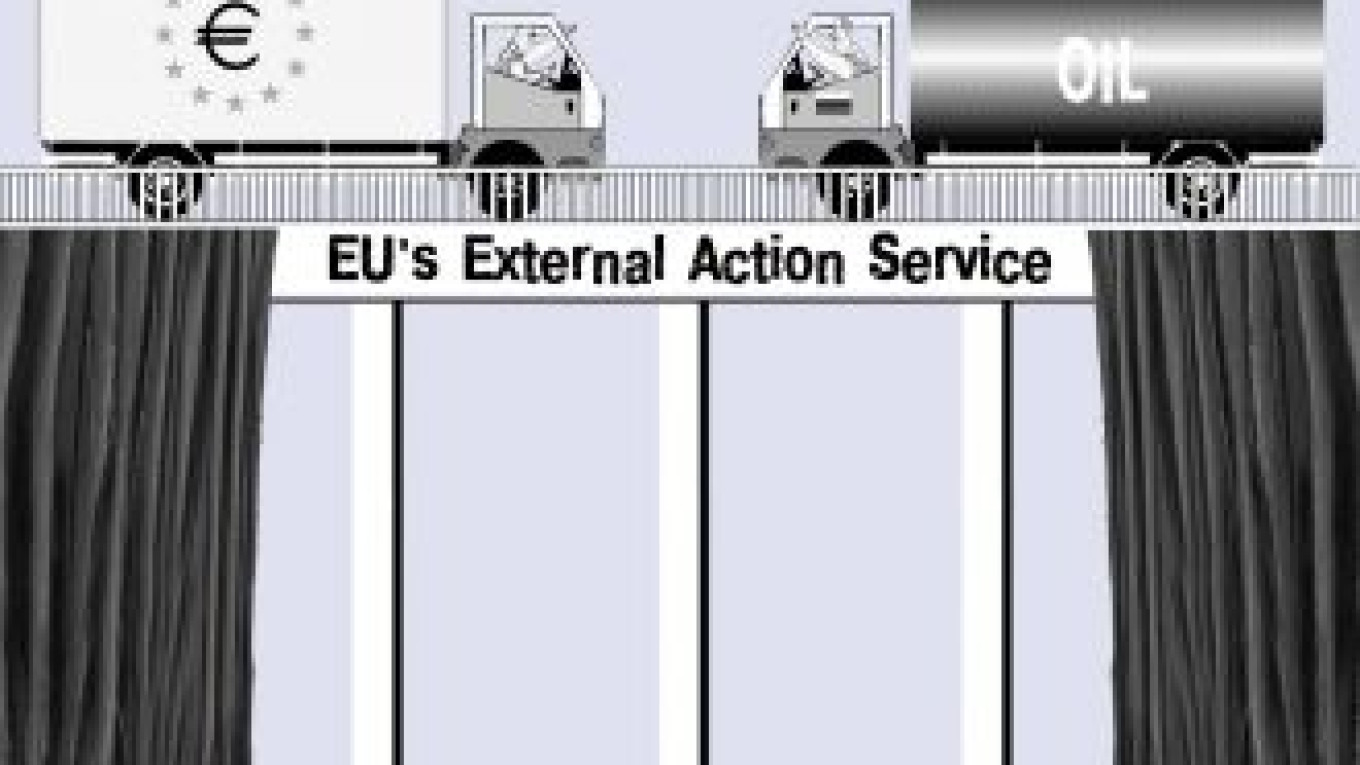
Russia is our strategic partner and a major player in many areas. Russia is also a European country and our close neighbor. The time is ripe to give a new boost to European Union-Russian relations, while continuing open and sincere dialogue based on common interests and values. It is no secret that the relations between the EU and Russia have suffered from differences of opinion and action and that a lot of work remains to be done on both sides to optimize the potential that the EU and Russia share.
The questions we should put to ourselves are quite simple: What are the fundamentals in our relationship, and, more important, what do we want to achieve together in 10 years?
Finland and Hungary share a long history with Russia, and both have joined the EU rather recently. In future relations with Russia, we see three priority goals.
The first relates to the economy. The EU is the most important export market for Russia, and Russia is among the top-three trading partners of the EU. Of foreign direct investments to Russia, about 80 percent come from EU countries. In energy, the interdependency is evident. Geographic proximity could contribute to the competitiveness of both Russia and the EU, but that should not be taken for granted in today’s world of global competition.
Currently, the most pressing issue is Russia’s accession to the World Trade Organization. Another key factor that would integrate our markets further is harmonization of technical standards. The EU has no reason to press Russia in this matter and no need to dictate the rules. But let’s be frank. A set of carefully prepared standards and legislation is there for Russia to grasp — that is, “euro standards” of proven high quality and earned consumer trust in Europe and elsewhere in the world. President Dmitry Medvedev, a committed supporter of modernization and innovation, has said European standards can’t be that bad. Also for Russian consumers, the euro standard has been synonymous with good quality for decades. Russian companies would be the ones benefiting the most from harmonized regulation because that would bolster their competitiveness in the European market.
The ultimate goal is a free-trade area between Russia and the EU. We should not see our economies as rivals but make them more attractive by means of enhanced integration. This could open a new window of opportunity for both in the increasingly competitive global market.
Second, we need to facilitate interaction between our people. Visa-free travel would benefit tens of millions of people. The EU and Russia agreed to pursue visa freedom as a long-term goal in 2003 and are committed to reaching it. But all technical and societal criteria have to be met. Russian and EU experts need to continue the discussions and examine where sufficient progress has been made and where steps still need to be taken. This paves the way for the negotiations on a visa-waiver agreement.
The third goal relates to foreign and security policies. Partnership can only be successful in the long run if it is value-based and pursued in the spirit of mutual respect and confidence. Progress has been made in the area of external security — for example, in international crisis management on the coast of Somalia and in Chad. But we could do much more together, including in the areas close to the EU and Russia, as well as in the civilian sector, like cooperation in emergency situations.
The initiative put forward by German Chancellor Angela Merkel and Medvedev on deepening cooperation between the EU and Russia in foreign and security policies should be explored further. The potential of the existing Organization for Security and Cooperation in Europe and NATO structures can and should also be made use of more effectively. Such an approach could be a good starting point for finding solutions to conflicts. Any efforts to find solutions in conflict areas of common interest, however, can and must only be pursued through involvement of and cooperation with other Eastern European countries, especially the countries directly affected.
Our strategic aim should be a common area not only for external but also for European security as both the EU and Russia are stakeholders of European stability and security and keen to enhance it.
What steps need to be taken to improve the EU-Russian partnership?
First, the EU has to do its own homework. We should be more united and act faster. A strategic discussion on Russia within the EU would be very welcome. We also need to discuss our common priorities and actions together with Russia to move from partnership to equal ownership, that is, an equal and genuine commitment to enhancing our relationship.
Second, we need a modern, legally binding basis for our relationship. Both sides are already negotiating what is called the “New Agreement” to achieve this goal.
Third, more effective working structures are required to implement the New Agreement and the so-called four common spaces of cooperation including the partnership for modernization. We propose to start evaluation work immediately, together with our Russian partners.
With the new structures created in the Lisbon Treaty, the EU is now in a better position to strengthen its foreign policy. High Representative Catherine Ashton and the future EU’s External Action Service, or EEAS, have an important role to play in fostering EU-Russian relations. These relations should be one of the priority areas for the EEAS from the very start.
Committed and active member states are essential for the EEAS to be successful. The EU-Russian relations rely to a large extent on bilateral experience. Bilateral relations and EU-Russian relations do not contradict one another but are complementary. It doesn’t matter whether the spokesman is in Brussels, Berlin, Paris, London, Warsaw, Stockholm, Budapest, Helsinki or any other EU capital as long as the main messages are the same and we practice what we preach. For its part, Russia should be clear in its EU policy and willing to enhance its own working structures.
The most important factor in building a strong EU-Russian relationship is mutual trust and playing by the same rules. On many issues, the ball is now in Russia’s court, but when the ball comes back to our court, we have to be ready and fit to play. Together, Russia and the EU can do a lot to help make the world a better and safer place.
Janos Martonyi is the foreign minister of Hungary, and Alexander Stubb is the foreign minister of Finland.
A Message from The Moscow Times:
Dear readers,
We are facing unprecedented challenges. Russia's Prosecutor General's Office has designated The Moscow Times as an "undesirable" organization, criminalizing our work and putting our staff at risk of prosecution. This follows our earlier unjust labeling as a "foreign agent."
These actions are direct attempts to silence independent journalism in Russia. The authorities claim our work "discredits the decisions of the Russian leadership." We see things differently: we strive to provide accurate, unbiased reporting on Russia.
We, the journalists of The Moscow Times, refuse to be silenced. But to continue our work, we need your help.
Your support, no matter how small, makes a world of difference. If you can, please support us monthly starting from just $2. It's quick to set up, and every contribution makes a significant impact.
By supporting The Moscow Times, you're defending open, independent journalism in the face of repression. Thank you for standing with us.

Remind me later.