

The universal electronic card demonstrated by President Dmitry Medvedev in the spring of last year is facing delays, with the rollout that was scheduled for this month being pushed to January of 2013.
The card, which is supposed to serve as a? combination of? an electronic ID, driver's license, car insurance certificate, ATM card and? migration document, among other possible functions, is the expected result of a project the government estimates will cost as much as 150 billion rubles to? 170 billion rubles ($5.2 billion to $5.6 billion) to put in the hands of every citizen.
Limited initial use of the card was to take place beginning in 2012, but the law that set up the project was amended in December to allow for a one-year delay.
Sitronics, the high-tech arm of billionaire Vladimir Yevtushenkov's AFK Sistema, which is involved in designing and making the cards, declined to comment on the project's status. A source at Sitronics told The Moscow Times that the cards are not ready and the system does not work.
The Communications and Press Ministry set up the Universal Electronic Cards company, or UEC, to run the card program. A spokesman for UEC told The Moscow Times that the program will begin to function next year and that this year will be spent organizing the places that will receive applications for the card. Application sites are expected to be set up at post offices, banks, commercial centers and other locations.
A ministry spokesman confirmed that infrastructure for the project is just beginning to be created, and only four out of 83 regions having begun work on it.
"The delay in starting the project is related to issues around interagency cooperation and underdeveloped infrastructure in some regions," said Yulia Kuchkina, a spokeswoman for UEC. "Pilot cards are being issued — with employees of government agencies and ministries becoming the first users. In Moscow test cards have been received by employees of the Moscow Department of Information Technology," she added.
The current card distribution plan foresees them being given out in the course of 2013 to those who apply for them. The following year they will be issued to all citizens, unless a person makes a written statement of refusal.
There are concerns about the public's willingness to adopt the card. Medvedev said last year that the risk of identity theft was an issue for the universal smart card.
Boris Volpe, Sitronics' vice president for marketing and development, said Sitronics' unique cryptography would protect people from the risk of identity theft. "All data used in transactions will be strongly encrypted, so that even if personal information was intercepted it would be completely useless."
The card's official website states that the universal electronic card will be safe, since the card itself does not hold any sensitive information. Such data will, as is done now, be stored in government databases so that even if the card is lost or stolen, there is no risk that sensitive personal information will be lost. The card is simply a faster more convenient way to access this information.
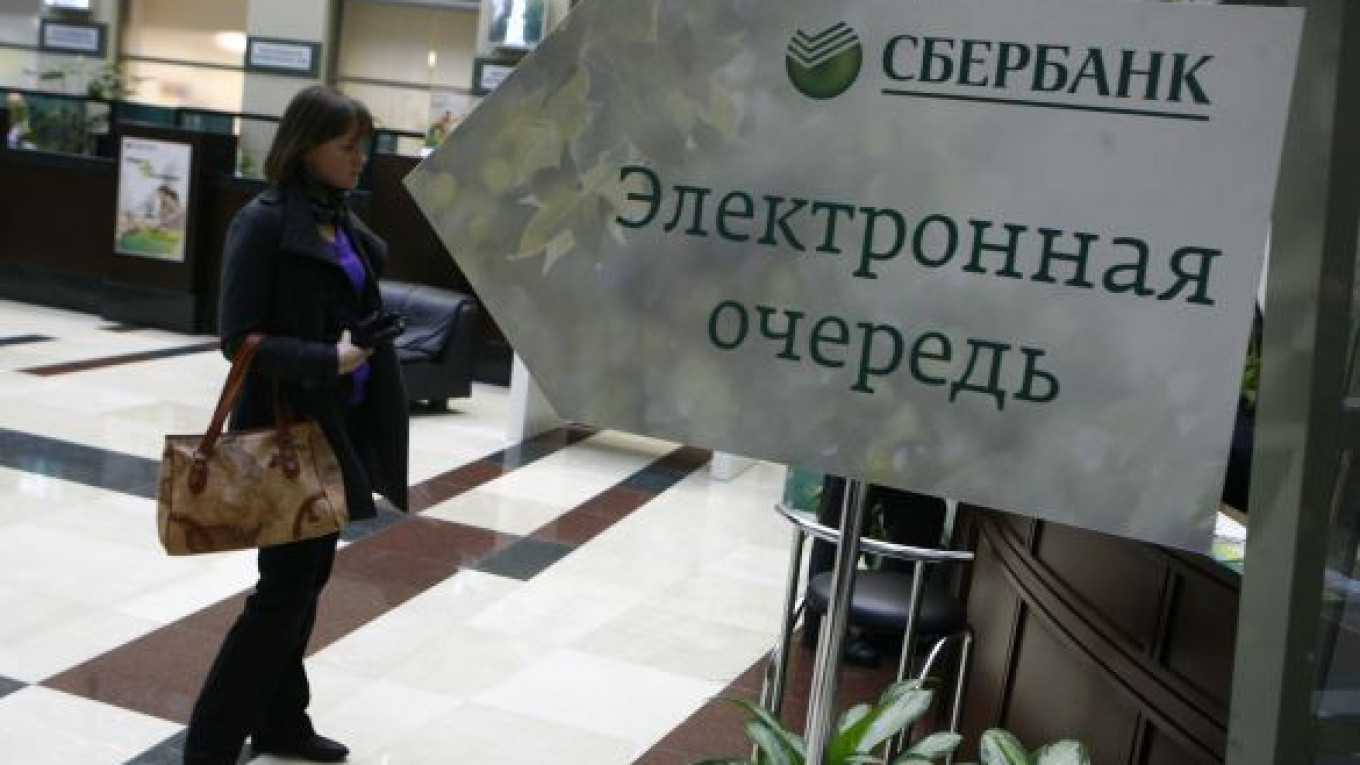
This is scant reassurance in a country where classified government databases can be freely purchased online or at electronics markets. Sberbank, who own a 34 percent share in Universal Electronic Cards, says the smart card itself poses no security risk.
"The universal electronic card does not add additional security risks to people who use it. The smart card is not only a convenient and secure way of protecting personal data, but is certified to securely encrypt information," a Sberbank spokesperson said.
While the issue of identity theft may be regarded as the project's main technical challenge, there is, according to Volpe, a more fundamental hurdle to overcome — persuading the general population to adopt the card. "Russia is a huge country," Volpe said. "It won't be easy teaching people how to use the universal electronic card, since there has never been anything like it before."
A Message from The Moscow Times:
Dear readers,
We are facing unprecedented challenges. Russia's Prosecutor General's Office has designated The Moscow Times as an "undesirable" organization, criminalizing our work and putting our staff at risk of prosecution. This follows our earlier unjust labeling as a "foreign agent."
These actions are direct attempts to silence independent journalism in Russia. The authorities claim our work "discredits the decisions of the Russian leadership." We see things differently: we strive to provide accurate, unbiased reporting on Russia.
We, the journalists of The Moscow Times, refuse to be silenced. But to continue our work, we need your help.
Your support, no matter how small, makes a world of difference. If you can, please support us monthly starting from just $2. It's quick to set up, and every contribution makes a significant impact.
By supporting The Moscow Times, you're defending open, independent journalism in the face of repression. Thank you for standing with us.

Remind me later.