

LAUSANNE, Switzerland — The Greeks can choose from a wide range of ice-cold drinks at Starbucks. The Chinese find a larger selection of food. And the French munch on waffles.
But Russians cannot smoke over their mugs of vanilla latte.
Starbucks, the world's biggest coffee chain, prides itself on adapting to the individual tastes of consumers, but it draws the line with cigarettes in Russia.
The reason has nothing to do with health concerns or environmental issues, said Lia Dovgun, marketing manager for Starbucks Russia. It's all about reputation.
"Coffee beans are very porous," Dovgun said. "They suck in the smoke, which affects the taste."
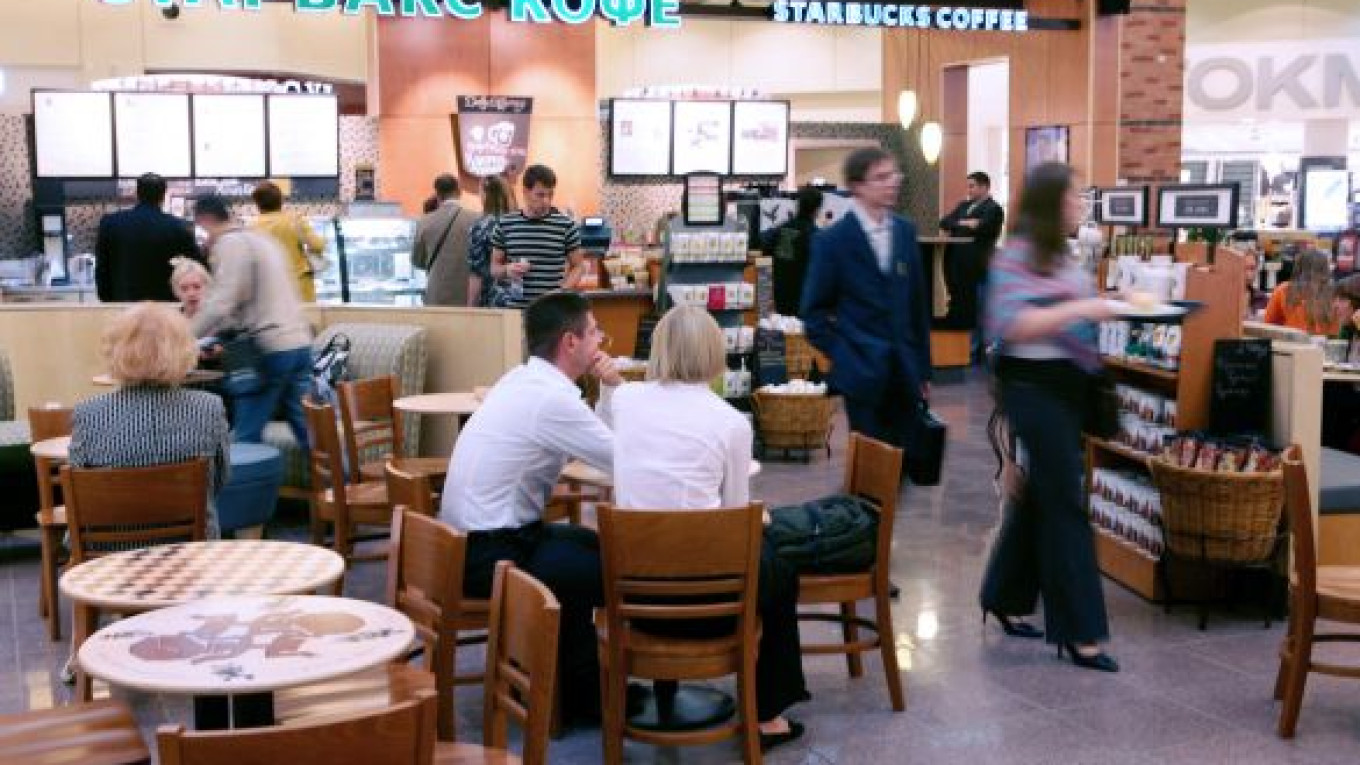
But the hard-line policy on smoking — which makes Starbucks one of the few restaurants in Russia to ban smoking — does not appear to be hurting sales. After launching its first cafe in a Mega shopping center just north of Moscow in September 2007, Starbucks celebrated the opening of its 50th cafe in the capital last month.
The fast growth speaks volumes for a company that entered the Russian market well after other coffeehouse chains had already established a strong presence. Indeed, Starbucks has expanded here more quickly than in countries like France, where local tastes prompted it to put Belgian waffles on the menu. Starbucks only has about 50 cafes in Paris, even though it got a three-year head start on Moscow in setting up shop there.
The Seattle-based Starbucks is notoriously tight-lipped on its corporate strategy, but officials pulled back the curtain a wee bit during a recent press tour of the Starbucks Coffee College in Lausanne, Switzerland, where select journalists were shown how coffee is tasted and selected in accordance with the company's strict standards and then paired with different food categories in coffeehouses.
It turns out that Russia is not the most difficult country for Starbucks to cater to. Of all the countries in Europe, the Middle East and Africa, Starbucks makes its biggest effort to adapt in perpetually sizzling Greece, said Carole Pucik, who heads global communications for Starbucks in those three regions.
"I would say where we gear the most is in Greece," she said. "And there's no mystery about that. It's because it's warm there. The beverages that are sold there are typically iced beverages."
In another adjustment, Starbucks, known in the United States as a take-away cafe, found it had to change that approach in China. The Chinese prefer to eat a meal with their coffee, so the company opted to provide a larger food menu, the Seattle Post-Intelligencer newspaper reported in 2005.
Pucik said adaptation to regional preferences is important because Starbucks is not trying to change people but attract them with superior service.
"We're definitely not trying to change people's behaviors," she said. "We're offering something that's a different level of service: friendly service, very high-quality product and a comfortable place to relax."
To that end, Starbucks in Russia requires all staff — from the office manager to the accountant — to spend a full day every week in one of its Moscow cafes in order to remain in close contact with customers and be aware of their needs, Dovgun said. In addition, marketing people approach customers and ask for their impressions when new products are introduced, she said.
Dovgun said no products have been developed in Russia and then geared toward other countries. "But we're only four years old," she added.
She noted that java chips, a crunchy additive to Starbucks drinks, have become "surprisingly popular" in Russia. The most popular beverages, she said, are the latte, the vanilla latte and the cappuccino. For food, Russians love chicken and mushrooms on ciabatta bread and New York cheesecake for dessert.
A Message from The Moscow Times:
Dear readers,
We are facing unprecedented challenges. Russia's Prosecutor General's Office has designated The Moscow Times as an "undesirable" organization, criminalizing our work and putting our staff at risk of prosecution. This follows our earlier unjust labeling as a "foreign agent."
These actions are direct attempts to silence independent journalism in Russia. The authorities claim our work "discredits the decisions of the Russian leadership." We see things differently: we strive to provide accurate, unbiased reporting on Russia.
We, the journalists of The Moscow Times, refuse to be silenced. But to continue our work, we need your help.
Your support, no matter how small, makes a world of difference. If you can, please support us monthly starting from just $2. It's quick to set up, and every contribution makes a significant impact.
By supporting The Moscow Times, you're defending open, independent journalism in the face of repression. Thank you for standing with us.

Remind me later.