

Zarema Mazhikhoyeva, a 23-year-old widow from Ingushetia, was arrested after failing to detonate a bomb in downtown Moscow last July. She told the paper she had joined a Wahhabite rebel group after stealing $800 worth of jewelry from the family of her late husband.
Mazhikhoyeva said she sold the jewelry to fund her and her daughter's escape from her in-laws, who had given the child to her childless brother-in-law after her husband's death. "[I became] the shame of the family," Mazhikhoyeva said in the interview from the top-security Lefortovo prison, where she is being held awaiting trial on terror charges.
Describing how she came to join a band of Chechnya-based Wahhabite rebels, Mazhikhoyeva said she decided to become a shakhid, or martyr, to repay her in-laws, as they would receive compensation of $1,000 from the rebels if she carried out a suicide bombing.
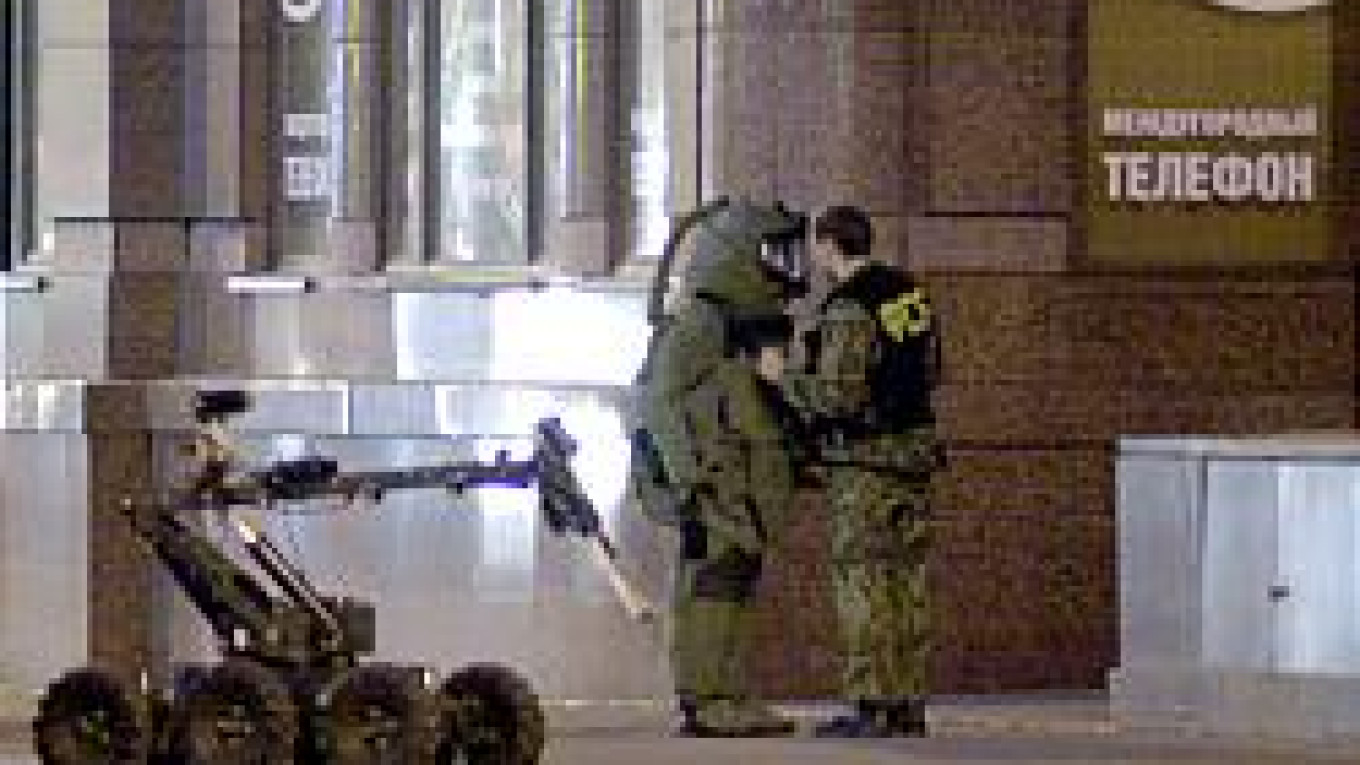
Mazhikhoyeva is charged with attempting to detonate a homemade bomb on 1st Tverskaya Yamskaya Ulitsa on July 10. The bomb went off hours later, killing an FSB bomb disposal expert who tried to defuse it.
Mazhikhoyeva said she lost her nerve one month before the botched attack, and was trying to draw attention to herself on the busy street so that she would be arrested. "I realized I would never be able to blow myself up," she said, Izvestia reported.
In the days leading up to the bombing attempt, two male minders from the rebel group stayed with Mazhikhoyeva in a house in the Moscow region village of Tolstopaltsevo -- along with two other young women preparing to carry out suicide bomb attacks.
Zalikhan Elikhadzhiyeva, 19, and Zinaida Aliyeva, 26, blew themselves up four days before Mazhikhoyeva's bombing attempt, killing 14 bystanders at a Tushino airfield rock concert.
Mazhikhoyeva said Elikhadzhiyeva's family had disowned her after she ran away with her stepbrother and Chechen rebel Magomed Elikhadzhiyev. It was he who later convinced Elikhadzhiyeva to become a shakhid, Mazhikhoyeva said.
According to the interview, of the three young women, only Aliyeva fitted the classic "black widow" profile, a term used to describe a Chechen rebel's female relative who avenges his killing by Russian troops.
Experts say both Mazhikhoyeva and Elikhadzhiyeva had violated one or more of the informal, but strictly observed social or religious laws that still govern poverty-stricken rural communities in the North Caucasus.
"The traditions are structured in such a way that women can more easily become outcasts," said Artur Martirosyan, a Caucasus expert and program manager at the Conflict Management Group in Cambridge, Massachusetts.
Martirosyan noted the similarities between Elikhadzhiyeva's case and that of Palestinian suicide bomber Reem al-Reyashi. Al-Reyashi had allegedly been caught cheating on her husband and was forced to carry out the bombing as punishment, Israeli media reported.
Aleksei Malashenko of the Carnegie Moscow Center agreed that social marginalization had emerged as a factor, along with ideology and revenge, motivating female suicide bombers.
"Those who are marginalized by society and its norms are [easy prey] for catchers of souls," Malashenko said.
A Message from The Moscow Times:
Dear readers,
We are facing unprecedented challenges. Russia's Prosecutor General's Office has designated The Moscow Times as an "undesirable" organization, criminalizing our work and putting our staff at risk of prosecution. This follows our earlier unjust labeling as a "foreign agent."
These actions are direct attempts to silence independent journalism in Russia. The authorities claim our work "discredits the decisions of the Russian leadership." We see things differently: we strive to provide accurate, unbiased reporting on Russia.
We, the journalists of The Moscow Times, refuse to be silenced. But to continue our work, we need your help.
Your support, no matter how small, makes a world of difference. If you can, please support us monthly starting from just $2. It's quick to set up, and every contribution makes a significant impact.
By supporting The Moscow Times, you're defending open, independent journalism in the face of repression. Thank you for standing with us.

Remind me later.