Russia believes itself to be already at war with the West — or at least the European part of NATO — and the Kremlin is prepared to apportion the rhetoric, finances and personnel accordingly.
But NATO currently lacks the structural resilience not only to defend against Russia’s increasingly risky attacks on its infrastructure, but the alliance would also face mass mobilization challenges in the event of a future war in Europe.
Russia’s non-military sabotage operations against NATO’s critical national infrastructure, undersea cables and supply chains are often referred to as its “shadow war” on the alliance. Since 2022 these activities have escalated in geographical scope, targeting and intensity, with most likely three broad aims.
First, they are designed to increase the economic and political costs for NATO of its military and economic support of Ukraine, temporarily hobble supply chains into Ukraine and create a broader sense of discord in the West.
For now, these operations stop short of a threshold that could prompt any military response. Issues around attribution — given the high burden of proof required in European jurisdictions — mean that the true scope of Russia-led operations can be challenging to pin down. Moscow’s use of third-party proxies allows the Kremlin strategic ambiguity and distance, but this carries risks. Contractors are less easy to control and do not always know that their ultimate bank roller is the Russian state, demonstrating the limits of Russia’s on-the-ground intelligence operations in Europe.
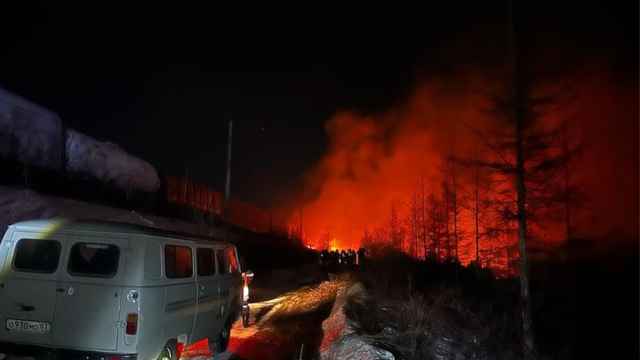
Certainly, digging into the available data suggests that while Germany, France and Poland’s transport and military production infrastructure has been increasingly targeted, the scale of these attacks remains limited. Indeed, some of the attacks appear to be a step up from vandalism, such as the May 2025 arson attack on a shopping mall in Poland — which Warsaw linked to the Russian security services — but which had little connection with the war itself, instead designed to undermine resolve.
If Russia’s objectives here were to frustrate NATO’s practical support for Ukraine, then you would expect to see a more coordinated or at least targeted campaign against European infrastructure, showing more concerted efforts to disable supply chains for longer periods of time.
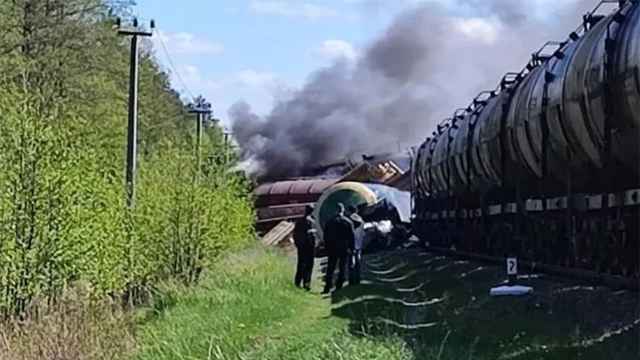
A comparison can be made with Ukraine’s increasingly precise drone and IED attacks on Russia’s own infrastructure. These campaigns have evolved to target railway substations (which convert and supply power to rail lines) and transformers, which are harder to repair than track railways. These substations lie at the nexus between manufacturing plants and logistics hubs that link supply lines to the front. Targeting them shows a more coordinated effort to knock out Russia’s infrastructure and has been increasingly successful, as in the May 2024 attack on the lines between Oryol and Kursk, which suspended supply lines for several days.
All of this tells us several political and practical things about Russia’s thought processes. It also shows us Moscow’s limitations.
Chiefly, it demonstrates that Russia does not yet anticipate a military response from NATO for these activities.
Second, it indicates that Russia is becoming more aggressive and willing to take risks with its intelligence operations in Europe. For example, although Britain has been one of the largest providers of military financing and economic aid to Ukraine, it has experienced relatively few targeted attacks compared to NATO’s eastern flank, possibly due to a lack of on-the-ground capability. This is beginning to shift and escalate, as exemplified by the arson attack on an east London warehouse in March 2024, where Ukrainian-owned businesses storing aid to be shipped to Ukraine were targeted. It later became apparent that had the initial operation been successful, there were plans to escalate to more serious crimes such as kidnapping.
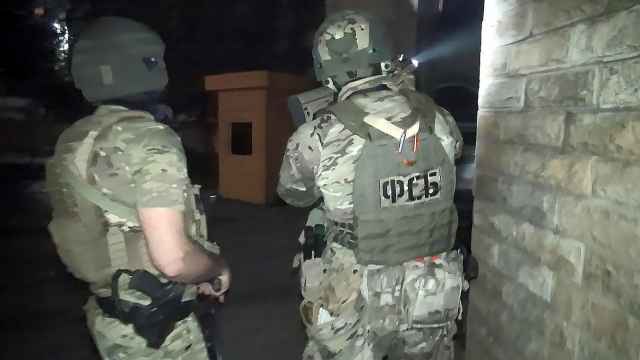
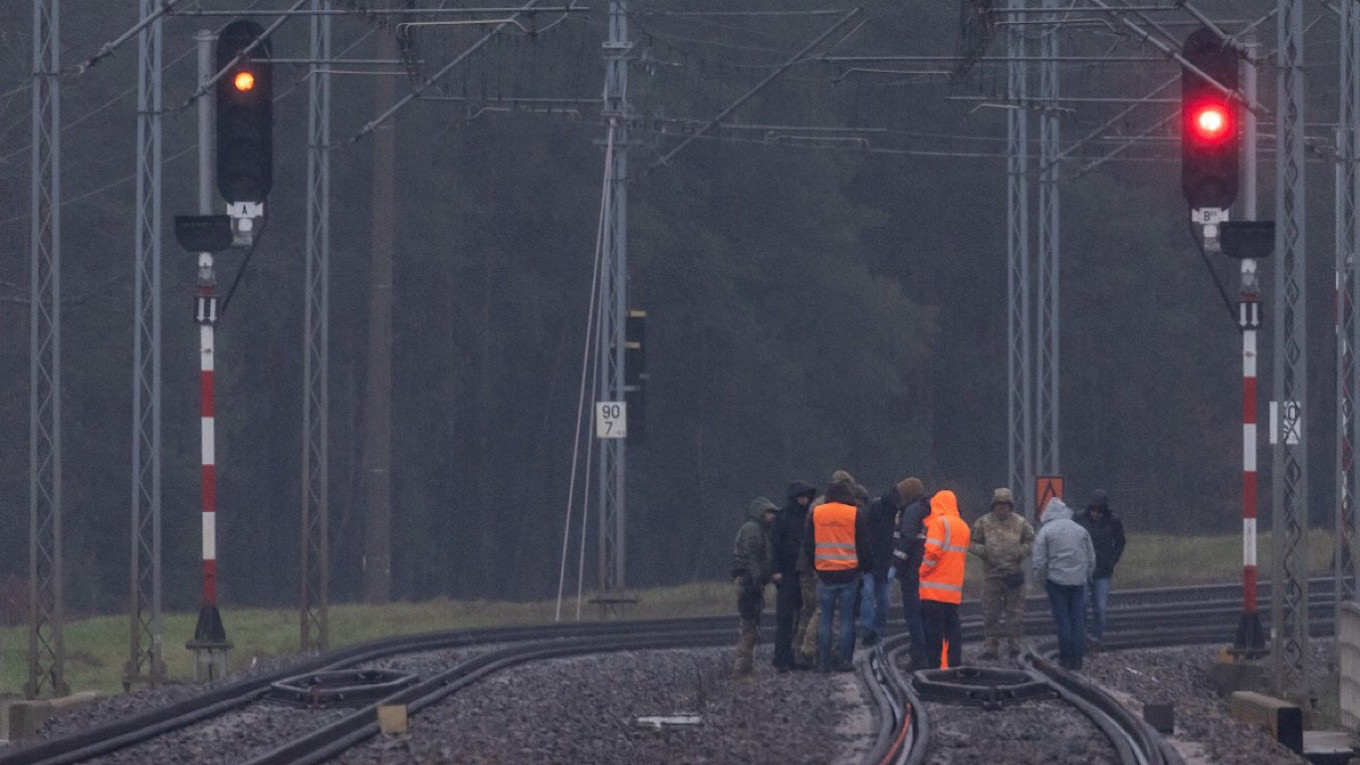
Russia’s attacks may not be as coordinated as they could be because of the GRU’s own inability to fully regroup — many of its networks were dismantled after 2022 following the expulsion en masse of Russian diplomats from European embassies. The picture might be complicated by other actors, such as the FSB’s apparent recruitment of two Ukrainian citizens to sabotage a railway line in Poland in November 2025. The FSB and GRU’s long-standing rivalry for resources and funding, and now apparent overlap in activities in Europe, risks creating confusion, friction and duplication of effort, as well as targeting of the same pool of recruitment.
In practical terms, if the Kremlin intended to paralyse — or at least disrupt more definitively military shipments of cargo into Ukraine, targeting bottlenecks and logistics hubs with relatively low-tech disruptive devices would require little more legwork.
Attacks on harder targets such as rail substations would be an escalation. But efforts to disrupt the network with debris, disrupting engineering work or even scrambling signals to create a build up of traffic would be sufficient. But Russia has not yet done so.
Constraints as a result of the war aside, it could be that the status quo is satisfactory for Russia; the Kremlin appears to have an unsettlingly long reach into Europe, creating a sense of unease and forcing allies to confront the possibility of a military response to something that is difficult to attribute.
But Russia’s activities also force NATO to confront a perhaps more pressing reality. Unlike Russia’s rail network, NATO’s own infrastructure is currently underequipped to transfer and maintain supplies of troops to a frontline in any future warfighting scenario.
The main response from Europe thus far has been to focus on the human side, cracking down on the recruitment of willing proxies. In early November, the EU confirmed it would be tightening up multiple-entry visas for Russian citizens, linking the decision to sabotage operations. But this does little to mitigate the threat, as these visas have been chiefly used by Russian journalists and dissidents expelled from Russia. This approach also does not counter the GRU and FSB’s manner of recruitment, which has mostly been to target local nationals with little personal connection to Russia itself.
But what Russia’s probing attacks have revealed is Europe’s own strategic vulnerabilities in logistics and supply chains, particularly its transport network.
As NATO’s forward presence in Europe has expanded geographically, it has become harder to defend. Europe’s rail network is uniquely vulnerable. Transport corridors are not up to standard, dual-use rolling stock to transfer troops to war theatres is limited and cross-border coordination is poor. These shortcomings would delay military-civilian integration in the event of a war. State interoperability remains inconsistent across transport networks, as has been already demonstrated in some of the bottlenecks in transferring aid to Ukraine.
From a military standpoint, NATO’s recent exercises in Romania highlighted major issues with transferring NATO forces at pace (and maintaining supply lines) to any potential front line in Europe, which at current standards would take several weeks. As the exercises showed, attempting to transfer large numbers of troops and equipment from France to Romania highlights the significance of rail routes via Poland, Slovakia and Hungary, upon which Ukraine’s own military preparedness depends.
These countries’ networks have been unevenly upgraded and many are in a state of disrepair — rail systems in Hungary are notoriously underfunded with no state plans to improve this — and digital interoperability between jurisdictions will stymie the seamless transfer of troops and hardware. Many of these European rail systems have incompatible gauge systems, requiring the loading and unloading of wagons and increasing waiting times at borders.
More fundamentally, there is no single coordinating body in Europe that oversees military mobility. This would make overseeing multiple forces convening on the front line extremely challenging for any future warfare in Europe.
Russia’s attacks on NATO may force a conversation about the resilience and securitization of transport infrastructure in the short term, but it should also raise structural questions about NATO’s ability to conduct and sustain future warfare.
A Message from The Moscow Times:
Dear readers,
We are facing unprecedented challenges. Russia's Prosecutor General's Office has designated The Moscow Times as an "undesirable" organization, criminalizing our work and putting our staff at risk of prosecution. This follows our earlier unjust labeling as a "foreign agent."
These actions are direct attempts to silence independent journalism in Russia. The authorities claim our work "discredits the decisions of the Russian leadership." We see things differently: we strive to provide accurate, unbiased reporting on Russia.
We, the journalists of The Moscow Times, refuse to be silenced. But to continue our work, we need your help.
Your support, no matter how small, makes a world of difference. If you can, please support us monthly starting from just $2. It's quick to set up, and every contribution makes a significant impact.
By supporting The Moscow Times, you're defending open, independent journalism in the face of repression. Thank you for standing with us.

Remind me later.